Showing posts with label 1936. Show all posts

Thursday, July 11, 2013

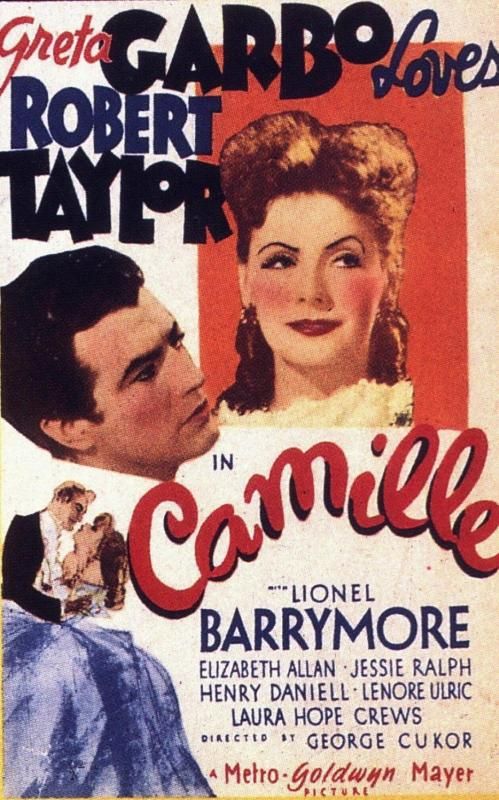
Camille


Camille
1936
Director: Geoge Cukor
Starring: Greta Garbo, Robert Taylor, Henry Daniell

I’m going to show my hand awfully early in this review and come right out and say I can’t be bothered to give two shits about this movie.  Camille is certainly not a bad film, but jesus christ, I don’t care.  I don’t care in the slightest.

Setting the standards for all future Nicholas Sparks novels, Camille tells the story of Marguerite (Garbo), a beautiful but sickly Parisian socialite/courtesan who gets through life by charming the pants and money out of men.  One night at the theater, she meets two new men.  Duval (Daniell) is wealthy but pompous.  Armand (Taylor) is poor but kind.  Guess which one she falls for, guess which one gets jealous and dangerous, and guess what her insistent coughing eventually means.  You guessed, good for you, get a cookie.
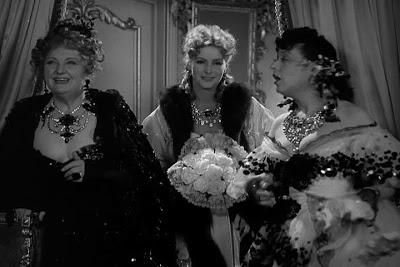
 
I know that this is a classic romance, and I know that to many people, Camille is desperately romantic.  I love romances, I do, and I definitely have the occasional mood where I want to do nothing but watch costume dramas for three days straight, but my taste in such films is not quite typical.  I find Camille so terrifically melodramatic, so soppy, so utterly predictable, and yet so tepid, that I just don’t care.  It reminds me of one of my favorite lines from Gilmore Girls, when Lorelai, commenting on Luke’s insensitivity about something or other, says, “This from the man who said ‘Finally!’ at the end of Love Story.”  That’s me; I am that person who says “Finally!” at the end of any kind of predictable shmoopy weepy romance.  It’s kind of sad, but I actually got excited when Marguerite (nicknamed Camille because of her love of the camellia flower) started coughing and getting markedly weaker, because that means the end can’t be too far away.
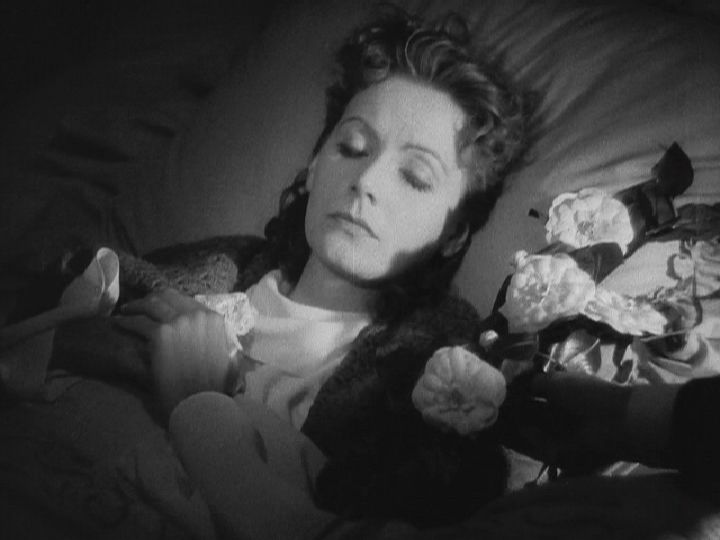
Yay!

The dialogue is inane.  Such ridiculous platitudes of love; if my husband started spewing this kind of flowery language at me, I’d think he was high on meth or something.  The soundtrack during these ridiculous exchanges just makes them even more over the top, full of glissando strings that whine and cry and just make everything worse.  Yes, this was the style of the time, but it doesn’t help me believe the stupidity being spoken.  And not helping things along is the fact that I don’t believe a single word out of any of the characters’ mouths.  There is so much fake sincerity in this film, it’s painful.  A part of the reason for this is the world that Marguerite inhabits at the beginning of the film is built on such insincerity.  We spend at least half an hour ensconced in this world of frills and frosting and fake declarations.  We see Marguerite roll her eyes at Armand – yes, roll her eyes – when he tells her pretty much right away that he loves her.  We see her laugh and giggle and purposely lead on Duval.  We see her friends who, amazingly enough, are twice as bad as she is.  So I have trouble buying the transition from superficiality to honest to god emotion. 
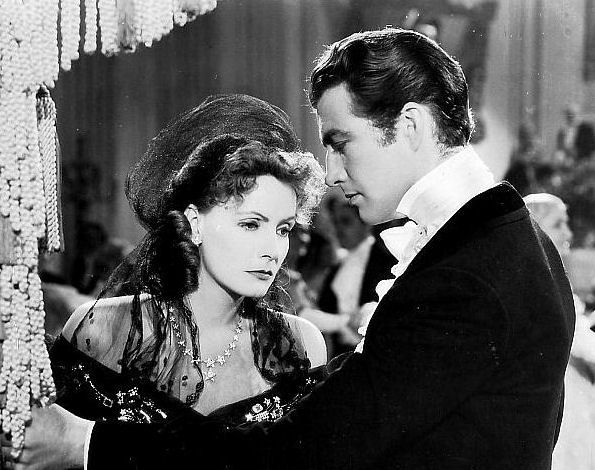
I feel the same way, Greta.  I feel the same way.

At this point, I’ll say again that I do actually enjoy romances.  What I need in order to enjoy a romance is some sort of spark or heat; chemistry, in other words.  I want to feel that feeling in my stomach, that feeling of the thrill of romance, of excitement.  My favorite romances make me feel this way, and I never felt a single jolt of this with Camille.  Not one iota of chemistry or excitement or that spark in my stomach.  No tension, no fun, no nothing.  Just pure tedium watching the wholly expected story play out in front of me.

My favorite part of the film – yes, I did have one, amazingly enough – was the costumes.  The gowns are gorgeous, even when shot in black and white.  There is such elegance, such luxury, and, when necessary, such ridiculous excesses (a bird dress makes an appearance at one point) that it’s quite a marvel.  I couldn’t get enough of Garbo in a clean white satin off-shouldered gown.  It was absolutely stunning.  Next scene, she’s swathed in black sequins and lace, and again, stunning.  If nothing else, I enjoyed watching everyone in this movie, even if the story and dialogue and characterization was more than a little wanting.  Maybe if I have to watch this in the future I’ll just put it on mute.
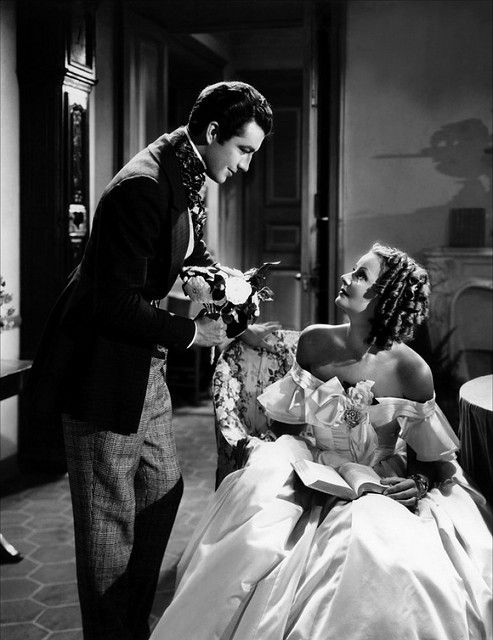
This gown was my favorite.


I know this is a classic Greta Garbo performance, and I suppose she does a good job.  I just… don’t care.  You could have the finest performance in the world, but if it’s as the tragic romantic heroine of the latest Nicholas Sparks adaptation, I’ll avoid it like the plague. 

I don’t know what else to write.  I’m coming up a few hundred words short on this particular film, but I don’t care.  I can’t think of anything else to say.  So utterly and completely not for me, yet at the end of the day, I recognize why many enjoy this kind of “romantic” escapism.  Despite me railing against it here, I know that this is mostly due to my personal taste in romance.  Really, Camille is a perfectly acceptable film.  It’s just not for me.

Arbitrary Rating: 5/10.  I don’t care.

Sunday, June 2, 2013

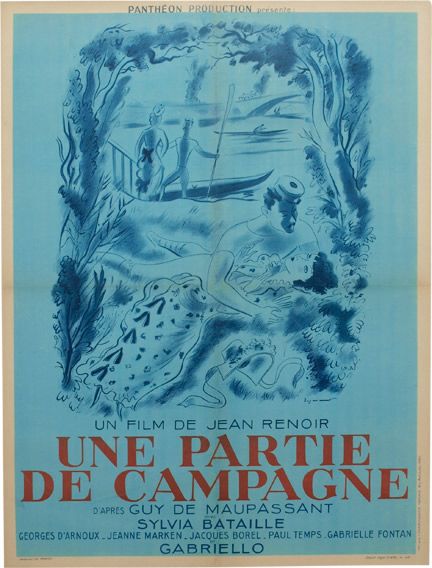
A Day in the Country (Une Partie de Campagne)


Internet has been incredibly spotty and out for the past few days.  We need a new modem, but can't get one until Monday.  Ugh.  Also - who gets a cold in June?  Apparently I do.  What the hell, body?


A Day in the Country
1936
Director: Jean Renoir
Starring: Sylvia Bataille, Georges D’Arnoux, Jacques B. Brunius, Jane Marken

What is it about Jean Renoir that he can, even with an unfinished film, so deftly strike at such powerful, soulful poignancies?  A Day in the Country was abandoned by Renoir and is clearly incomplete, but he manages to still stir feelings of passion and tragedy in a simple story.

  
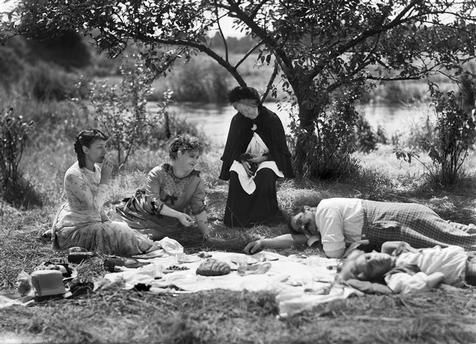
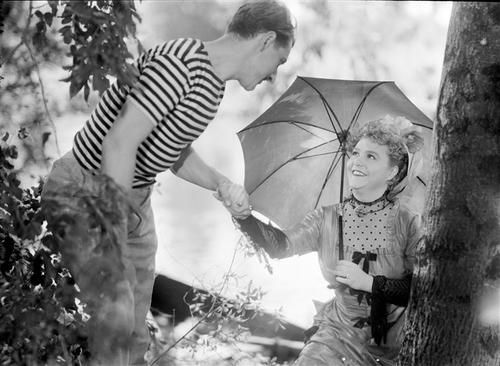
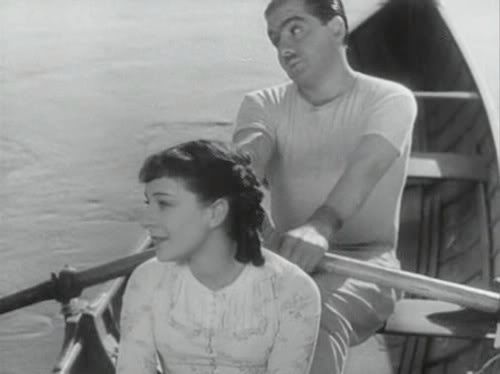
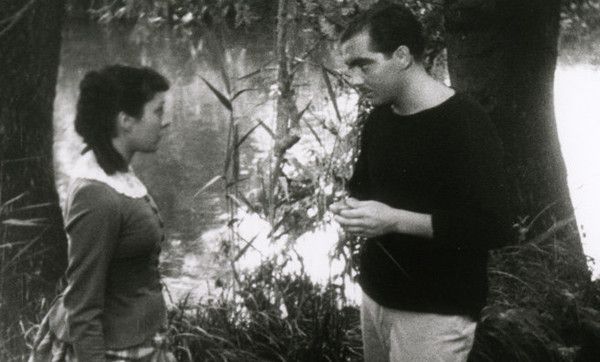
Henriette (Bataille), a young shopkeeper’s daughter from Paris, accompanies her parents, grandmother, and, we learn, her future husband Anatole, for a day in the countryside.  Her family picnics under a cherry tree where they are spied upon by Rodolphe (Brunius) and Henri (D’Arnoux), two young boaters.  Rodolphe and his crazy moustache sets his sights on seducing Henriette and her mother (Marken) by luring them away from the others, and Henri, rolling his eyes at his friend’s antics, comes along for the ride.  But soon Henri and Henriette cannot deny their attraction for one another, and a boat ride alone leads to romance.  These are only moments of happiness, however, as Fate has other plans for Henri and Henriette.

 
It’s remarkable how in a brief, unfinished film of only 40 minutes, Renoir manages to make me care far more about his leading couple than any romantic comedy from the last 15 years has done.  Undoubtedly Renoir makes me care so much because of who he surrounds Henri and Henriette with; namely, some of the silliest characters to ever grace the screen.  Everyone except these two are essentially cartoon characters.  Henriette’s father and Anatole look like Laurel and Hardy, as dad is a blundering buffoon and Anatole is a pasty incompetent.  Henriette’s mother isn’t any better, fluttering around and having fits and flirting with anything that crosses her path.  Rodolphe’s personality is made infinitely clear by the fact that he wears a mask to protect his moustache while he’s eating.  After that, it’s no wonder that all he can think of is having a “bit of fun” with Henriette.

  
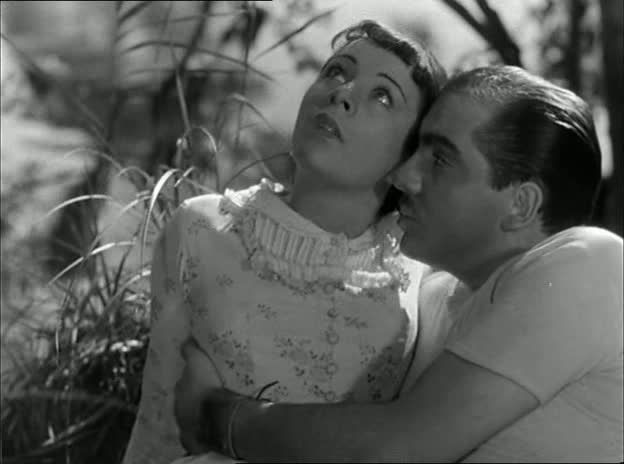
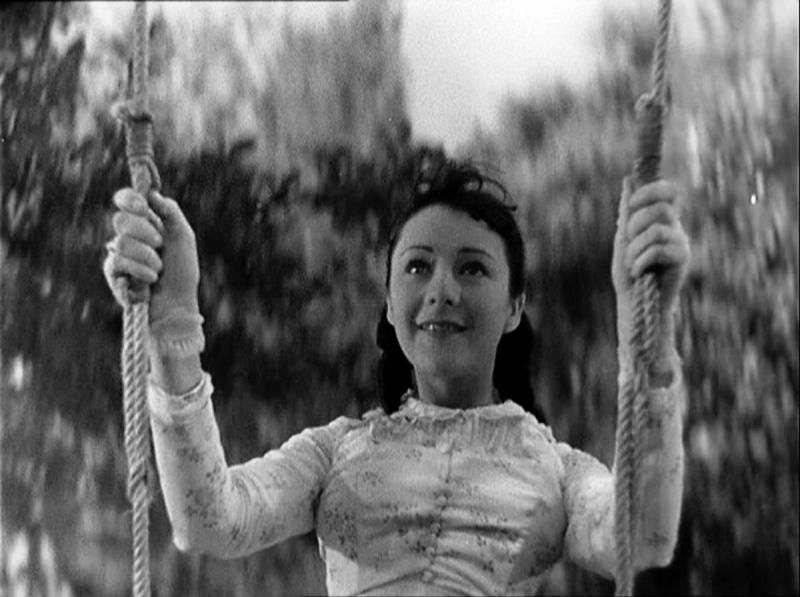
With so much cartoon silliness around her, Henriette immediately stands apart from her family.  Her wide-eyed joy with which she greets the country is different than her mother’s simpering.  She is drinking the country in, overwhelmed at its juxtaposition with the urban life she knows.  The happiness she exudes while playing on the swings is not the same as her mother’s fussy giggling, this much is clear.  The same goes for Henri.  I get the feeling he’s only friends with Rodolphe because it’s convenient, and not because he likes him at all.  Henri listens to his friend talk about conquests and ignores it.  When Rodolphe suggests Henri distract Henriette’s mother so he, Rodolphe, can make time with Henriette, Henri goes along with it more to shut him up than anything else.  Henri is serious, the antithesis of the superficiality of everyone around him.  But as soon as we see Henri and Henriette side by side, it is clear that they belong together.  They have to be together.  It’s utterly necessary.

 
And herein lies the tragedy of the film.  We learn right from the very beginning of the film that Henriette will eventually marry Anatole.  That’s important, because there is a sense of sadness right from the beginning, knowing that her fate is not with Henri.  When Anatole is quickly shown to be a useless clown, the happiness that we see in Henriette’s face takes on a different tone.  Rather than being happy for her for having this day in the country, I felt immensely sad that this was a one-off occasion, a day of bliss not likely to be repeated.  With a few brief scenes of Anatole being idiotic, it is all too clear what Henriette’s future will be. 

 
And this makes Henri and Henriette finding one another for the briefest of moments so important and so romantic and so tragic.  Normally I am not a huge fan of tragic romances – I prefer my romances to end happily, thank you very much – but Henri and Henriette were too soulful, too perfect for me to not fall in love with myself.  Renoir has this effect on me.  He goes to a similar place, although not with romantic lovers, in The Rules of the Game, by so tragically speaking of unrequited love and class differences.  A Day in the Country is similar in terms of his ability to uncannily peel back the outer layers of a story to get at an incredibly sad universal truth.  

  
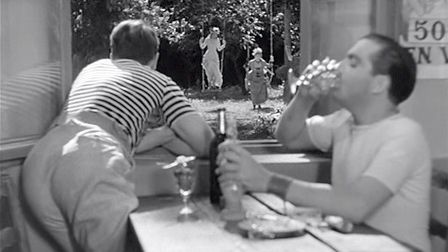
In terms of the filmmaking, although I cannot be certain, the beginning of the film feels far more finished than the end.  I wouldn’t be surprised if the unfinished portion is the second half.  The opening is full of joy and happiness and bright sunlight.  A nice moment is when Rodolphe throws open the shutters of a window to see Henriette playing on the swings.  Music erupts from nowhere, and it’s pure joy – and pure Renoir.  The finale, full of wistful regrets and what might have been, feels far too hasty and slapped together, and here is where it’s clear the film is unfinished.  However, this fact doesn’t keep the story from being any less powerful.  

  
I like romantic movies, but my taste in them is a little different from most.  To me, A Day in the Country hits an almost perfect note of brief joy and lifelong sadness.  I admit right now, I find it utterly romantic.  Oh, Henri and Henriette, why couldn’t Renoir have found a way to give you a proper length film?  I so badly want to see more of them, more of their day together, or more of their brief reunion.  But I can’t.  I only have this, and it’s not even available on DVD.  Something’s better than nothing, I suppose.  I’ll choose Renoir’s take on romance any day.

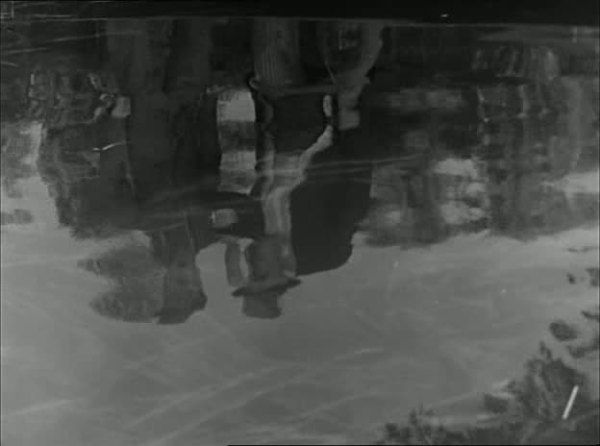
The second meeting.
  
Arbitrary Rating: 9/10.  High?  Yes.  But that is how strongly I fell for Renoir’s story of Henri and Henriette.  It’s a fragment of a tale, but when it’s got the goods, it works for me.