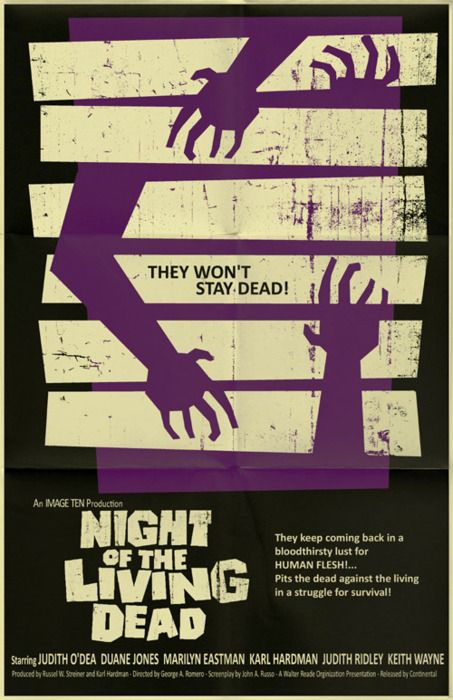
Night
of the Living Dead
1968
Director: George A. Romero
Starring: Duane Jones, Judith O’Dea,
Karl Hardman
So
I’ve been incommunicado for the past few days.
Why? Because my friend Angie came
to visit me. Who cares, and why are you
telling us, you might think. First of
all, I have been online friends with Angie since 2006 but this was the first
time we’ve ever met in “real life,” (AND IT WAS AWESOME AND AMAZING AND FULL OF
FANGIRL FLAILING) so that was significant, but Angie also came to visit for a second
specific reason. Angie was into zombies
before zombies were de rigueur. Angie
wrote her undergraduate thesis on socio-political constructs in zombie
films. Angie is THE expert in all things
zombie. And the Dryden screen Night
of the Living Dead this past weekend.
Thank
you, Dryden, for bringing my friend to me and allowing us to meet and talk about
classic zombie films in person.
The
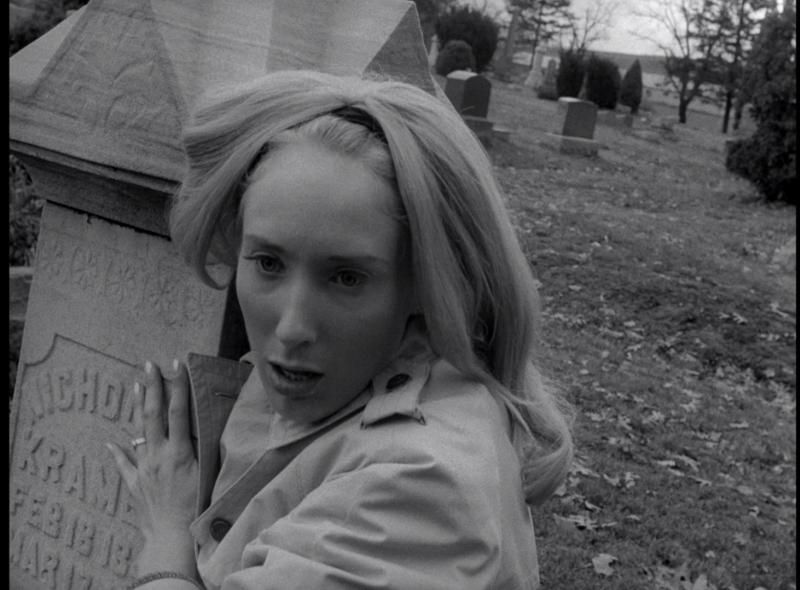
story of Night of the Living Dead is straightforward. A young woman, Barbra (O’Dea), is visiting a
cemetery to put flowers on her father’s grave when she sees a slowly moving
body coming towards them. The thing
kills her brother and Barbra flees for the safety of a nearby farmhouse, where
she is quickly joined by Ben (Jones).
Ben barricades the house and has phenomenal survival skills, especially
compared to catatonic Barbra. They are
eventually joined by a handful of other survivors and tensions rise among the
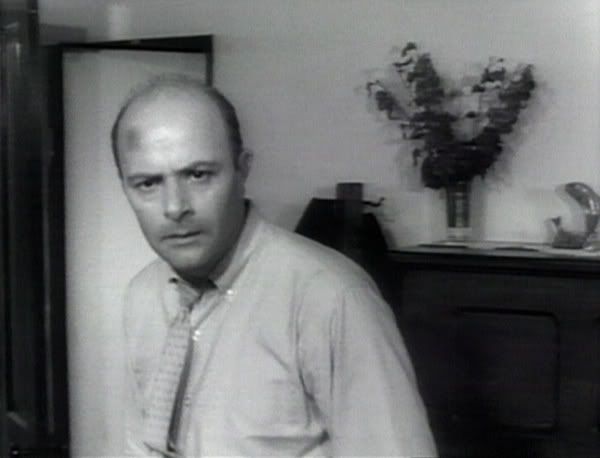
group when Cooper (Hardman) clashes continually with Ben. Details of the reason for what we now call a
zombie attack slowly leak to the people in the house. Can the group survive the night?
So
much of what makes Night successful comes down to its resolution, so I will say
right now that if you are somehow, amazingly unspoiled on this horror film
classic, stop reading then go watch the movie.
It
is very difficult to overstate just how significant this film is in horror
movie canon. I am not a horror movie
buff, I seldom choose to watch horror movies (because I’m a wimp at heart), but
I’ve seen many of the “significant” horror films thanks to 1001 Movies
and I feel like I have a decent grasp on the evolution of the genre. Just as the French New Wave revolutionized
standard Hollywood filmmaking in the late sixties, the effect of Night
of the Living Dead was to take so many “standard” classic Hollywood
horror tropes and rip them up, spin them around, and usher in a new philosophy
of fright. When you tack on the
staggering fact that Romero also manages to make this into an insidious
socio-political commentary, you’ve got something that is nothing short of
game-changing.
Consider
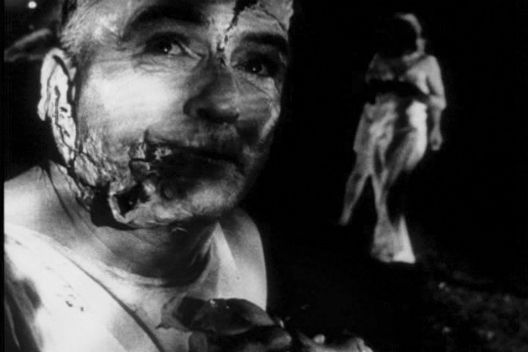
first how Night compares, in terms of sheer concept, to the “monster
flicks” of the thirties, forties, and even fifties. Instead of posh sets and elegantly articulate
actors, realism (due to budget constraints) reigns supreme. This is not a monster pic in the world of
some gothic Victorian village, this is real people in the real world facing a
threat. Although I very much enjoy Lon
Chaney Jr.’s The Wolf Man in particular, Night refuses to create that
kind of posh, elegant horror movie. What’s
more, consider the threat itself. Angie
is always quick to point out that zombies have a significant distinction from
other classic horror monsters in that zombies are ourselves. Vampires, Frankenstein, werewolves, these are
all horror monsters that have some element of separation from humans. But zombies, ah, they are different. As Night eventually says, anyone who
dies during this zombie attack from any cause will then turn into a zombie
themselves. Even setting itself apart
from the monster films of the fifties like The Blob and Them!, with whom Night
shares the concept of some sort of foreign attack closing in on a group of
characters, the central threat in Night cuts a little too close to
home. Zombies are not killer ants from
outer space, they are us. They are humanity
itself. Current settings and a monster
threat that manages to be both supernatural and too close for comfort at the
same time rewrote many of the rules for classic horror.
To
me, this is interesting from a historical aspect, but what makes Night
even more significant is its tone. Yes,
there had been monster invasion movies popular in the fifties, but none of them
had the streak of utter, unrelenting nihilism running through them that Night
has. Our group of survivors in the
farmhouse numbers seven total (Ben, Barbra, Cooper, Cooper’s wife, Cooper’s
daughter, and young couple Tom and Judy), and not a single damn one makes it
out alive. What… what is going on
here? What did Romero do? That’s not right. We’re supposed to have at least one member of
our band of gallant fighters live through the night. Sure, we might not expect everyone to survive,
but we certainly don’t expect everyone to die.
Even by today’s standards, killing off every damn one of our protagonists
is a gutsy move. It’s a game changer. “You can’t do that,” someone must have said
to Romero. “Watch me,” he undoubtedly
replied.
It
is this unrepentant nihilism that completely changed my perception of Night the
first time I watched it. I remember
watching it through, unspoiled, with a sense of “Well, this is nice. I can somewhat see why this movie is a big
deal. It’s fine.” The film reached its climax and Ben
survived. “Great, cool, Ben survives,
alright, movie over, large death toll but we have the survivor.” Nope.
When Ben died, it was one of the few moments in film that actually made
me gasp and clap my hands to my mouth. I
couldn’t believe that had just happened, and in that one brief, cruel moment, Night
of the Living Dead went from “nice” to “yeah, okay, WOW, I *completely*
understand why this movie is a big deal.
Holy crap.”
And
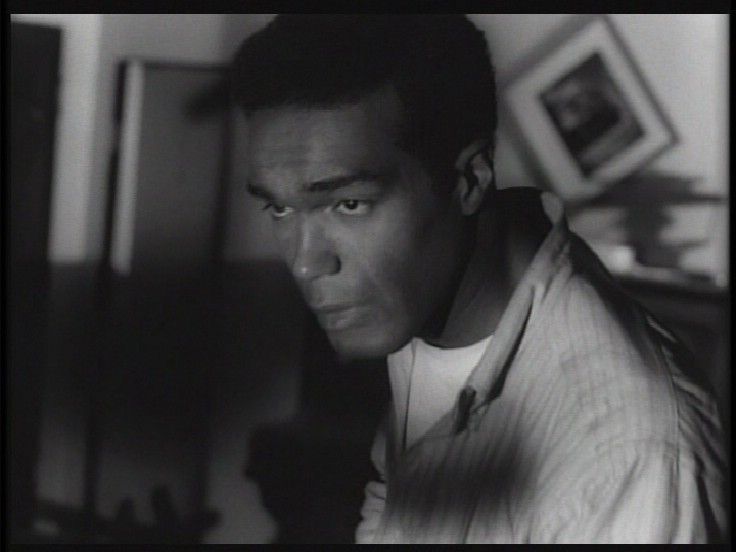
speaking of Ben, how can I not. Famous
for casting a black man in a movie filled with white characters and without the
intention of making him black (Duane Jones simply gave the best audition, Romero
said) is nothing short of groundbreaking.
Making that character the most resourceful and level-headed person in
the film, even better. And then unceremoniously
shooting him in between the eyes, killing the character not by zombie attack, which
Ben is smart enough to survive, but by the rescuers who assassinate anything
that moves, is nothing short of heart-wrenching. I cannot imagine living in an America in 1968
that had just lived through the assassination of Martin Luther King Jr. mere
months prior to having Night unleashed on them. Racial tensions were notoriously high, and
along comes a horror film, of all things, that zeroes in on them and splays
them across the screen for all to see. As
my friend Angie knows with far more authority than I, Romero is a director
dedicated to providing positive portrayals of both women and people of color in
his films; he just happens to make his profound social statements through the
medium of zombie films instead of academic articles. The discontent of the American populace is
somehow distilled down and incorporated, making the horror film not just
mindless entertainment but a gauge of public attitudes.
Although
filmed on a scant budget and looking like it (with some gawdawful performances,
as Angie was constantly sniggering at Tom and Judy), Night of the Living Dead
retains its power over time through its innovative storytelling and its
fearlessness to confront social issues. Although
it might perhaps seem formulaic for a zombie film by today’s standards, you
must remember that this is the film that WROTE that formula. It’s not formulaic if you invent it yourself. This is a film that deserves its place in
history.
Arbitrary
Rating: 8/10
PS
– ILU, ANGIE!!!!!!!!