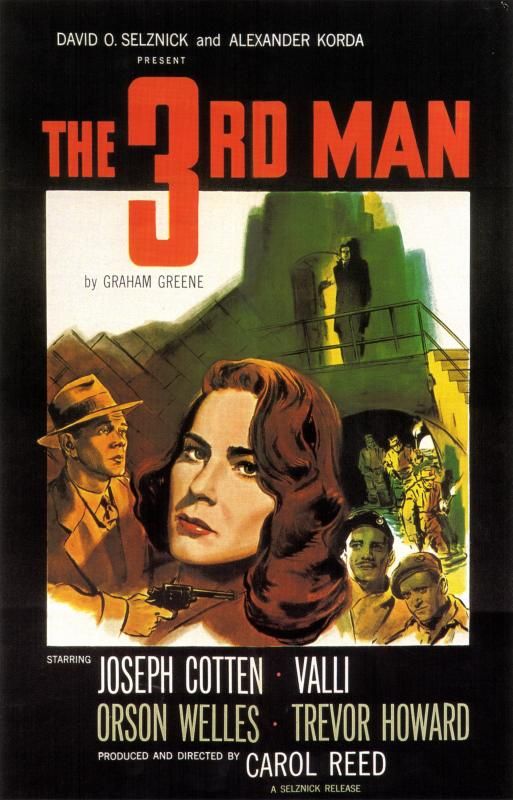
The
Third Man
1949
Director: Carol Reed
Starring: Joseph Cotten, Alida Valli,
Orson Welles, Trevor Howard
My
blog friend Jay from Life vs. Film has a category of film he calls “Guaranteed
Happiness.” It’s a great tag, and one I
think I just might have to adopt, especially for films like this one.
Because
seriously, ladies and gentlemen, cogency escapes me when dealing with something
so utterly sublime, so painfully perfect, so completely flail-worthy as the
fantazmoniousness (yes, that’s a made up word from my college days) of The
Third Man.
The
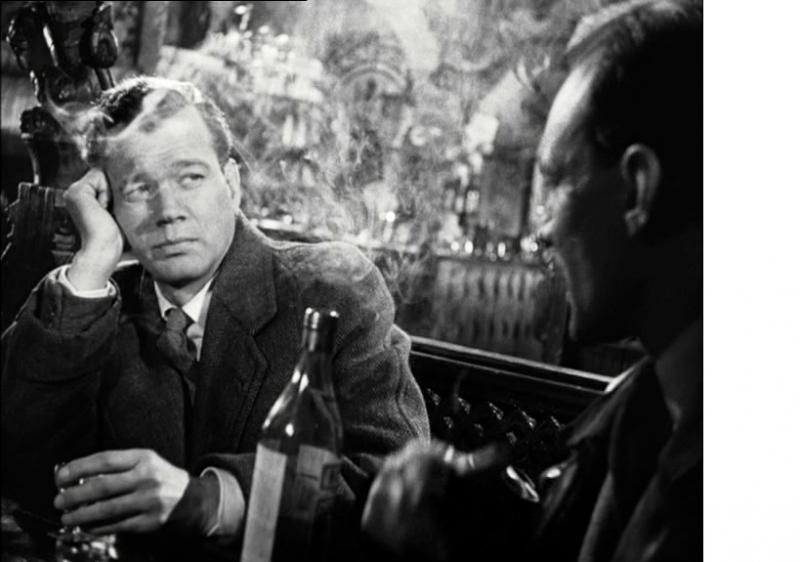
somewhat labyrinthine story focuses on Holly Martins (Cotten, a name that
autocorrect refuses to recognize), an American pulp novel writer who heads over
to 1949 rubble-strewn Vienna in order to get a job from his old friend Harry
Lime (Welles). Trouble is, though, as
soon as he shows up, he’s told that his friend Lime has died under rather shady
circumstances. Not only has he died, but
the British Major Calloway (Howard) informs Holly that Lime was a crook who was
running penicillin on the black market.
Not at all certain who to believe, things get more complicated when
Holly falls in love with Lime’s mourning girlfriend, the actress Anna Schmidt
(Valli) who thoroughly believes Harry was a good man.
Seriously,
I don’t know where to begin. Photography! Characters!
Music! Thematic elements! TOO MUCH!
Suffice it to say, this movie inspires such overwhelming feelings of
love and adoration that it has rendered me imbecilic.
 |
| adskjfai;oewjraio;h. That is all. |
I
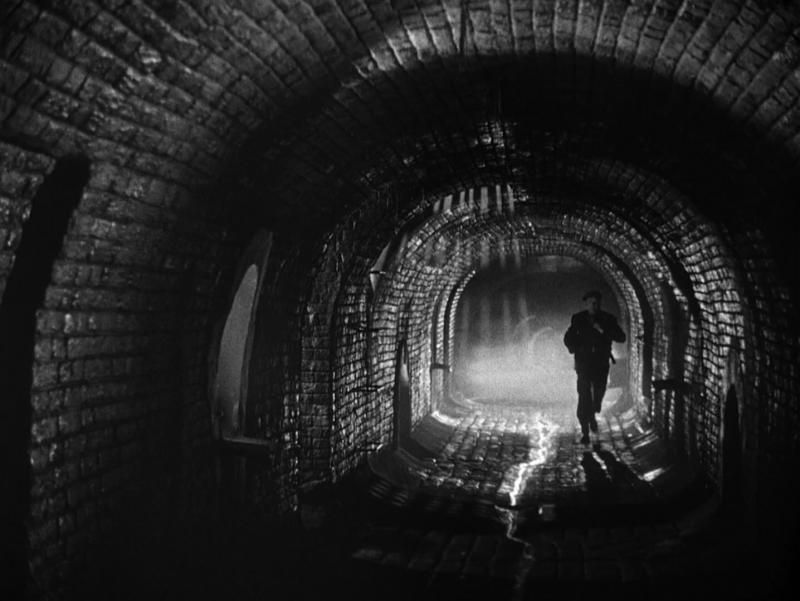
guess I’ll start with the first time I ever saw part of The Third Man. It was right around the time I was
considering making an effort to see the films from the 1001 Movies book;
I had purchased the book, but had not yet committed myself to it. On a lazy Sunday, I was flipping through
channels and the final sewer chase sequence was on Turner Classic. It made me stop. It made me gasp. I watched, enraptured, such black and white
photography the likes of which I had never seen before. To say I was stunned would be putting it
lightly. The photography of this film went
a long way towards convincing me that I should embark on the 1001 Movies
journey.
Because
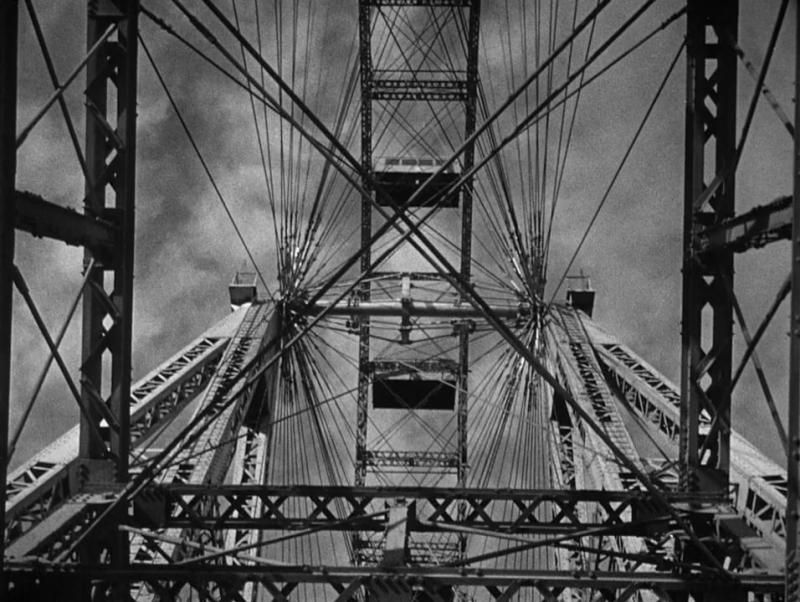
fuck, this is a pretty movie. I dare you
to find two back-to-back shots that aren’t canted at an angle and I find that
exciting, thrilling even. Reed goes to
town with the sense of disarray throughout the entire film, constantly skewing
shot after shot. When you combine this
with the beautiful shadow and light play, this is some brazenly constructed
cinematography, and I cannot get enough of it.
I hold my breath during certain shots in The Third Man because
they’re just too gorgeous. Not only are
the shots skewed, but they are filled with a heady mixture of gothic romantic
architecture and rubble. Some of the
characters live in formerly luxurious apartments that are no longer furnished
because of the war. There are cracks in
the plaster and repair equipment everywhere.
There’s something about the combination of destruction and luxury that
seems so illogical, yet it works.
It’s
also the little touches that put The Third Man over the edge for
me. Things like the fact that the head
of the Culture Committee that invites Holly Martins to speak is constantly
subtly trying to shunt his mistress to the side. The young boy with the ridiculously cherubic
face accusing Martins of being a murderer.
The blind balloon salesman and his important walk. The fact that a significant conversation
takes place at an old amusement park.
The slimy guy with his stupid little dog that nevertheless rarely leaves
his side. The police sergeant who loves
Martins’ novels because they’re easy to put down. The fact that no one seems to be able to get
a name right to save their lives.
“Vin-kel,” Professor Winkel repeatedly tells Holly. Callahan instead of Calloway. Anna even calls Holly Martins “Harry” in one
scene. The richness of the details in The
Third Man goes a very long way for me.
The
confusion in names is related to the setting of the film, a war-torn Vienna
that is occupied by four countries at once.
Vienna is a necessary character in the film; this movie would not be the
same were it transplanted to any other place or time. No, this is 1949 Vienna, and it MUST be 1949
Vienna, set in a world where there is confusion on an international level and
no one quite knows what’s going on. The
French, American, British, and Russian sections all have their own quarters of
the city and no one speaks each others’ languages; Harry Lime and associates
took advantage of this fact to run their black market operations. This movie NEEDS the rubble and confusion next
to the centuries-old cathedrals.
The
score. The goddamned music. Best movie music ever, or best movie music
ever? No movie score is like the score
to The
Third Man because the music makes no sense when combined with the plot,
BUT THAT IS ITS GENIUS. The score here
does NOT serve to emotionally underpin key scenes or lines, but instead simply
contributes to the sense of Vienna. A
nonstop run of carnival-esque zither music, of all things, plays throughout The
Third Man, and it’s perfect. I
love how it goes against any and all expectations of what a film score is or
should be. And yet, because it’s so
utterly Viennese (Anton Karas was, for all intents and purposes, a street
performer before he recorded the music for The Third Man), the music goes such
a long way in immersing me in the foreign and uneasy world of Vienna. For three years, the main theme was my
ringtone on my phone, that’s how much I love this music.
But
beyond the superficiality of the film, there is a fascinating and immensely
complex morality play going on in The Third Man. Holly Martins is the de facto “hero,” but he
is so, so far from this role. As an
American dime novelist who writes cheap westerns, undoubtedly full of Good Guys
in White Hats and Bad Guys in Black Hats, Martins doesn’t understand shades of
grey, and he just walked into the greyest city in Europe. He doesn’t understand why Anna, who seems
nice enough, could love the criminal Harry Lime after he learns of Lime’s black
market dealing. He doesn’t understand
how his friend could have entered into the black market at all. What’s so clever about The Third Man, though, is
that the movie makes it clear to the audience how both of those things could
have come to pass. A speech about how we
do not judge countries who commit atrocities in war, killing millions, and yet
spread about some diluted penicillin and you’re the devil himself. Is that a fair judgment? No, it isn’t, but Martins has trouble with
this. He’s far too tunnel-visioned, and
his dime novel sense of morality and justice does nothing in The
Third Man to bring him joy; instead, it divorces him from everything he
thought he cared for. When you add in
the fact that he is constantly appearing to be the fool – bungling a speech,
mucking up friendships, getting bit by a pet bird, even falling down and
generally being clumsy, we have a hero who is really anything but. Not a hero, no, but a fool, a dunce, who
thinks he knows everything and in reality knows nothing.
Everyone
else, however, is far more world-weary and cynical, having adapted to living in
the moral ambiguity of post-war Europe.
Major Calloway is an interesting study; he’s the character closest to
the side of right, but I would hesitate in actually calling him virtuous. He’s got a tough job to do, and he’s more than
willing to subvert justice to get his way.
Watch how he plays Anna, then plays Holly, to get his man. He’s not concerned with the fact that Anna is
in Vienna on false papers and the daughter of a war criminal; he’s more than
willing to ignore this to get his way.
Unlike Martins, he’s incredibly aware of the moral grey area and isn’t
afraid to dip his toe in. He’s a great
foil to the baddies in The Third Man.
And
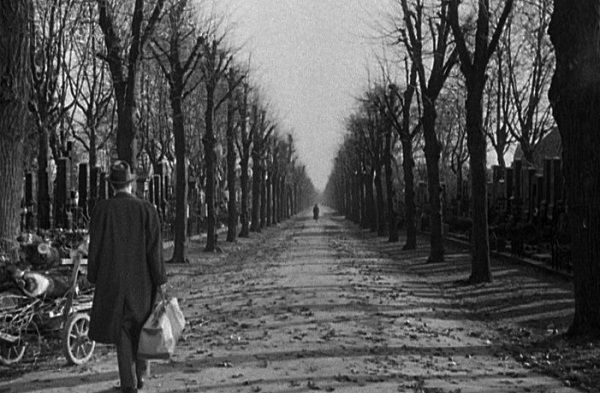
then there’s Anna. She might be one of
my favorite female film characters of all time.
Completely full of flinty determination, she is a pillar of strength and
sadness. It’s easy to understand why
Holly becomes infatuated with her, but I love her all the more for sticking by
her man and not making eyes back at Holly simply because he’s there. She could never love Holly, he’s far too
simple, and the deliciously powerful final shot of the film confirms this (I LOVE
THAT SHOT JFC!). She is loyal to Harry
despite Harry’s many flaws because, well, he’s her man. And she’s no angel. She’s in a tough situation, but she will get
herself through. Anna’s a survivor. I love her for that.
Giddy. This movie makes me giddy. It’s brilliant. It’s fantastic. It has one of the BEST reveals in all of
cinema (one that I have, on several occasions, made my rather bored husband
watch over and over and over). It’s got
a gutsy and perfect final shot. The
music is divine. The cinematography is
heavenly. The characters are
intriguing. This movie, man. This movie.
This is what movies are all about.
Arbitrary
Rating: 10/10. Because duh.


