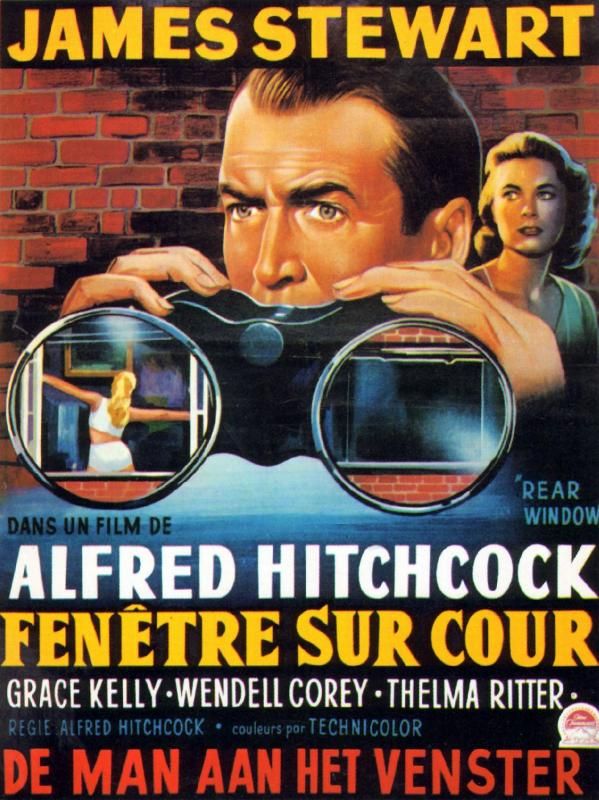
Rear
Window
1954
Director: Alfred Hitchcock
Starring: James Stewart, Grace Kelly,
Thelma Ritter, Raymond Burr
Before
I had ever laid my eyes upon a single Hitchcock film (and I shamefully admit I
hadn’t seen any of his work prior to working my way deliberately through 1001
Movies), I really had no idea what he was about as a director. I vaguely thought he made scary movies,
predecessors of movies like Friday the 13th. Now, having seen all of Hitchcock’s films
from 1001 Movies and a handful of others to boot, I honestly don’t know
if I’d describe any of them as “scary.”
And Rear Window certainly isn’t frightening. It’s got moments where it’s tense and moments
where it’s thrilling, to be certain, but not scary. But, despite my expectations being completely
wrong, I think I fell in love with Hitchcock’s Rear Window the most
because it’s so many things. It’s funny,
it’s compelling, it’s sexy, it’s tense, it’s thrilling… it’s all of these
things, none of which I initially expected, and all of which work and blend
together perfectly.
“Jeff”
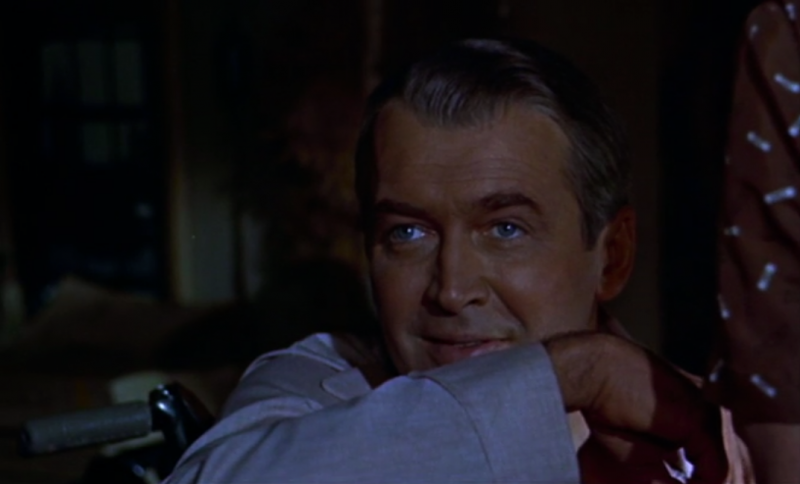
Jeffries (Stewart) is an action photographer who travels the world. Unfortunately, he’s currently recuperating in
his Greenwich Village apartment waiting for his broken leg to heal before he
can get out on assignment again. He’s
driven crazy with cabin fever, but his fashion model-slash-socialite girlfriend
Lisa (Kelly) is thrilled that Jeff is homebound for awhile. She’s desperately in love with him, but he
isn’t sure their lifestyles are a match.
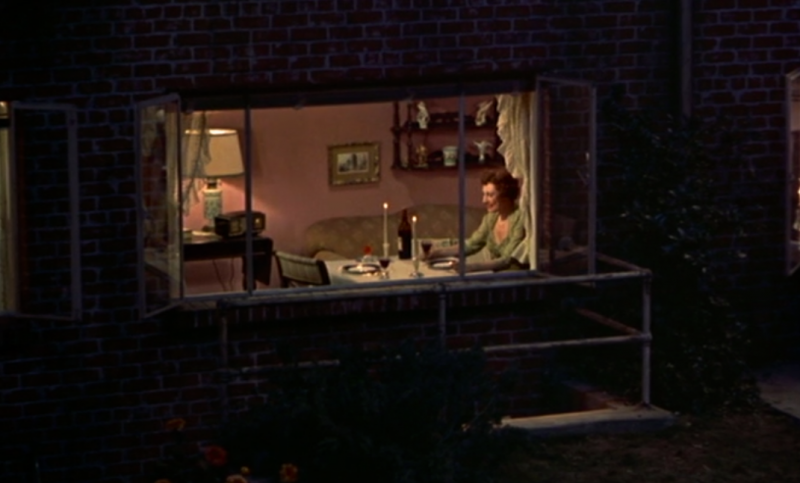
Soon, though, Jeff gets distracted from his relationship woes by
watching the lives of his neighbors across the courtyard of his apartment
building. His interest turns into an
obsession when he thinks he sees his neighbor across the way (Burr) murder his
wife, but did Jeff really see what he think he saw?
My
heart bursts with adoration for this film.
It’s so good. All of it, it’s so
good. So, gosh, what can I say about
it? I guess I simply have to enumerate
the bits about it I love.
1.
Jeff
and Lisa’s relationship. Smack dab in
the middle of the stultifying 1950s, Hitchcock manages to present to us a
complicated relationship between two strong-willed people. I sense that Jeff’s instincts are correct,
that he and Lisa are fundamentally different people, and that if they were to
marry, those differences would ultimately prove very difficult to
overcome. At the same time, however, there
is a great love and attraction between them.
Lisa is hopelessly in love with Jeff, and cannot break herself from him,
despite the fact that at one point in the film, she vocalizes the knowledge
that it probably would be for the best for them to split up.
Add on top of a complicated
relationship the even more complicated arousals caused by Jeff’s, and then
Lisa’s, voyeurism, and Jeff and Lisa grow even more complex. As both are sucked into the soap opera of
Jeff’s neighbors’ lives, he finds himself falling more and more in love with
her. The simple answer is that this has
happened because he is happy to find she has a flaw, but I think it’s more than
that. If Jeff was looking for a flaw in
Lisa’s life, he could have easily found one elsewhere (for one, she’s stubborn
– we see that before she starts peeping at others). No, Jeff has some sort of erotic response to
Lisa’s enjoyment of watching others. I
love the way Stewart smiles, like a giddy little school boy, when he glows at a
gushing Lisa just back from doing a bit of illegal sleuthing. It’s more than a little dirty; it’s messy, as
a matter of fact. Theirs is not a simple
relationship. And the finale of the film
hardly states clearly what will happen to Jeff and Lisa. Will they stay together? Will they split up? Can they find a way to be happy? Their happy ending is hardly guaranteed. I love it.
I love them.

2. Voyeurism. Oh lordy, but Hitchcock knew that deep down,
so many of us like to watch, and he just splashes it up on the screen in broad
daylight in Rear Window. Just like
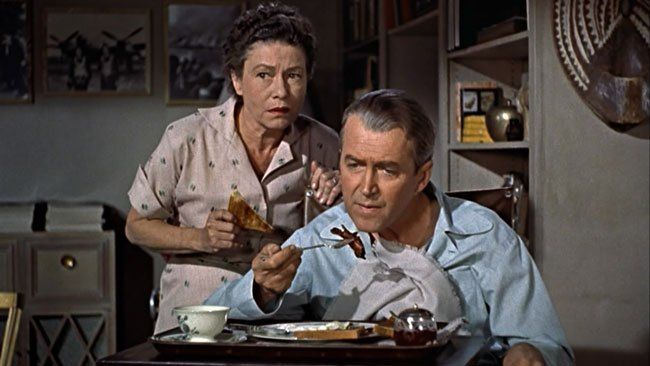
Stella, Jeff’s nurse (played immaculately by Ritter), we judge Jeff at first
for his peeping tom habit. But then, it
doesn’t take us long at all to get completely caught up in the world of others,
and we get annoyed at the “real life people” who try to knock down Jeff’s
theories of what happened to the neighbor’s wife. I can remember being five or six years old
and raising my bedroom window curtain at night to look out at the neighbor’s
house. I don’t know what I was hoping to
see, but I knew I was hoping to see something.
Anything. As Jane Austen says,
“Who are we, but to make sport for our neighbors, and laugh at them in our
turn.” This vein runs deep throughout
the human experience, and it’s both universal and shameful. Voyeurism – Rear Window exploits this
in spades. It’s a fascinating movie
because of it, and it also makes me feel a little naughty. Hitchcock knew this.
The sense of spying is palpable
throughout, but Hitchcock does it smartly by playing Jeff’s subjective
observations against the facts of what we see.
Jeff is quick to link simple observations together with wild conjecture
and we are inclined to believe him, until we remember one vital scene where we
see something Jeff doesn’t see. It’s a
clever inclusion in the film; we are thinking we’re getting Jeff’s first person
account, but this one small sequence is enough to upset that. Can we trust Jeff? Can we trust the crazy stories he’s coming up
with? The only way to answer these
questions, though, is to look more. To
keep spying.

3. The performances. It would be hard for me to come up with a
Jimmy Stewart performance I enjoy more than that of Jeff Jeffries, and I cannot
come up with a Grace Kelly performance I like more than that of Lisa
Fremont. Stewart’s Jeff is likeable but
hardly heroic. He is a bit of a
troubling hero in that the entire film is about his growing obsession, and that
obsession puts him in great danger.
Unlike Vertigo, however, where Stewart’s character crosses a line and
becomes odious to me, Jeff is sympathetic if not a little off his rocker. Stewart is great at playing a bit crazy and a
bit frustrated. Jeff’s injuries also
represent his lack of power and Jeff slowly realizes how vulnerable he really
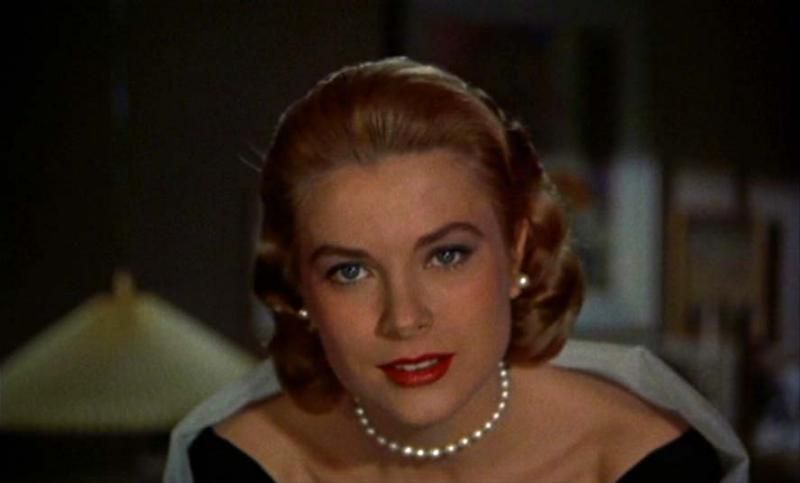
is. Stewart does a great job. As for Kelly, her introduction is downright
breathtaking, as she leans in, glowing and dewy, and plants a slow motion kiss
on Jimmy Stewart. She then gracefully
walks around the apartment lighting lamps as she speaks her name. It’s just a gorgeous film introduction; you
can see how Hitchcock was infatuated with her.
But it’s not just her presentation I love; I love Lisa’s character. I love how strong she is, how daring she is,
but most of all, how horny she is. I
have never seen Grace Kelly so downright into a guy as Lisa is into Jeff. No other director had the guts to give Kelly
material like this one, and I really respond to her performance here because of
it.

4. The many, many changes in tone
that never seem forced or incongruent. Rear
Window is like one gigantic smorgasbord of a film, picking and choosing
and shifting constantly. Because it’s
all about spying on neighbors, there are many different stories taking place at
the same time, and yet it works. Jeff
makes an offhand crack and it’s funny and I laugh. The neighbor across the way, the one we think
murdered his wife, is behaving oddly and I am nervous. The other neighbors from the fifth floor wheel
their dog down to the garden in basket and I am warmed by their eccentricity. Lisa pulls out her slinky overnight bag and I
chuckle at the sexy arousal. But most of
all, I see Miss Lonely Hearts across the way and I am sad. I feel all of these things in Rear
Window – happy, thrilled, nervous, uncertain, scintillated, and melancholic. Hitchcock does none of these feelings
halfway; when he wants you to laugh, you really laugh. The scene is really funny. When he wants you to feel sad, it’s really
sad. The stuff with Miss Lonely Hearts
could have been a movie unto itself. I
feel that storyline with an acute pain; it’s so sad and painful yet beautiful
in its melancholia as well. That
Hitchcock is able to pull all of these feelings together so well, with such
grace, in one film, is astounding.

5.
The
soundtrack. As a fan of classical music,
I always pay attention to music in film.
It’s something I notice and like to think about. Rear Window is so damn smart in its
soundtrack, in that it doesn’t exactly have one. That is to say, there is definitely a
soundtrack, but not a traditional one. A
composer was hired (NOT Herrmann, interestingly enough) but the score he wrote
is one of background noises, because that’s what the soundtrack to Rear
Window is. Given that the entire
story is that of Jeff Jeffries looking out his apartment window in the
Manhattan summer, Hitchcock made a tremendous decision to avoid traditional
scoring and instead rely completely on ambient noise. That’s all we hear. If the other apartments are silent, there is
no background music. If another
apartment is playing music, then there is music. But there is always the distant sound of the
cabs and cars and street sounds. I like
this decision quite a bit; it reminds me of the times I’ve spent in Manhattan
when it’s impossible to escape the noises and hubbub of the world around you.
In
closing, I need to add that Rear Window is a film that everyone
should try to see on the big screen.
There are certain classics that you obviously realize you should take
the chance to see in a theater if it comes up – films like Gone With the Wind, Lawrence of
Arabia, or 2001: A Space Odyssey are no-brainers. Of course you’ll see it on the big screen if
you can. But Rear Window isn’t as
obvious a choice. Several years ago, the
Dryden had a double feature, North by Northwest and Rear
Window (oh boy, that was a great night), and of course I went. I was beyond surprised, however, to discover
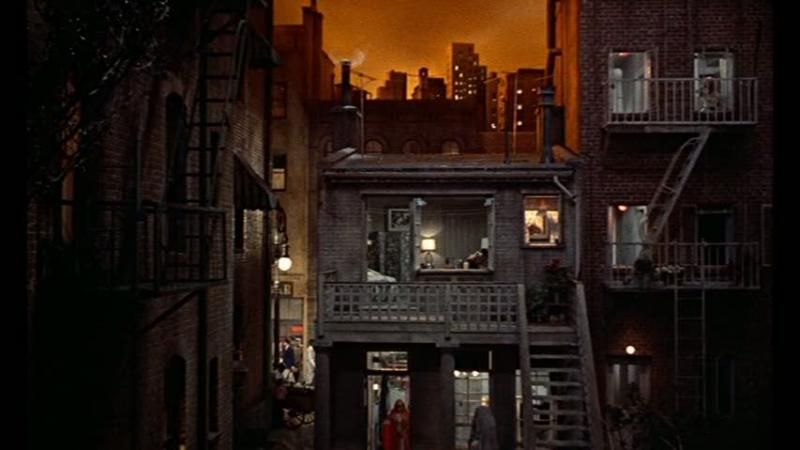
how much Rear Window changed by seeing it in a theater. The major theme of the film, voyeurism, is
amplified to a truly remarkable level with the magnification that comes with
the big screen. You can see an amazing
level of detail in the neighbors’ apartments when watching it nice and big and
blown up. It really reinforces the idea
of peering into someone else’s life, and as such, magnifies the effect of the
whole movie. Honestly, if this is a
movie you at all enjoy, GO SEE IT IN A THEATER if you EVER get the chance. It’s just not the same as seeing it on your
little TV (even if your TV, like our TV, is quite a large TV).
Arbitrary
Rating: 10/10. I never get tired of this
one. Favorite Hitchcock, right here.