Showing posts with label billy wilder. Show all posts

Sunday, December 1, 2013

The Apartment


The Apartment
1960
Director: Billy Wilder
Starring: Jack Lemmon, Shirley MacLaine, Fred MacMurray

If there is such a thing as a perfect film, The Apartment strikes awfully close to the mark.  Full of quiet comedy and a streak of pathos so deep that it seems to become sadder the more I think about it, The Apartment is utterly lovely from open to finish.  It certainly helps that when I think about “my type” of film, The Apartment fits the bill almost to the tee.  I have always preferred what I call “small films,” films that have a story that only concerns a handful of people in a limited number of locations dealing with regular, ordinary, everyday problems.  And while the central conceit of The Apartment is played for ludicrous satire, it is so gloriously small in its scope that I love it more and more each time I see it.  This is my kind of movie.

C.C. Baxter (Lemmon) works in insurance in a big, generic corporation in Manhattan.  He often works late, not because he’s driven but because four of his bosses regularly use his apartment in the west sixties as a trysting place for their extramarital affairs.  Baxter trades his apartment for promotions at work, leading him to ultimately come up before big boss Sheldrake (MacMurray) who has heard about Baxter’s place through the grapevine.  Sheldrake wants to use the apartment as well to continue his affair with cute and perky elevator girl Fran Kubelik (MacLaine).  Thing is, though, that Baxter, has fallen hard for Fran, not knowing she is Sheldrake’s lover.  Fran, for her part, is too hung up on the married guy she knows is no good to pay any notice to Baxter’s earnest attentions.  Things come to a head when Fran is dumped in Baxter’s apartment.

  
While there’s certainly more to this film than C.C. Baxter as played by Jack Lemmon, it can be hard for me to see it.  This central character and this brilliant performance completely make the film for me.  This is my personal favorite Jack Lemmon performance because it strikes such a fine balance between comedy and tragedy.  Lemmon makes me laugh as he watches his typewriter at his desk, nodding his head along with its rhythm.  About an hour later, he breaks my heart as he frantically paces his apartment after finding a comatose Fran lying in his bed.  Neither is played too extreme; Lemmon, definitely known for his hammy comedic talents (and I mean that in the best possible way) never lets his hamminess completely take over the lighthearted scenes.  The opposite is true as well; when the tenor turns more somber, he never dreams of ranting and raving and throwing things around to express his angst.  Instead, it’s all done so perfectly quietly in his face where I can read the depth of sadness and worry he is feeling.  Lemmon makes my heart ache in this film.  He is utterly sublime.

But Lemmon would not be as amazing as he is were it not for the creation of the story itself, and that credit goes to Billy Wilder and I.A.L Diamond.  Lemmon’s perfect blend of funny and heart-wrenching pain comes directly from a story that makes it abundantly clear from the get-go that no one is above reproach.  No heroes, no villains, just regular people making bad choices.  Sheldrake is perhaps the clearest-cut villain from the cast of characters, but even he seems less dastardly and more simply an arrogant man used to getting his way.  There are even moments where I feel sympathy for him (albeit not many).  And Baxter?  I suppose he is the de facto hero, but what I adore about this story is that really, he is not.  Is Baxter a good person?  Well, that depends.  At first glance, yes, you see his earnest interest in Fran and you think, wow, what a nice guy.  You see him throw away what other people think of him in order to take the blame himself rather than incriminate others, and his self-sacrifice seems positively noble.  Indeed, that self-sacrifice is another component of Lemmon’s performance as Baxter that utterly breaks my heart.  But then back it up: Baxter trades his apartment, where he lives, for its use for sexual favors, all in order to climb the corporate ladder.  He has sold more than a bit of his soul, making seedy bargains to work his way to that elusive corner office.  From the very beginning, I yearn for Baxter to finally say “No” to his demanding bosses, his bosses who kick him out on the street at 2am because they met a Marilyn Monroe lookalike (lovely little in-joke from Wilder there), but he can’t.  He doesn’t have the necessary spine to get himself out of the web he’s woven for himself and so simply keeps surrendering to the lewd demands of others.  Baxter, a hero?  Hardly.  I think he is a good man, but deeply flawed, and he must learn to overcome it in some small way.


Opposite Baxter is MacLaine’s Fran Kubelik, another brilliantly written character.  Fran is believably stuck in a toxic relationship that she desperately wants to end yet cannot.  I love that Fran knows in her head that she needs to end the affair with Mr. Sheldrake.  Fran knows this, she says it over and over again.  And yet, her heart won’t let her.  She is in love with him despite desperately not wanting to be.  This makes her sad and frustrated and everything comes to a head.  This sort of situation, of knowing that you SHOULDN’T be in a certain relationship, yet not being able to actually cut and run, this is a difficult situation to believably portray, but I believe it completely in The Apartment.  MacLaine is fantastic and helps me believe that Fran knows better yet can’t find the strength to walk away.  So our two main characters, those we feel should be our heroes, both can’t seem to find the strength to end the morally reprehensible situations they find themselves stuck in.

It is the utter ordinariness of the film that I love as well.  The Apartment is rife with ordinary, everyday touches that make me love it even more.  I love Baxter’s drab little apartment that only grows seedier as the film continues.  I love him unceremoniously lighting the oven and preparing a foil-wrapped TV dinner.  I love him drinking the leftover cocktails from the party as his place.  I love the electric blanket he has to plug in.  I love the simple feast of spaghetti and meatballs he prepares, complete with grated Parmesan from a jar.  I love Fran’s taxi driver of a brother-in-law.  I love her broken compact mirror.  There is no attempt to glamorize the sets in The Apartment, and I love that.  I mean, I really love that.  So gloriously, perfectly ordinary, lumps and all.


There is so much more to The Apartment; the fantastic set design, the gorgeous cinematography, the witty banter, script-wise, and the rampant social commentary running through the film.  All this is great and important, but that’s not why I love The Apartment.  I love it because of its characters, because of their brokenness, because of Jack Lemmon, because of the perfect tiny details, and because it breaks my heart and makes me laugh at the exact same time.  And it’s aged extraordinarily well.  I recently put this on while my parents were visiting, and my mother watched it in spite of herself.  Still engrossing, still wonderful, still relevant, still real. 

Arbitrary Rating: 10/10, ratings-wise.

Friday, May 24, 2013

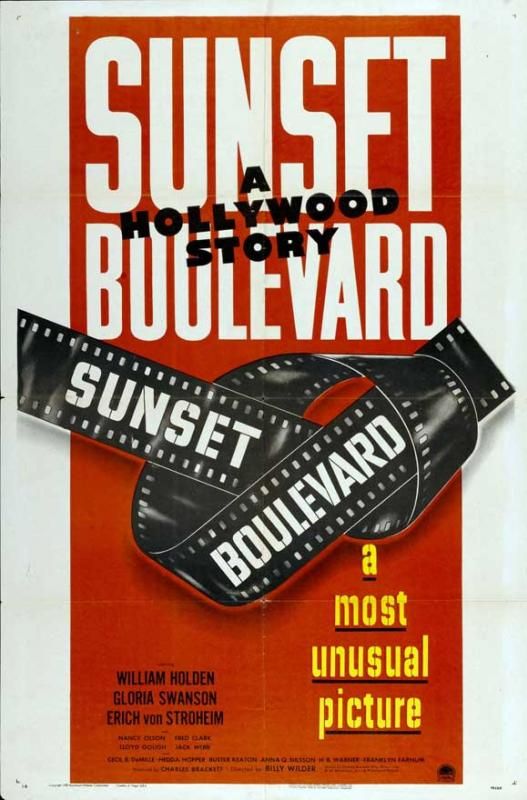
Sunset Blvd.


Sunset Blvd.
1950
Director: Billy Wilder
Starring: Gloria Swanson, William Holden, Erich von Stroheim

Is Sunset Blvd. the most brutally lacerating film made by Hollywood ABOUT Hollywood?  Possibly.  I’m sure, dear readers, that now I’ve said that, you’ve got at least five other films you’re thinking of to prove me wrong, but you’ve got to admit that Sunset Blvd. is an absolutely eviscerating portrait of the filmmaking industry.  And Christ, I love it.

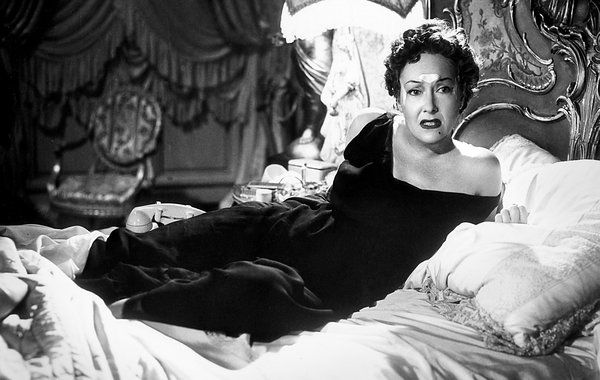
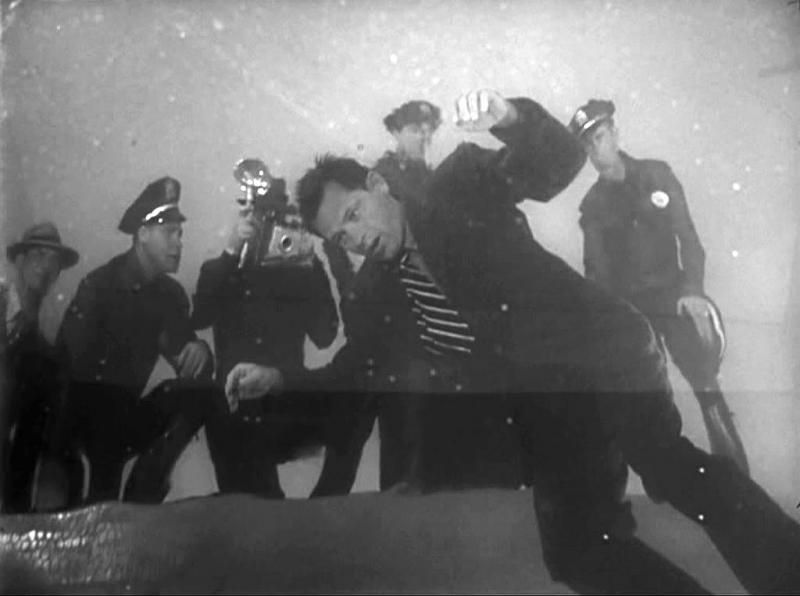
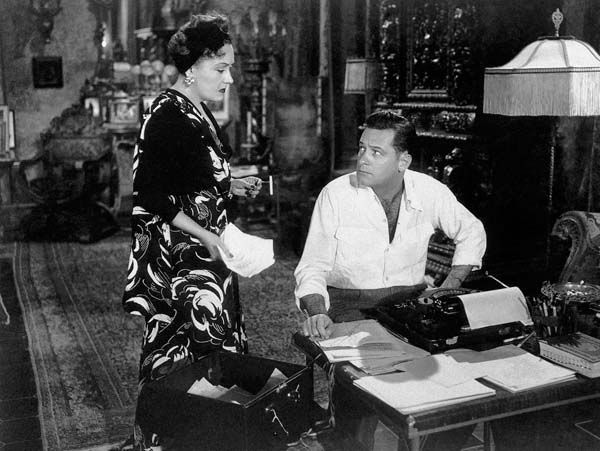
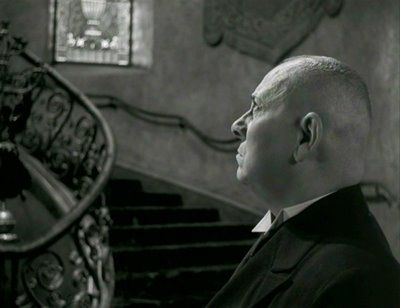
Famously opening with a shot of his dead body floating in a swimming pool, the story is that of Joe Gillis (Holden), a down on his luck screenwriter in Los Angeles who narrates the story of how he wound up dead.  In an effort to evade the repo men, he drives his car one day into the garage of aging silent film star Norma Desmond (Swanson).  Desmond is more than a little eccentric, what with the funeral for her dead monkey, her frankly creepy butler (von Stroheim), and her ridiculously narcissistic view of the world around her (“I am big!  It’s the pictures that got small!”).  She soon ensnares Joe, turning him into a kept man, and Joe goes along with it for awhile, and the two plan Norma’s comeback (“I hate that word!  It’s a return!”).  But Joe can’t live like this forever.

  
There have been plenty of movies made by Hollywood about Hollywood, but Wilder ups the ante on nearly all of them by not bothering to disguise his characters as caricatures.  Oh no, he uses real names, like Zanuck, Ty Power, and “We’re always looking for a Betty Hutton,” and references real films (“You’d have turned down Gone with the Wind!” “No that was me.  I said ‘who wants to see a Civil War picture.’”), and even uses real studios, with most of the action taking place at Paramount, with references to Twentieth Century Fox as well.  Even the main characters in the film are thinly veiled references to the actors who portray them.  William Holden had indeed been pretty hot in Hollywood, but not for some time.  He was certainly down on his luck, and had to convince Wilder to give him a chance.  Gloria Swanson was indeed a silent film star who had not transitioned at all to sound.  Even Erich von Stroheim was playing a version of himself, a former silent film director.  Sure, Holden doesn’t really behave like Joe Gillis, and I’m certain Gloria Swanson wasn’t nearly as crazy as Norma Desmond, but the point is there.  Sunset Blvd. isn’t nearly so much an allegory as a straight up “true crimes” story about the dirty business that is Hollywood.  I love that about this film.  I don’t have to try to guess who each character is supposed to represent, as in the also very good The Bad and the Beautiful, because realistically, everyone is playing themselves, right down to the waxworks of Buster Keaton and Anna Q. Nilsson.  

  
Of all the crazies in Sunset Blvd., it is actually the main character, that of Joe, who most fascinates me.  Clearly, we are meant to sympathize at the outset with Joe, as Norma is, frankly, batshit crazy and does everything in her power to keep Joe within her talon clutches.  But the thing is, Joe isn’t exactly the most sympathetic character in the world.  In fact, he’s kind of a dick.  He acquiesces far too easily to be “kept” by Norma, and he rather shamelessly takes advantage of her wealth.  Sure, you can tell that he’s lost respect for himself when he accepts her expensive gifts or favors, but that doesn’t stop him from accepting them.  Just as much as Norma is using him to help her get back into show business, Joe is using Norma.  It’s an equally parasitic relationship.  This is evident most especially when we are introduced to Betty Schaeffer, a young, pretty script reader at Paramount who Joe eventually starts to work with and develop feelings for.  The best, most noble move that Joe makes in the film is when he shows Betty exactly how far he’s fallen and how much he hates himself.  Joe and Betty’s blossoming romance would never work; he’s too far down the rabbit hole with Norma to make an honest go of it with someone as righteous as Betty, and by bitterly showing Betty his rather ugly side, he pushes her out of his life.  The fact that this is the “nicest” thing Joe does in the film is what makes me easily conclude that Sunset Blvd. is a film noir.  Noirs all have a fatally flawed hero, someone who is good but can’t help himself when it comes to one thing; money, or maybe women, or maybe power.  For Joe, his fatal flaw is clearly luxury.  He can’t help himself but leach off of Norma when given the opportunity.  As much as we are meant to sympathize with Joe getting trapped by crazy Norma, by the end of the film, Wilder has, rather cleverly, slightly turned the tables on us.  Joe is hardly a hero, and Norma actually becomes a bit sympathetic.  For as crazy as Norma is, for as much as Joe complains about being “caught” by her, he is just as much to blame for his downfall.


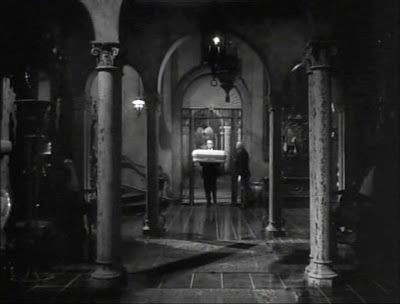
Practically a character in the film in and of itself is Norma Desmond’s estate.  A ridiculous portrait of grotesquerie, Joe Gillis equates it with the house in Great Expectations when he first walks up to it, and the comparison is fitting.  While not quite as full with cobwebs and decay as Miss Haversham’s, it certainly exhibits the same sort of mood.  In Great Expectations, Miss Haversham ensnares Pip and manipulates him, and we have the same sort of relationship between Norma Desmond and Joe.  The fact that this is played out in Sunset Blvd. against a background so stuffed to the gills with ornate, ludicrous luxuries makes the whole story feel unseemly.  You don’t need dirt and grime to make a story feel sordid, oh no.  The set is almost claustrophobic despite the vast expanse of the mansion because no matter where you look, there is some gaudy monstrosity of furniture leaning into the shot, crowding the scene.  It all feels so… so… creepy.  Wrong.  Unnatural.  Which is to say, absolutely perfect for the story at hand.  

  
Honestly, it should go without saying that the script to Sunset Blvd. is sparkling; just look at how many quotes I’ve already included in this review, and I don’t find myself normally including quotes.  Billy Wilder is famous for his screenplays, and when you hear the amazing turns of phrases in this film, it’s easy to understand why.  The great thing about Wilder’s films is that it’s not just great lines, but great lines combined with great stories.  The lines themselves are powerful and potent on their own (“All right, Mr. DeMille, I’m ready for my closeup”), but when you see them in the context of the story, they’re even better.  


Back in my biochemistry grad school days, I had to write plenty of rather wretched research proposals and committee meeting reports.  I remember holing myself up in the basement of the house we were house-sitting in at the time, and putting in either Double Indemnity or Sunset Blvd. (funnily enough, both by Wilder) and putting them on repeat while I eked out the reports on the computer.  It was here, during this fairly crappy time in my life that I learned to love film noir.  It was having these films on repeat, over and over, where I fell in love with the dialogue and the music and the characters and the themes.  I’ve seen Sunset Blvd. more times than I can count, and as sappy as this may sound, I’m glad this movie is a part of my life.

Arbitrary Rating: 9/10.

Tuesday, July 17, 2012

Double Indemnity


Photobucket


Double Indemnity
1944
Director: Billy Wilder
Starring: The immaculate Barbara Stanwyck, Fred MacMurray, Edward G. Robinson

It’s hard for me to write about Double Indemnity because I love Double Indemnity so damn much that I have essentially no capacity to speak about it lucidly or objectively. All I can do is wildly flail my long fangirl arms and screech about how it’s pretty much the best movie ever made. There. I’ve warned you.

Walter Neff (MacMurray, in a non-Disney Dad role) is an insurance salesman who seems to be having a bad night. He stumbles to his office where he dictates a message to his friend and boss Barton Keyes (Robinson). The story he tells is one of meeting Phyllis Dietrichson (Stanwyck) when he was renewing her husband’s policy. Phyllis seduced Walter and convinced him to help her kill her husband and, as you may have already guessed, things head downhill for everyone.

Plain and simple, this is the most perfect film noir ever made. There are so many classic noir-isms that Wilder either establishes or perfects in Double Indemnity: the femme fatale, the fundamentally-good-but-fatally-flawed hero, the shadowy lighting, the sexual power trips, the hard-boiled dialogue, the symbolism, and even the names. Noir has great names, and this movie has some of the best: Walter Neff? If that name doesn’t scream “pushover,” I don’t know what does. You don’t doubt Neff falling for Phyllis and succumbing to her every whim when he has a name like that.