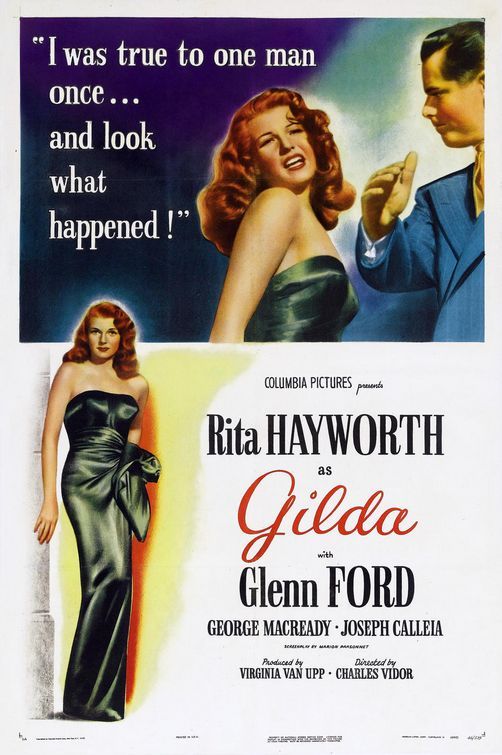
Gilda
Director: Charles Vidor
Starring: Rita Hayworth, Glenn Ford,
George Macready
1946
The
movie that turned Rita Hayworth from a starlet into a star, Gilda
drips with venom-laced sex appeal at every corner. It’s a noir – of sorts – and also provided
Glenn Ford with one of his most iconic roles.
Self-loathing and sexualized hate underpin most of the motives in the
film, and it’s so rampant, so out-of-control, that if this film had a
temperature, it would be too hot to handle.
Johnny
Farrell (Ford) is plucked from his street rat existence by the smart,
sophisticated and wickedly cunning casino magnate Ballin Mundson
(scene-stealing Macready). When Farrell
meets Mundson’s new wife, Gilda (Hayworth), memories of what had to be a
passionate but toxic love affair with the woman in question resurface. Mundson, no fool, sees these sparks of
hate-filled passion fly, and thus begins one of the most venomous love triangles
in all of film.
The
first time we see Glenn Ford, the “hero,” for lack of a better word, he is down
on his hands and knees, anxiously picking up some die from a gambling
ring. Slovenly, underdressed, he is a
ramshackle of a man. He nervously grins
and glances at the shoes that surround him as he collects his dirty winnings as
hurriedly as he can. Farrell will come a
long way from here in the story, but his cheating, soiled, grubby beginnings
will follow him forever. You can clean
the man up but you cannot turn him into a gentleman. He is perpetually reminded of his lowbrow
upbringing; his boss looks down his nose at him; the bathroom attendant
constantly calls him a “peasant.” He is promoted quickly to a manager of
Ballin’s casino, yet he has no real handle on his employees, no sense of
control, no real power. He is not let
into the innermost workings of the place, he is left to wonder about its
secrets. Perhaps, due to his lack of power
in his own life, his pretensions at grandeur, he lashes out by trying to control
Gilda. She is the only thing in his life
– yes, thing – that he can have some sort of power over. This isn’t to say that Gilda won’t fight this
control wildly, but he’ll exert it nonetheless, acting on the frustrations of his
class consciousness, with one of the cruelest fists ever attached to a “hero.”

Once
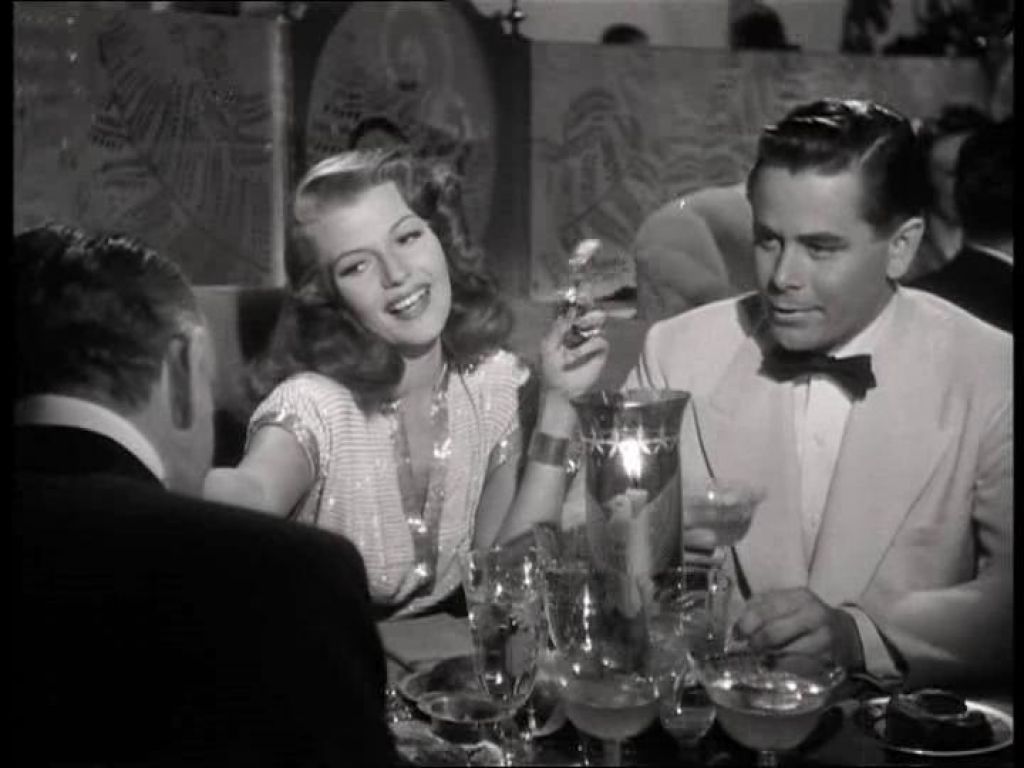
again, Rita Hayworth is inescapably luminous.
I have a burning love for her, similar in nature, I am sure, to many men
of the forties and fifties. She is so
open and yet so unknowable in this film; artless and simple, and yet capable of
cruelty and hate. Gilda is the
quintessential woman who is battered by fate, thrown back and forth and beaten
cruelly by the wills of the two men who, well, at least claim to love her. What sets Gilda apart, what makes her more
than a waif adrift in the wake of fortune, is the fact that this waif has a
backbone. And claws. And, most amazingly for the forties, an acute
awareness of her sexuality. Gilda likes
her husband, and Gilda loves Johnny, yet the world is angry at her and decides
to punish her. She lashes out by viciously
flirting with whatever stupid man happens upon her track. She knows, all too well, that Johnny is still
in love with her, and to get back at him for what is most likely a history of
mistreatment, she decides to torture him.
Torture, slow and acute, not by physical pain, but by sexual
prowess. Pitch perfect when she is
punishing him, this Gilda is counterpointed by the Gilda who never actually
went through with her flirtations, the innocent, open Gilda, the one who
finally admits she still loves Johnny, the one who plaintively sings “Put the
Blame on Mame.” Undoubtedly, this is
what made Rita Hayworth an icon, and this, her most iconic role, for in one
movie, she manages to be both the angel and the whore, and don’t men really
want both?
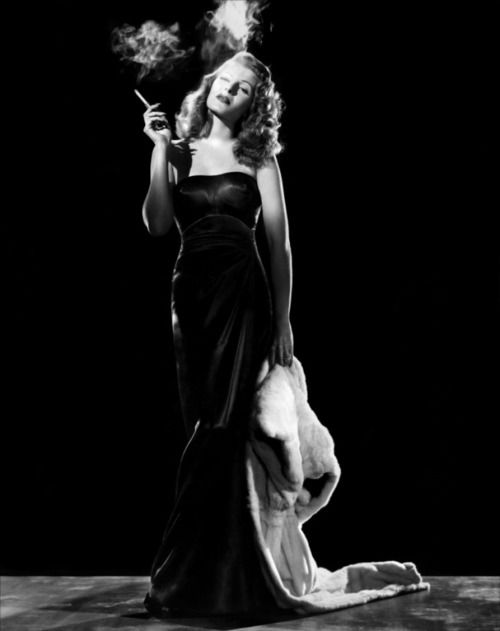

The
misogyny in the film is wildly rampant.
I would even call it the central theme.
Both Johnny and Ballin clearly hate women. Johnny is wildly, passionately in love with
Gilda. So what does he do about it? He calls her vicious names, he ruins her
reputation, he marries her then locks her up in his room. Ballin loves Gilda – well, he certainly likes
her enough to marry her on a whim – and what does he do about it? He uses her as a pawn, pushing her together
with Johnny then taunting the two of them for it. He views her far more as his possession, as
if he went into town one day for some eggs and bought a wife as an impulse
purchase at the register. For all of
this mistreatment, this film still appeals to me (despite my just beneath the
surface rampant feminism) because Gilda is not stupid enough to take it. She’s a smart girl, and when treated badly,
she’ll treat them badly right back.
She’s surrounded by misogynists, yet even though she’s mired down by
their hateful webs, she’s struggling to get out, fighting tooth and nail to
free herself. I just wish that she had
been smart enough in the first place to avoid getting involved with such
horrible men.
The
setting fits in nicely with Hollywood’s South American obsession of the
thirties and forties. In terms of
“exotic locales,” one really couldn’t beat South America at that time. Not actually shot there, of course; why
bother when a backstage will do? Notorious,
Now, Voyager, seemingly half a dozen Fred and Ginger movies, and that’s
just to name a few of the films that viewed South America as some mysterious,
fascinating vacation land the characters could jet off to, escaping their
mundane lives. Gilda is yet another film
looking for some sort escape. In this
film, the escape is from law and justice; the dirty casino needs to operate
outside the boundaries of legal limits and to allow some plot-thickening former
German scientists (re: Nazis) to distract from the central triangle. The lawlessness that abides and the lack of a
judicial system are the intrigues of South America here. The artificiality of the sets, however, so
clearly not in South America, adds to the hyperrealism of the story, somehow
reminding the viewer that this story isn’t real – how could it be? The people are far too vicious.
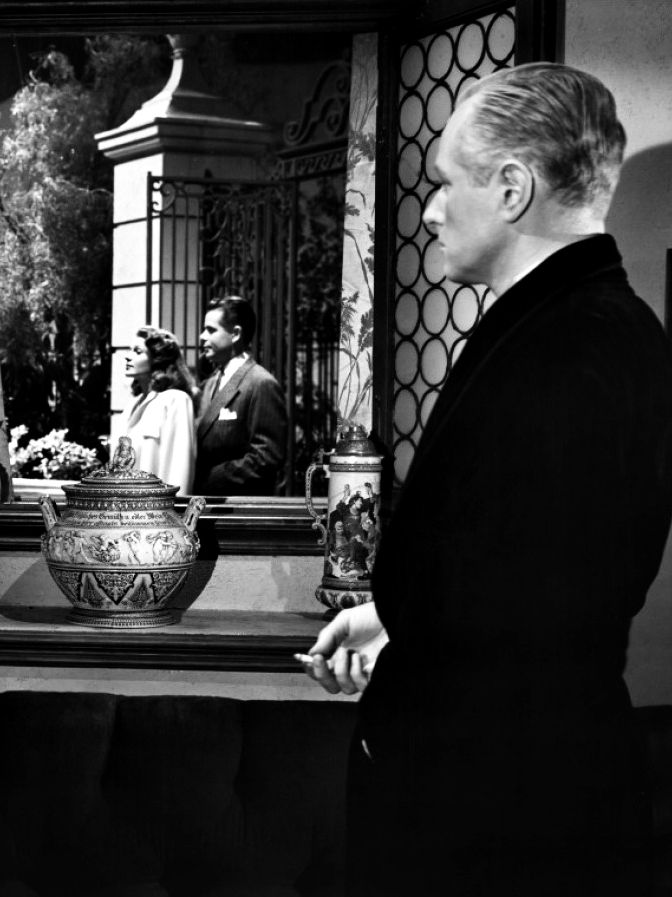
Considered
a noir by some, Gilda is one of those films on the edge of genre classification. It is noir in some aspects, but not all. In terms of characterization, I have no doubt
that this film fits nicely within the genre.
People with horrid motives – money, lust, greed, possession – these are
the people who populate the world of Gilda. In my opinion, you cannot call a film a noir
without these things. Also helping the
argument is the camera work. Not nearly
as replete with canted angles as, say, The Third Man, Gilda does dabble now
and then in the play of shadows and smoke.
In one gorgeous scene, Hayworth, clearly feeling vulnerable and small,
has her head practically obscured by her pillows and hair on her bed, and she
is completely in shadows. When she
speaks, we cannot see her lips moving, so it is as if the words are being
superimposed on the shot.
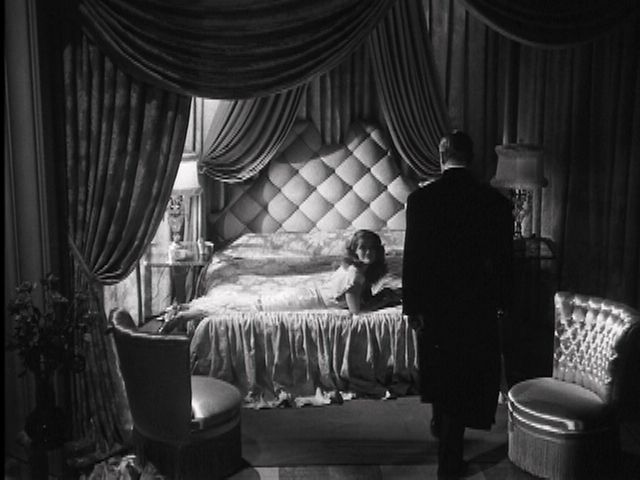
The sets,
however, are too glossy, too glamorous. We see little to none of the seedy underbelly world of crime that is
important to the look of the noir style.
Gilda looks like noir-lite, almost, as if Hollywood didn’t want
to get its hands TOO dirty when making the film. Furthermore, there is the question of the
ending. Noir films are about fatal
flaws, key term being “fatal.” Can a
film noir have a happy ending? Does the
ending undo the noir characterizations the film spent so much time
establishing? In my opinion, it
doesn’t. The ending feels a bit too
artificial, just like the nightclub sets, and I choose to interpret it as not
the ending to Johnny and Gilda’s story, but more a continuation. These two people, who spent so much time
torturing one another, can they really end up happy with one another? Doubtful, and it is this doubt that leads me
to believe, personally, that this is a noir.
All
the unnecessary frills that surround the central triangle are mere
distractions, as that triangle is the true strength of Gilda. Three people who simultaneously love and hate
one another. Hayworth, still underrated
to this day in regards to her acting ability, is absolutely marvelous and
manages to carry a film about such horrid relationships, turning it into a
truly iconic piece.
Arbitrary
Rating: 10/10. I don’t think it’s a
perfect movie, but I really really really effing love this movie. One of my all-time favorites.


