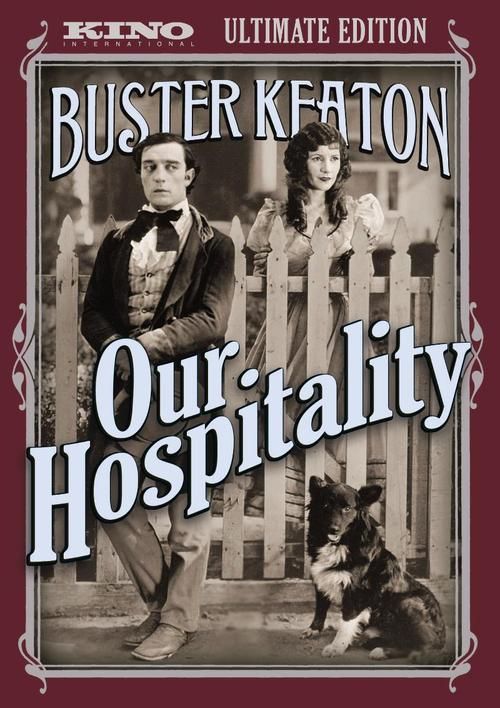
Our
Hospitality
1923
Director: Buster Keaton and John G.
Blystone
Starring: Buster Keaton
I’m
starting to feel like saying you prefer Keaton over Chaplin is the snooty,
snobby, trendy, hipster thing to say.
Dammit, though, it’s true.
Although Our Hospitality is not my favorite Keaton, it’s still charming and
clever and, well, funny!
The
plot is comedic take on the Hatfields and McCoys, only in Our Hospitality, it’s
Canfields and McKays. After his father
is killed by a Canfield, baby Willie McKay is sent to grow up in New York,
unaware of the feud. When he turns 21
(now Keaton), he returns to his hometown to inherit his family “estate,” and
inadvertently gets mixed up in the old feud by falling in love with the
Canfield daughter (Natalie Talmadge and Keaton's wife at the time).
The
title of the film mainly refers to the middle third of the film where Southern
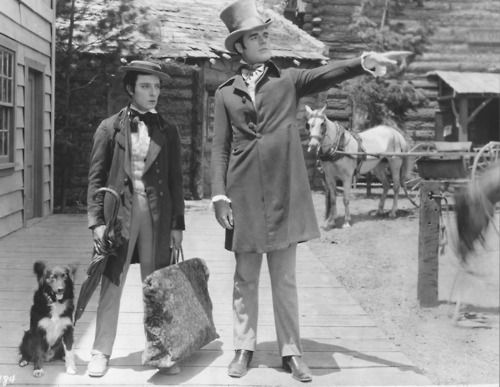
manners and idiosyncrasies are played for the best comedy of the film. Canfield’s daughter has invited Willie McKay to
dinner at their estate. Southern
hospitality prohibits the Canfields from shooting Willie when he is a guest
inside their home, but the second he steps outside, the rules are off. Willie quickly realizes this. Comedy gold ensues. The segment is essentially a very early
sitcom. Think of the word “sitcom” – a
mash-up of “situational comedy.” Although
I would never say that Our Hospitality invented the
concept, situational comedy certainly gets great early cinematic treatment
here. Think about it: a feud that no one
can remember why it started has to be put on hold for a bizarrely upheld sense
of “manners.” Buster Keaton capitalizes
very well, playing up both Willie’s fear and the physical restraints he has
while trying to stay inside the house.
While
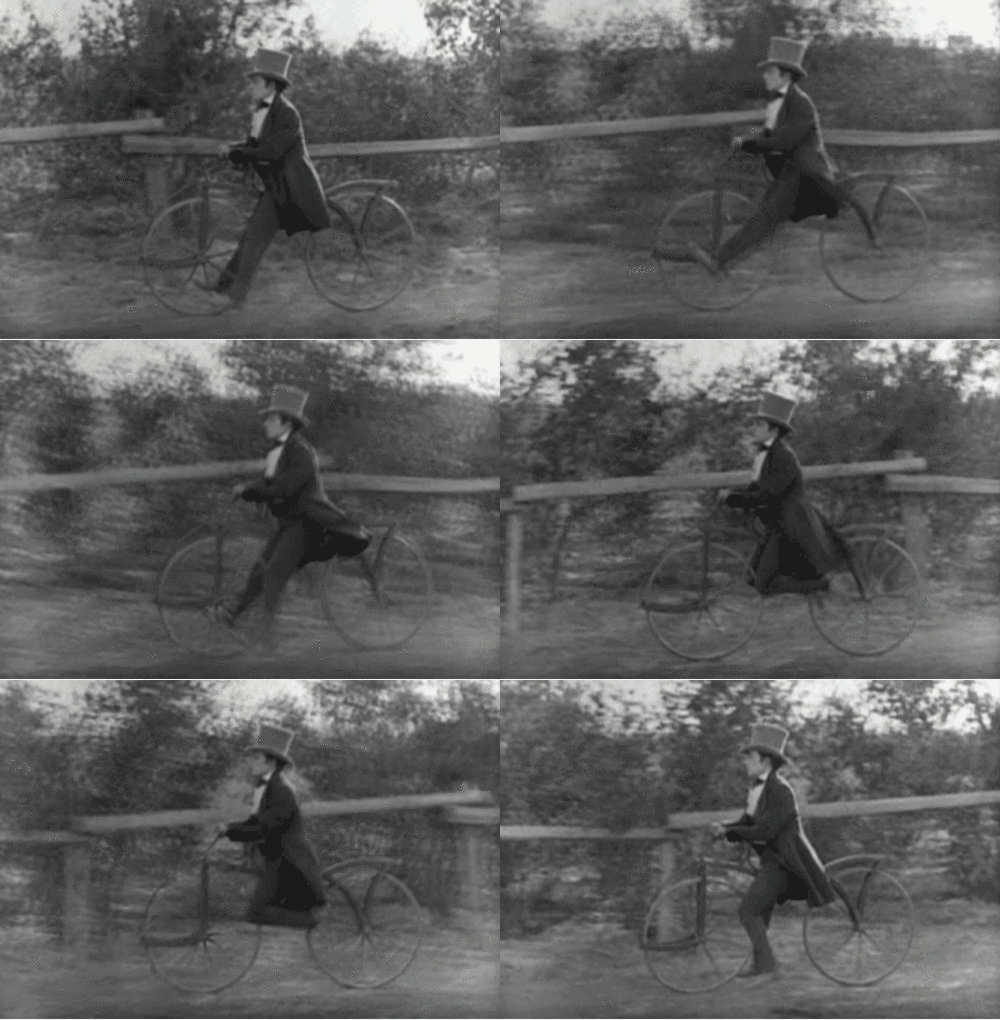
the middle third of the film plays out as a silent film sitcom, the majority of
the comedy in the film comes from sight gags; more so, it seems, than in other
Keaton films I’ve seen. The first third
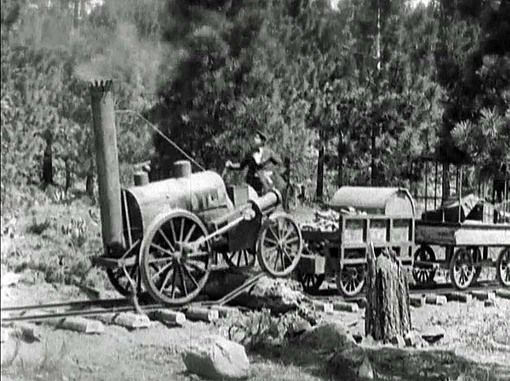
of the film primarily concerns itself with Willie’s train journey from New York
to the South, and the train he rides on is flat out ridiculous. Apparently, Keaton was a stickler for
historical accuracy, and the primitive train seen in Our Hospitality would
have been what people rode in 1830, the year the film is set. The damn thing looks like a Tonka playset,
but that’s the gag. Additionally, the
shots of 42nd Street and Broadway are, well, historically accurate,
but a sight gag nonetheless. The Mad
Hatter-sized felt top hat that Willie wears is hysterical, and there’s a nice
bit with dressing up a horse. It’s all
very clever and, again, funny!
The
final third of the film is less comedic and more action oriented. Willie is running through the forest in order
to avoid his would-be assassins, and winds up in the river. The Canfield’s daughter jumps in to try to
save him, so we naturally have a thrilling waterfall’s-edge rescue
sequence. This was easily the most
exciting part of the film, mostly for the fact that Keaton did all his own
stunts. When he’s hanging over the side
of a cliff, the dude is legit hanging over the side of a cliff. Those early film comedians were fearless as
all get out, man. Unbelievable.
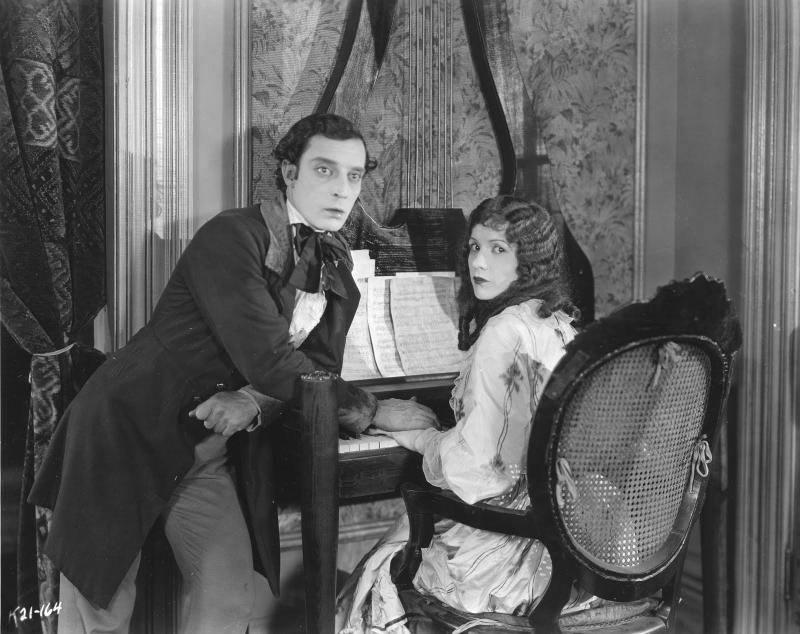 |
| I like the little touch with their hands. |
Ultimately,
though, Our Hospitality feels like three distinct silent comedy shorts
vaguely strung together with weak connecting threads. Don’t get me wrong, those three shorts are
awesome and funny and exciting and thrilling.
However, they lack coherence; they just feel like “bits” weakly tied to
each other. I like Our Hospitality, but I
don’t love it. It’s not nearly as strong
as some of Keaton’s other work in terms of being a fully realized narrative
feature-length film. I did a Keaton
double feature, watching this and The General on the same day. To speak bluntly, The General blows this
movie out of the water. It’s has
narrative tension and focus, both of which are lacking in Our Hospitality. Our Hospitality, while being amusing,
feels primitive – just like the early train it showcases.
Arbitrary
Rating: 7/10
