Showing posts with label alexander payne. Show all posts

Saturday, January 4, 2014

Musings on Mandela, Philomena, American Hustle, and Nebraska.

I’ve been struck with the unusual-for-me desire to get my butt to the cinemas to enjoy the pickings for 2013.  In these, the first three days of 2014, I’ve done two double-headers at my favorite cinema that shows current releases.  And, because I’m still me, I can’t simply “watch” these movies, I have to also think about and analyze them.  But four 1000-word-plus reviews is a bit too daunting, especially when my blogging skillz are a bit rusty.  So I figured I’d do a briefer review of these four flicks.

Up first:


Mandela: Long Walk to Freedom
2013
Director: Justin Chadwick
Starring: Idris Elba, Naomie Harris

The utterly inevitable movie of Nelson Mandela’s life hits the big screen with brilliant casting being the best thing going for it.  As my students are wont to say, not gonna lie, the only reason I went to see it was Elba.  Idris Elba as anything is automatically worth it; the man is a force of nature, and him as Mandela seemed too good to pass up. 

The film follows a mostly straightforward biographical movie outline, starting with voiceover reminiscences to golden memories of youth, then plunging us almost immediately into young man Mandela’s difficulties and following, in a linear fashion, through the imprisonment we all knew was coming, as well as the release and election.  We also follow the life of Mandela’s second wife Winnie (Harris), who stands by her man while he’s in prison by continuing to lead the revolution movement, even to the point of becoming militant.  Director Chadwick makes an effort to humanize the mythic Mandela, showing him as a red-blooded young man who was a hound dog with the ladies and not exactly husband of the year to his first wife.

Elba does not disappoint as Mandela, filling the screen with rage, righteousness, and then powerful pacifism, and he is easily the strongest aspect of the film.  Harris is also very good as the sweet yet steely Winnie who must also weather great injustices in the family-lead fight to end apartheid.  But the performances are all I can truly recommend; the story feels too disconnected to my liking.  Years pass, peoples’ opinions fundamentally change, and we are given little to no reason for it.  The resolution of the film feels like a hasty mash-up, as if the director realized he had painted himself into a corner of racial warfare and had no idea how to get out.  Now granted, this was undoubtedly a similar situation to the feeling in South Africa at the time, but the 180 that this film pulls feels more than a little incongruous.

Worth it for the performances, but not a hearty recommendation from me.  I will add, for honesty’s sake, that biopics are really not my thing, not in the slightest, so I was predisposed to not being completely moved by this one to begin with.

Arbitrary Rating: 6/10


Philomena
2013
Director: Stephen Frears
Starring: Judi Dench, Steve Coogan

After my final statement about Mandela having a strike against it simply because it wasn’t my type of film, I will now own up and say that going in, I knew Philomena WAS my type of movie, and after seeing it, yes, most definitely, it’s my type of flick, for sure.  Objectively, though, I do believe Philomena is a stronger film (although, probably not as much stronger than Mandela as my rating will reflect).

Judi Dench plays the titular character, a silly, elderly lady who loves her salad buffets with toasty croutons, snacks on the road, and frivolous romance novels.  But Philomena’s secret of fifty years, that she gave birth to a baby boy when she was just sixteen years old at a Catholic nunnery in Ireland who was then later adopted against her will, is gnawing at her.  With the help of recently-unemployed big time journalist Martin Sixsmith (Coogan), who needs a human interest story to set him back on track, she goes about finally trying to track down her long lost son. 

Everyone knows that Judi Dench can act circles around pretty much anyone, but what’s unusual in her performance here is how utterly ordinary and regular Philomena is.  I’m used to Judi Dench playing either someone of great esteem (a la Shakespeare in Love) or someone with something unusual about them (a la Iris).  Philomena is neither.  Yes, you can certainly argue that having a long lost son is unusual, but after seeing the film, Philomena still feels ordinary.  She’s just a fussy, aging Irish Catholic woman who colors her hair and wears old lady clothes, and Dench does her proud, giving her grace and humanity and a full range of emotions alongside all her silliness.

Maybe more surprising than Dench playing such a regular character is the fact that Steve Coogan can play a straight man (in the comedic sense, not the sexual sense).  For everything that Philomena loves about ordinary, middle-class comforts, Martin is used to the finer things.  As a former international political journalist, Martin is an Oxford-educated, BMW-driving, boutique-restaurant-frequenting perfect foil to Philomena.  Watching her get on his nerves and under his skin is half the film, but it’s an enjoyable relationship to explore, as Dench is careful to never let Philomena get too silly, just as Coogan is careful to keep Martin from being too snobby or curmudgeonly. 

Because ultimately, silly caricatures aside, this film has tremendous depth of heart.  The story that is explored, about the long lost son, is done so with as few clichés as I’ve ever seen.  When you think you know where the story is headed, it throws you an enormous curveball, one that requires both lead actors to show us new aspects of their characters, or expand tremendously on ideals that have already been established.  It’s sweet and funny but never cloying, never overly sentimental. 

To reiterate, this is very much my kind of film.  The wry British sense of humor is on full display, it touches without manhandling you, and who knew Steve Coogan could hold his own against powerhouse Dench. 

Arbitrary Rating: 9/10.


American Hustle
2013
Director: David O. Russell
Starring: Christian Bale, Amy Adams, Bradley Cooper, Jennifer Lawrence

Perhaps the buzziest of the films I’ve seen recently, American Hustle is certainly riding a wave of good press and award nominations. Without necessarily meaning this as an insult, American Hustle is the type of film meant to appeal to Academy voters.  I won’t use the term Oscar-bait due to its negative connotations, but American Hustle feels exactly the sort of edgy, flashy, seriocomic film that the Academy can feel terrifically justified in nominating.  “Look how hep we are, we’re recognizing American Hustle!” they proclaim with glee.

Overweight and balding Irving (Bale) is a con artist working out of New York who falls madly in love with Sydney (Adams), a beautiful creature who eagerly joins him in his cons.  The fact that Irving is already married to Rosalyn (Lawrence), a slightly crazy hausfrau, is a minor hiccup.  But when they are nabbed by an FBI agent (Cooper), they both agree to his terms of running a con to bring down some politicians in exchange for a reduced sentence.  But really, when politicians, the mob, the FBI, and con artists are all thrown into the mix, who’s conning who?

The style of American Hustle was probably my favorite part.  The late seventies, in all its glitzy, superficial glory, is on full display, and we have our fill of overdone hair, polyester shirts, and New Jersey accents.  Amy Adams is terrifically sexy in shirts and dresses that plunge to her navel, and Jeremy Renner as a Jersey politico happily prances around in pale blue tuxedos with frilly sleeves.  The film is dressed in golds and browns, giving the entire story an air of wistful nostalgia, as though our con artists are recounting their glory days.

The performances are, again, top notch.  Particularly delightful was Jennifer Lawrence as Rosalyn.  Unhinged yet manipulative all at the same time, Lawrence pulls it off and then some.  She’s definitely making a strong case for being up for the big prize for a second year in a row.

However, there’s something that never quite coalesces in American Hustle.  Like Mandela, the finale feels somehow inadequate to the tremendous build up it is given.  Is it about the con or is it about the drama of the characters at hand?  Frankly, the film waffles on this question, and ultimately, I felt there were unanswered issues on both of those sides.

I enjoyed American Hustle, but not absolutely.  It is a good film, a strong film, but it didn’t blow me away.

Arbitrary Rating: 8/10


Nebraska
2013
Director: Alexander Payne
Starring: Will Forte, Bruce Dern, June Squibb

Full disclosure: I am a slavering little Alexander Payne fangirl, due in no small part to the fact that I’ve now met him twice, have his autograph, and a picture with him.  I’ve even spoken to him about his filmmaking style.  I enjoyed his films before I met him, but now?  Now I’m a devotee for life.  Given that he only makes a film once every two to three years, it was an utter no brainer for me to see his latest.  Spoiler: I loved Nebraska.  But then, frankly, I was always going to love Nebraska.

David Grant (Forte) sells speaker systems and electronics in a strip mall in Billings, Montana.  His father Woody (Dern) is an alcoholic and not altogether with it retired auto mechanic.  When Woody gets one of those magazine promo letters proclaiming that he’s won one million dollars (provided his number matches and he buys some magazine subscriptions), all he sees is the one million dollars.  Convinced he just hit it big, he becomes obsessed with the idea of getting to Lincoln, Nebraska, to claim his winnings, and ultimately, a harassed David agrees to take him.  On the way, they stop in Hawthorne, Nebraska, the tiny near-ghost town where Woody grew up.  Woody visits with his old family and friends, all the while spreading the news about his apparent good luck.

There are so many things I adore about Alexander Payne, and this film has them all.  I was amused as the credits rolled at the end, because Nebraska was precisely what I expected it to be given what I know about Payne’s filmography.  I don’t think this is a bad thing; on the contrary, I think it means that Payne knows clearly who he is as a filmmaker and can deliver his message in a vivid and consistent manner.

I have decided that Alexander Payne is in love with the American working class, but he is also determined to show them as they are, not as they think they are or wish to be.  There is so much truth in Nebraska in this regard that the number one criticism I have seen leveled at the film is that Payne is mocking the small town folk of his film.  I could not disagree more.  There are some less-than-positive characters and moments in Nebraska, but nothing ever feels as though it is played for cheap laughs.  Instead, everything feels… real.  Painfully real, but thoroughly real.  I went to college in an area not unlike those shown in Nebraska, and I visited friends’ homes who lived close by whose families behaved precisely – and I do mean PRECISELY – like the family in Nebraska.  That’s why I don’t think there is any mocking meant here; I’ve seen these scenes before, I’ve seen these places before, just never on the big screen.

Furthermore, Payne himself is from Nebraska.  He shot his first feature Election (the film that made me a fangirl of his to begin with) in Nebraska, and when I’ve heard him speak, he always spoke lovingly of the area in which he grew up.  A year ago when I last saw him, he announced this film and I could hear how excited he was to make a film about his home.  I see affection, not mocking, in Nebraska, culminating in the gently poignant yet utterly devastating finale sequence.  There is so much love in the ending of the film that, while Payne undoubtedly calls out the less than savory characters in the story, showing them for the superficial assholes they ultimately become, he also knows there are heroes in his story, and they are glorious.  Mocking?  Not in the slightest.  Loving yet careful not to romanticize?  Absolutely.

Apart from the simple characters who reek undoubtedly of truth, my favorite aspect of Payne’s work is his production design.  Or perhaps, lack of production design.  What I passionately adore about Payne is his devotion to filming on real locations, locations that haven’t been meticulously manicured.  He uses real houses, real motels, real bars, real chain restaurants, and his extras are real people.  When he does need to film on a set, more often than not, the set is modeled on an actual house or room.  There are knick knacks everywhere, dirty dishes in the sink, cracks in the driveway, leaves in the pool, and scratches on the linoleum.  It’s not that his films are dirty or dank; it’s that they’re fucking REAL.  The living room looks like a real living room, warts and all.  I’ve always noticed and responded to this in his films, and it’s what I had a chance to ask him last time I saw him.  When I mentioned this to him, that I loved that he uses real places, I remember so vividly that he smiled broadly, and responded with “I don’t understand why we need to prettify everything.”  Indeed.

While Payne plays the utter ordinariness of the world around his characters in most of the film as flat and banal, he also shoots the film occasionally with great beauty.  When the film reaches its emotional climax, suddenly the everyday locations around seem majestic.  Payne lingers on a shot of a wide open field, the sun breaking through a magnificent cloud formation.  Because truly, there is extraordinariness in the everyday.

Bruce Dern as Woody is brilliant in quietly showing us a sad old man desperately clinging to one last wish for glory.  Are we annoyed with Woody or do we pity Woody?  Well, both, sometimes at the same time.  As David discovers more about his father on this road trip, we see far more in the simple facial expressions than the curmudgeonly drunk we meet at the beginning.  Will Forte is easily an unusual casting choice, as he is known almost completely for broad comedic work, playing a caricature of a caricature.  Here, though, he carries off a decidedly downbeat performance, following in the footsteps of Jack Lemmon in The Apartment.  It’s not as brilliant a performance as Lemmon’s is, but I can see the influence, and I imagine Forte being inspired by Lemmon in this role. 

I knew what to expect from Nebraska, so when I found myself sobbing rather uncontrollably at the quiet finale of the film, I wasn’t surprised in the least.  I was happy, though; happy that Payne had delivered once again on a simple human story, relatable to the last, that kept me happily engaged throughout its entirety and then packed an inevitable punch at the end.
Arbitrary Rating: 9.5/10.  The only thing I can level against Nebraska is that the pacing isn’t always as tight as it could be, and it drags a bit in the middle.  But in terms of what I want from Alexander Payne, Payne proves that he knows how to deliver it in a mature and confident manner.  I also recognize that if Payne’s previous films haven’t floated your boat, you will undoubtedly find Nebraska incredibly grating.

Up next for Siobhan: eagerly looking forward to Her being released wider next weekend.  I might make an effort to see Inside Llewyn Davis as well.  Might try to catch Gravity when it comes to the second-run theater in town.  And of course, whenever The Grand Budapest Hotel finds its way to my local theaters, I’ll be there with bells on.  I’ll also be looking out for Blue is the Warmest Color playing any wider, and I’ve got my eyes peeled for whenever Walesa: Man of Hope plays around here.  Because I NEED to see that movie.

Frankly, it’s been rather lovely seeing some more current release films in theaters again.  I do love this time of year for current releases, when the theaters are full of films trying their hands at Oscar nominations, when small character-centric comedy dramas are the order of the day rather than big blow ‘em up action flicks. 

In terms of 1001 Movies, my job is… more under control now than it was in the fall.  I’m looking to recommit myself, in the non-sanatorium sort of way, to blogging and The Club. 

Oh, and in a personal plug, I’ll find out end of January/beginning of February if my proposal for presenting at a national conference this summer was accepted.  Personally, I think my workshop idea is pretty darn awesome, but still, wish me luck. 

OH, and my old laptop finally started crapping the bed in December, so this entire review is coming to you from my bright, shiny, brand new touch screen Asus laptop.  No optical drive, so it’s gorgeous and light and doesn’t overheat every hour and doesn’t need to be constantly plugged in (thus defeating the point of a laptop).  YAY CHRISTMAS YAY NEW TOYS!!!

Thursday, March 7, 2013

Sideways


Sideways
2003
Director: my new crush Alexander Payne
Starring: Paul Giamatti, Thomas Haden Church, Virginia Madsen, Sandra Oh

Sideways fits perfectly into the sub-genre of film that is probably my most favorite type of movie ever: the small scale character-driven comedy that is heavy on melancholia.  If my film diet was nothing but this sort of film, I honestly don’t think I’d grow tired of it.  Given my predisposition to liking this type of movie, when a really GOOD film from this sub-genre appears on the scene, so much the better; how quickly can I own it?

Miles (Giamatti) is a struggling writer-cum-middle school English teacher who is still trying to get over his two-year-old divorce.  His good friend Jack (Haden Church) is getting married, though, and Miles is determined to send Jack off in style with a weeklong getaway to California wine country.  See, Miles loves wine to the point of absurd pretension, and to him, a trip of tastings is sheer bliss.  Jack has other plans, however, and he soon makes good on them by shacking up with winery employee Stephanie (Oh) for the week – without telling her he’s about to get married.  Stephanie’s friend Maya (Madsen) is also a big fan of wine, and shows enough interest in Miles to start to snap him out of his coma of depression and anxiety.

The first and most immediate thing I responded to in Sideways is the characters.  This is Miles’ story, and he is our hero, but he is utterly, painfully real.  Miles is deeply flawed, but I love him for it.  I can easily understand someone hating Miles, or at least disliking him, because he has many less than palatable traits on full display.  He’s a downer; his depression and anxiety are eating away at him.  He’s pretentious – not only about wine, but academically as well.  His novel doesn’t sound at all intriguing, and instead sounds like a big ole mess.  He seems constantly annoyed by his friend Jack.  He bumbles and fumbles his way around Maya, letting his fear constantly win.  He even steals from his mother.  Despite all of that, though, I love Miles because he is, deep down, a good person going through a really rough time.  He is fragile and is trying to put his life back together.  He is lonely and sad, and I desperately want him not be lonely and sad.  Despite superficial appearances, he loves his friends and family and is loyal to them.  The way he lights up when he talks about wine, however snobby he may sound, is fun to watch.  I want Miles to win.  I want Miles to deal with his personal demons.  I want Miles to be happy.

 
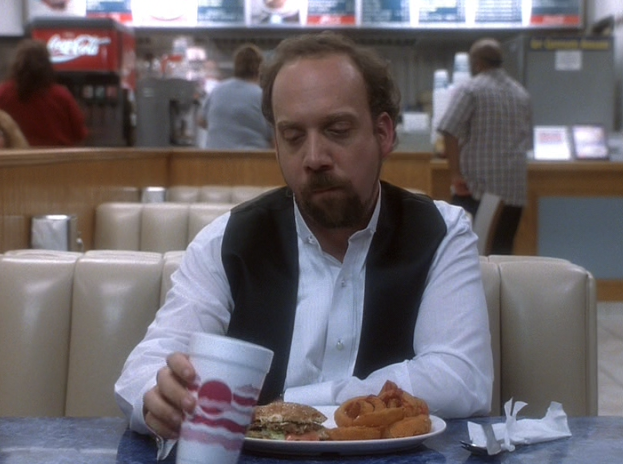
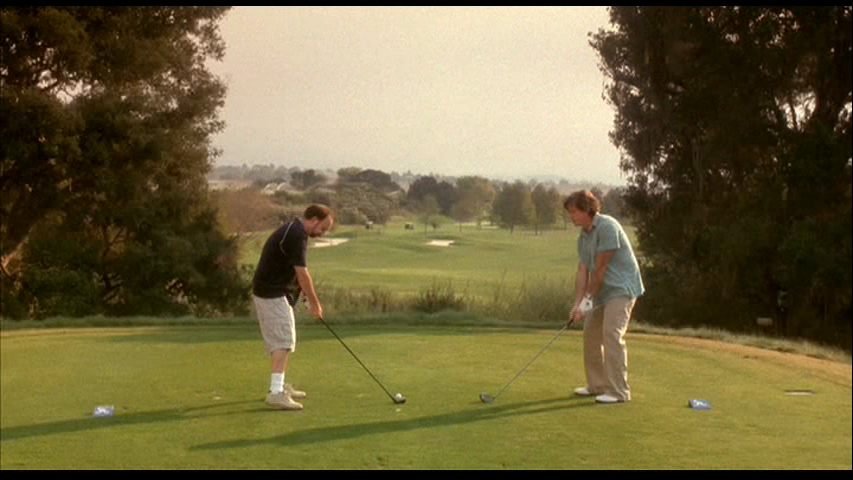
Giamatti’s performance is mostly why I love the character Miles.  Giamatti just breaks my heart, over and over again as Miles, from the early scene where he sadly pauses, wracked with guilt, as he takes some hundreds out of his mom’s hidden stash, to when he plays golf by himself, abandoned by Jack for the day, to when he finally cracks open a prized bottle of wine in a fast food joint.  Giamatti is, of course, a wonderful actor, and he’s so good at disappearing into a role.  He *is* Miles, but at the same time, I know that it’s a performance.  His air of sadness, of being beaten down by the world, is palpable and perfect.

The other cast members are equally fantastic.  Haden Church is revelatory as Jack.  Jack is a tricky character – one or two false moves, and Jack is completely unsympathetic.  But Haden Church gives Jack an openness, a sense of naivety, and a dogged sense of loyalty to his friend that, despite the fact that Jack ruins Miles’ plans, I get the sense that Jack loves Miles.  Their relationship is long-standing and complex.  They spend a great deal of time bickering, but somehow, both of these actors convince me that underneath it all, Miles and Jack have a very strong bond.  Miles and Jack are precisely like a married couple that fights but always makes up.  Madsen as Maya is careful in her performance to suggest that Maya is nearly as bruised as Miles without overdoing it.  Maya is a little shy and a little scared, but also focused on moving on.  Watching Maya and Miles stagger ungracefully towards one another is bewitching and completely realistic.

 
But I’m not just enamored of the characters and their stories.  I love the look of the film.  Payne is a director who (by his own words because I’ve heard him speak live TWICE NOW HA HA HA HA HA HA!!!!) is greatly interested in humanism.  He writes and directs tales of real people, faults and all, but he wants the audience to have sympathy for these people too.  After all, most people in real life are good people; so too are the characters in his films.  The lighting in Sideways is meant to underline your sympathy for everyone, despite their all too human failings.  There is a lot of soft focus, a lot of gentle back-lighting, and a color palette of golds and greens.  Payne doesn’t want his characters to look like gods or goddesses, but he wants you to care about them, so by laying off the harsh lighting and cold cruel lines or angles, he helps you like them. 

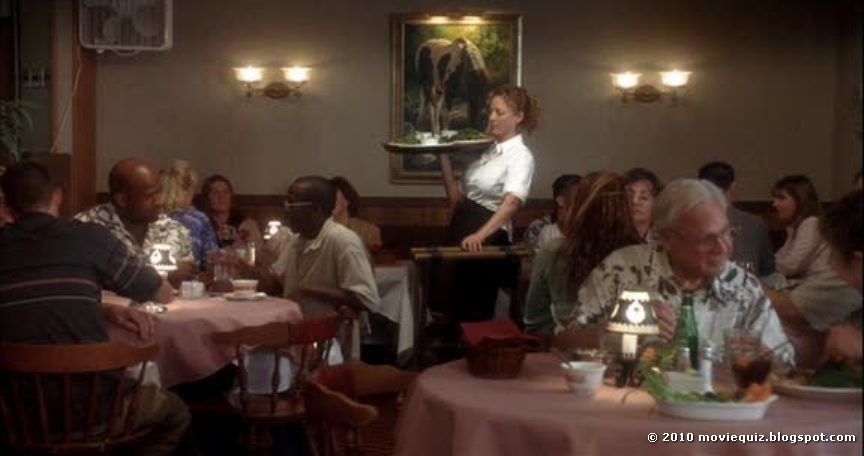
Locations, sets, extras.  Payne (by his own words because I’ve had a PERSONAL CONVERSATION WITH HIM ON THIS VERY TOPIC HA HA HA HA HA HA!!!) believes in found locations.  If there’s any set work in Sideways, it’s few and far between, or an exact replica of a reallocation.  Jack and Miles’ motel room is a real motel room, complete with cramped quarters and polyester blanket and leaves floating in the pool outside.  Maya’s and Miles’ respective apartments are in real complexes with real faded paint and real empty bottles on the counter.  This was not filmed on a stage.  Very little was invested in terms of set dressing beyond what was already there.  All the restaurants Miles and Jack frequent were real restaurants, and they look it.  They don’t look like some ridiculously classy set, they look like a place I’d actually go to.  The extras are real people, not silicone-filled actors.  Young, old, middle-aged, fat, thin, attractive, ugly – these are the people who populate the sidelines.  I just adore this fact about Payne’s films, because they’re all this way.  It’s so unusual, seeing such obviously real locations and real people in a Hollywood film.  It really hammers home that the characters are indeed characters, not cartoons.  This is a real story about real characters dealing with their real problems in the real world.  Payne wants real – not ugly or pretty, just real.  Normal.  If there are warts, let there be warts.  If there is a gorgeous sunset, let there be a gorgeous sunset.  

A real restaurant.
 
The charming jazzy score is a delight, full of saxophone and organ and hearkening back to the seventies.  It underpins the emotional arc of the film nicely without being too overt or melodramatic.  I like the subtle shift in the main theme as we go on Miles’ journey with him.  We start upbeat and happy as he anticipates his vacation with Jack, but we end on a far more introspective tone.

After all of this, after the emotional pangs, the heartbreak, the great lighting, the fascinating sets, Sideways is also really funny.  Seeing this in a theater recently, the entire place was laughing throughout most of the film.  It’s amusing and diverting, and the comedy – broad, subtle, physical, and word-play – just helps you swallow the pill of the emotional angst.  Or is it the other way around?  This is a funny movie; it makes me laugh. 

If I were to make films, I would make movies like this one.  Low-key, character-driven, small scale, comedy and melancholy in equal amounts… this.  I love this.  This is for me.  This is my kind of movie.  I love this type of movie, and I love this movie in particular.  It’s one of the best examples of this very particular sub-genre. 

Arbitrary Rating: 9.5/10

Sunday, March 3, 2013

An ode to the Dryden, aka And now for something completely different.


We interrupt this regularly scheduled movie review to bring you a recap of last night’s events.

As a film lover, you can spend a lot of time by yourself or with only a few other people consuming film.  Every now and then, however, film is not just a product, not just a piece of art to be consumed, but an event.  An honest to god event, one that brings you together with many people.  Last night was a film event.

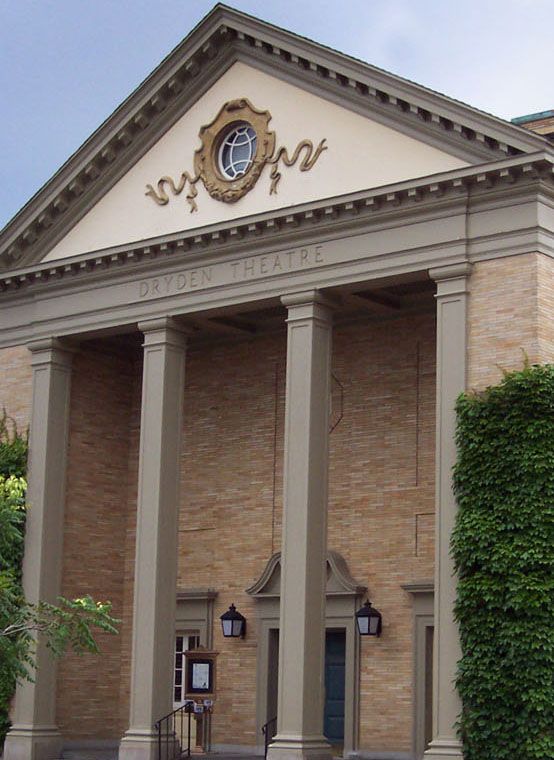
The Dryden, the archival theater that is part of the George Eastman House and Museum, reopened last night after being closed for two months for renovations.  I am a fan of the Dryden.  I first discovered its existence in 2006, which is the year that I started to get really serious about film.  I stumbled the Dryden’s calendar and quickly realized that all these movies from 1001 Movies I was interested in watching had the chance of being seen on the big screen here.  I can’t even begin to enumerate the classic films, the hard to find films, even the contemporary films that I’ve had the joy of seeing in a theater thanks to the Dryden.  

The facade of the Dryden.

 That would be enough to make me love the Dryden in and of itself.  But the Dryden is more than just a means of watching film.  It’s also a community.  There is always an introduction before every screening where something about the film is discussed in depth.  People go the Dryden and know others there.  I’ll look around the theater prior to the screening and recognize at least half a dozen regulars I’ve seen there many times before.  There’s the rotund little gentleman who always wears suspenders and round glasses sitting reading his novel in the right orchestra section before the show.  There’s the middle-aged local actress with frizzy hair and a coffee in her hand who always shows up five minutes after the screening has started and always sits in the front row.  I have struck up conversations with those sitting around me thanks to a shared love of cinema.  I have introduced myself to the film programmer there, commending her on her choice of schedules, and we since chatted on a couple other occasions.  Going to the Dryden is much more than a regular Cineplex experience.

Add to this the fact that the Dryden does special events with guest appearances by film professionals, and the whole thing is just plain awesome.

Last night was a really big deal for the Dryden.

On January 2nd, the Dryden closed for two months for renovations.  Good thing too, because the seats really weren’t that comfortable and the viewing experience was hardly state of the art.  To celebrate their reopening, they invited director and writer Alexander Payne to introduce his film Sideways and do a question and answer session afterwards.  I’ve been a fan of Payne since seeing Election in theaters, and in fact, the first time I went to the Dryden was when Payne came to introduce that film.  I got his autograph then and was all giddy when he answered my question in the Q&A.  I think it’s fantastic that Payne has since come back to the Dryden – this was actually his third appearance there – to support our little city’s theater.  Add to that the fact that I really adore Sideways, and buying tickets for the event was a no brainer.

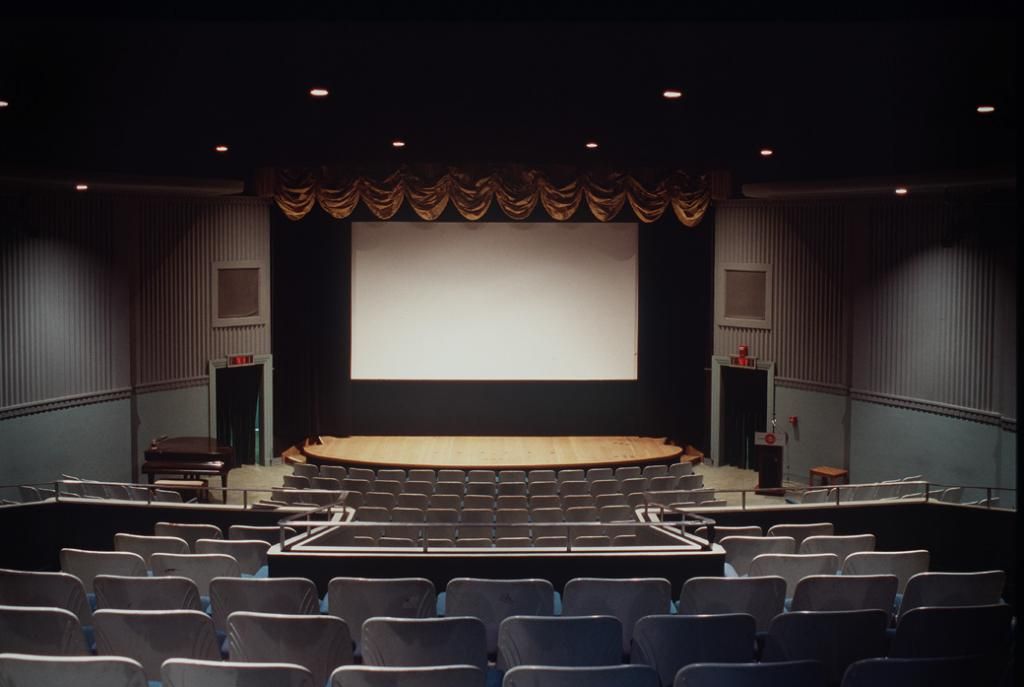
The old interior of the Dryden.

 So the show started at 8pm, and me, my husband, and my sister arrived at 7:15pm only to find the parking lot was already full.  Also in the parking lot were searchlights lighting up the night sky; with the snowfall, the effect was incredibly beautiful.  Before even entering the Dryden, we knew this was an EVENT.

We walked in and the excitement was palpable.  People were swirling everywhere in the tiny lobby, and most of these people were dressed to the nines – I felt more than a bit underdressed in my dark blue jeans.  We were greeted by usher after usher who showed us to our seats – unusual given that the Dryden holds 500 people.  You don’t exactly *need* an usher.  I recognized the volunteers and the programmer and some of the curators, and it was great to see them so dressed up.  I re-introduced myself to the PR rep for the George Eastman House and briefly chatted with her, all while taking in the gorgeous new deep purple interior of the auditorium, the new dark black rug and the comfortable plush red seats.  My sister and I made our way out to the restrooms, and on our way back in, we stopped at a booth they had set up proclaiming “Share Your Favorite Dryden Memories!”  Not being shy to speak about things I love, I stepped right up to the camera and talked for about a minute about how awesome this place is.

Feeling rather buzzed by the whole experience, I was then immediately whisked to the other side of the lobby by the aforementioned PR rep.  “Are you a Dryden fan?” she asked.  “Of course!”  “My friend from the local news network wants to interview a Dryden fan, would you mind?”

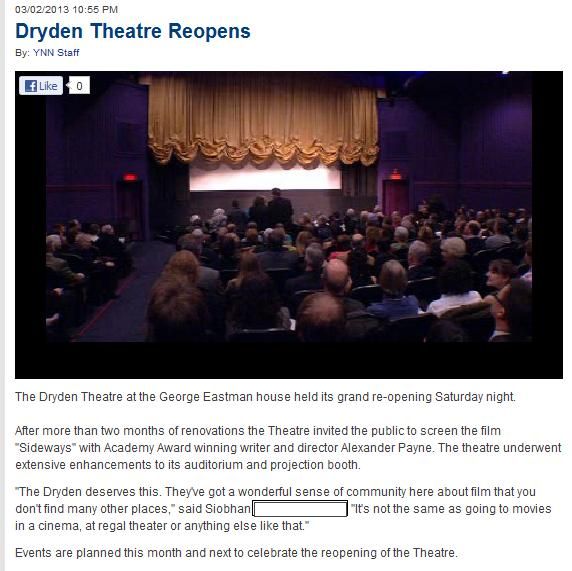
So I was interviewed for the local news about the Dryden’s reopening.  The cameraman asked rather inane questions, and it wasn’t until he asked if I had anything else to say that I was able to speak to the uniqueness of the Dryden, the community I mentioned above, and what a special place it really is.  When I finished, he was thrilled – “Are you a spokesperson for the Dryden?” he asked. 

Nope, just a really big fan.  (When we came home at the end of the evening, we turned on the news network and found that yes indeed, Siobhan was on camera talking about the Dryden.  Still trying to figure out a way to upload that video.)

The news article in which I'm quoted about the event!

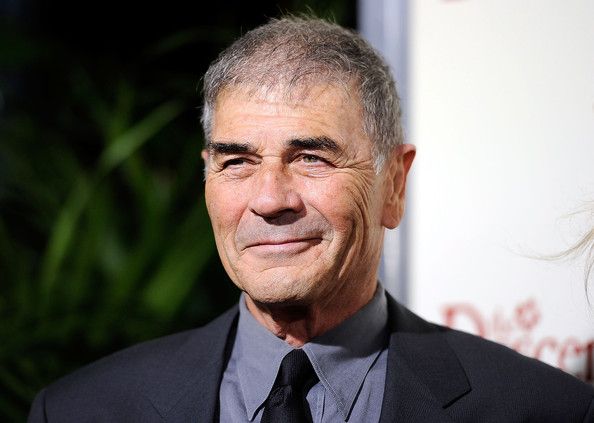
 In reading through the official program for the evening, I turned to the back – Honorary Chair Persons for the evening.  Of course, Jack Garner was listed, our city’s resident film critic, albeit retired.  I expected that.  Unexpected was seeing Robert Forster’s name and picture.  I had no idea Forster had any connection with my city and/or the Dryden, but there he was.  And indeed, fifteen minutes later, there he was again – walking past my seat up the aisle to have a seat in the audience.  Holy shit, that was just Robert Forster! 

Already the evening was far more than I had imagined it to be.

Yup, he was there.  Walked right past me too.  Holy crap.

 When the lights dimmed, we opened with a five minute video about the renovations themselves, followed by several speeches.  The first two speeches focused on the George Eastman House and the Dryden specifically, and they were very nice.  Next up was the film programmer who talked about Alexander Payne.  And then the man himself, Mr. Payne appeared and briefly introduced Sideways.

I will save my review for Sideways for a separate post.  Needless to say, I really love that film, and it was brilliant seeing it in a sold-out theater.  The laughter was infectious.

After the film ended, the film programmer Lori joined Alexander Payne on the stage.  But he wasn’t the only one there.  Rex Pickett, author of the novel Sideways, was also in attendance.  As was Jim Taylor, Payne’s screenwriting partner.  Jesus H. Christ, this evening just kept on getting bigger.  I could hardly believe it.

Pickett was hysterical.  Clearly an ex-hippie-surfer dude, he was crass and uncensored, but in a loveable way.  He spoke about how Sideways the novel was incredibly autobiographical for him, how he was Miles at one point in his life, and he also spoke about how film was his first passion, how he writes with a focus for dialogue rather than description.  And he was not shy for praising Payne in his adaptation, talking about working with him to maintain the idiosyncrasies of the story, avoiding contrivances.  (He also called the Japanese remake of Sideways “unwatchable.”)  My favorite quote from the evening had to come from Pickett, when he said that if Michael Bay had adapted Sideways, “it would have become two dudes doing jello shots in Cabo.”

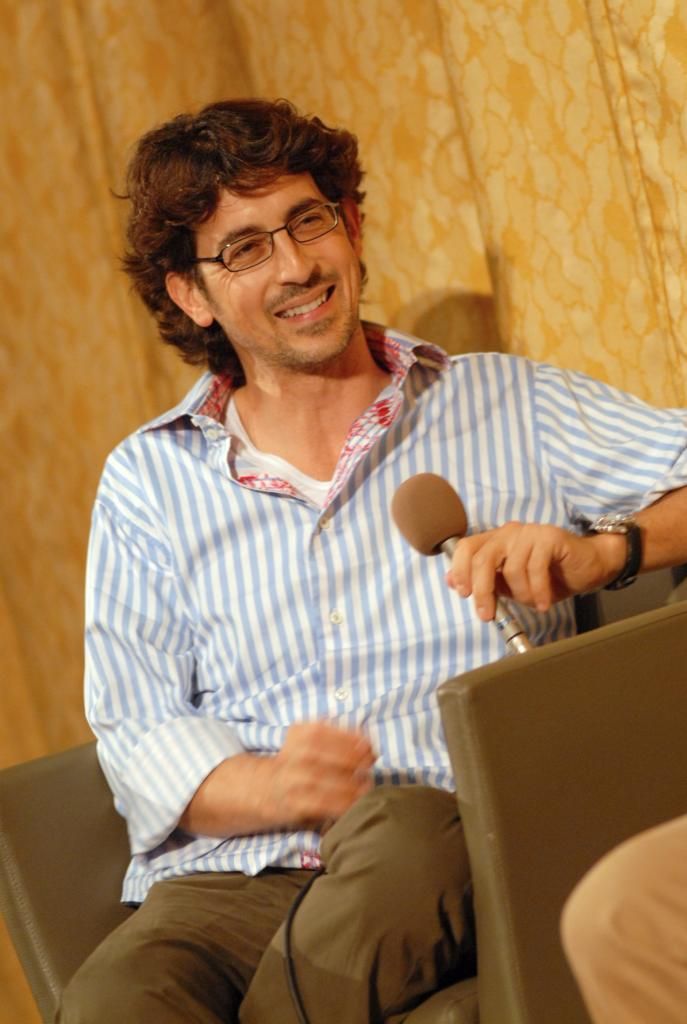
Alexander Payne was precisely as I remembered him – intelligent, passionate, and very kind and gracious.  He loves film.  I think I love film, but this guy is worlds apart from me.  He spoke passionately about how lucky we in this city are to have a place like the Dryden (I know, Alexander, I know), about how honored he felt to be asked back here for this event.  He insisted on taking all of the questions that people wanted to ask even when the programmer said we were running out of time.  He spoke of Welles, Antonioni, Allen, Scorsese, Hal Ashby, and Leo McCarey.  He very particularly identifies with that last director, responding to McCarey’s sense of comedy and also his humanism.  He specifically referenced Make Way for Tomorrow.  I liked his mention of that film as the one time I watched it was at – you guessed it – the Dryden, and I literally sat in my seat and wept for five minutes when the film ended before I got up and left. 

Payne wants to be – and is – a very humanist director.  He clearly communicated that he is interested in people, in Americans, in real Americans, not cartoon caricatures.  He is fascinated by pathos and melancholy but also humor and foibles.  He wants to tell stories about these people in a sympathetic way. 

I love this guy.

Press photo of Payne speaking at the Dryden about Election in 2006.


After the Q&A, my sister and I rather unabashedly rushed the stage – easy, given we were sitting in the fifth row.  I wanted to talk to him.  I wanted an autograph (well, another autograph – I got Election signed back in 2006).  Most of all, I wanted a picture.  Meaghan went first, getting her copy of The Descendants signed, and I took a couple shots of her and Mr. Payne, who was incredibly gracious in dealing with us rather rabid fans.  After Meaghan, I nabbed Alexander Payne’s attention.  I can’t remember what I initially said, but I do remember this exchange. (I’m paraphrasing, mind you.)

“I really love, in your films, how you use locations, real locations.”

The man smiled – he liked my comment!  “What is it you like about them?”

“I like the cracked pavements, the leaves in the yard, the empty beer bottle on the table – it’s just REAL, and it resonates with me so much more!  It’s really unlike so many other Hollywood films.”

“Thank you so much for saying that, I really appreciate it.  I don’t understand why Hollywood feels the need to prettify everything.  There’s so much natural beauty in this world.  I don’t want to change it, I want to capture it.”

I’m sorry, Siobhan wasn’t listening to anything you said after “thank you for saying that, I really appreciate it.”

I’m still reveling in the feeling that I was able to tell one of my favorite contemporary directors how much I loved his films – I actually told him “If I made movies, I’d make movies the way you do,” which is completely true – and was able to make a fairly intelligent observation about his work that he responded to in a very positive way. 

Fuck it, I talked to Alexander Payne about movies.  How fucking cool is that.

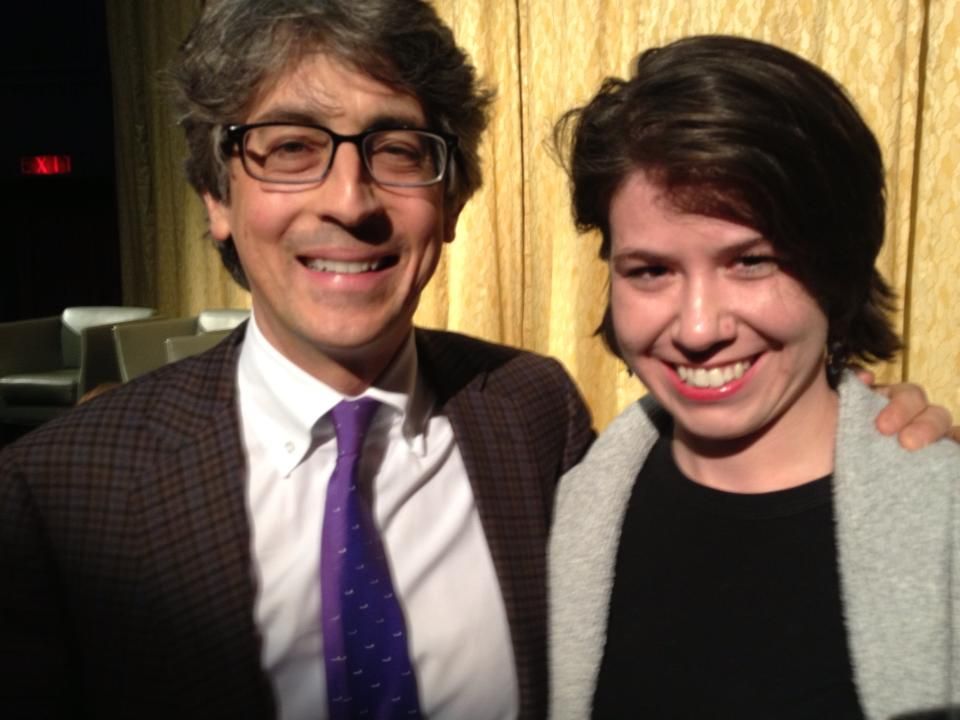
He posed for a picture with me too.

Yup, that's me and a dude who's won two Oscars.  I am very happy.

 Like I said, very kind, very intelligent, very gracious.  I am a fan, Mr. Payne.  I have been a fan for almost fifteen years now, and I will continue to be a fan. 

Last night was a film EVENT.  And it was AWESOME.  Definitely one of the most amazing theater experiences I’ve ever had.