In honor of Ironman 3 hitting theaters last weekend...
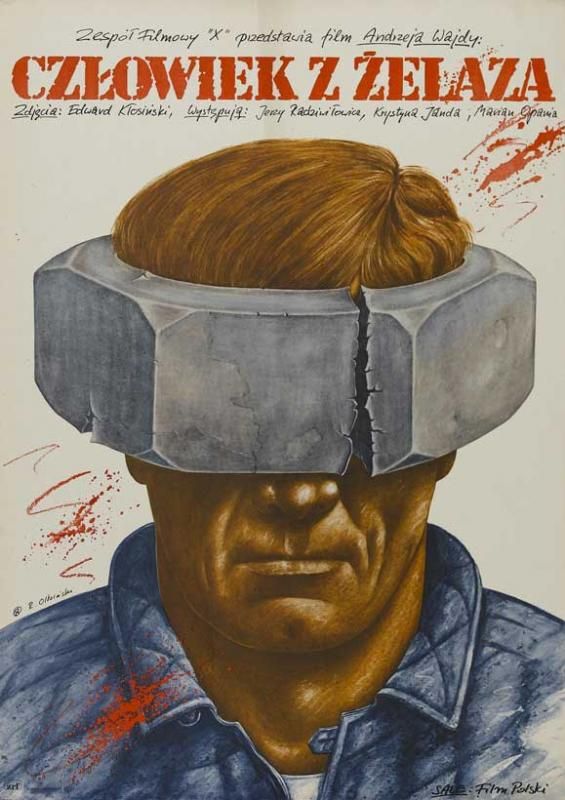
Man
of Iron
1981
Director: Andrzej Wajda
Starring: Jerzy Radziwilowicz, Marian
Opania, Krystyna Janda
Films
like Man
of Iron remind me of how utterly ignorant I am of histories other than
those of the United States. Watching
them makes me aware of how much I don’t know of things like Poland’s political
history of the twentieth century, and of how much I would like to know. This can be a significant handicap for
watching a film; the director might be assuming some basic understanding of
certain historical events. But despite
my having zero background in pertinent information, Man of Iron is still
captivating and watchable, and that to me is its real genius.
A
sequel to 1977’s Man of Marble, Man of Iron essentially picks up
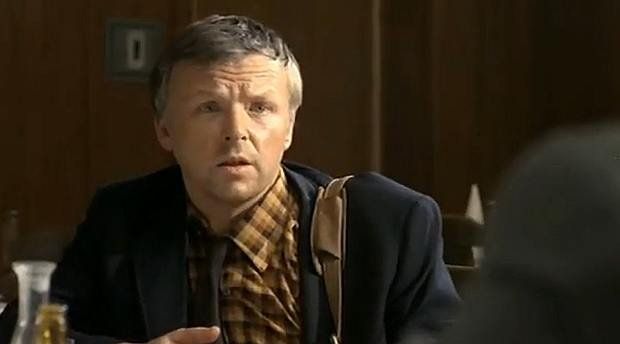
where the first left off and follows a similar path. Television producer for the Communist-run
state network Winkel (Opania) is commissioned by the bosses in government to
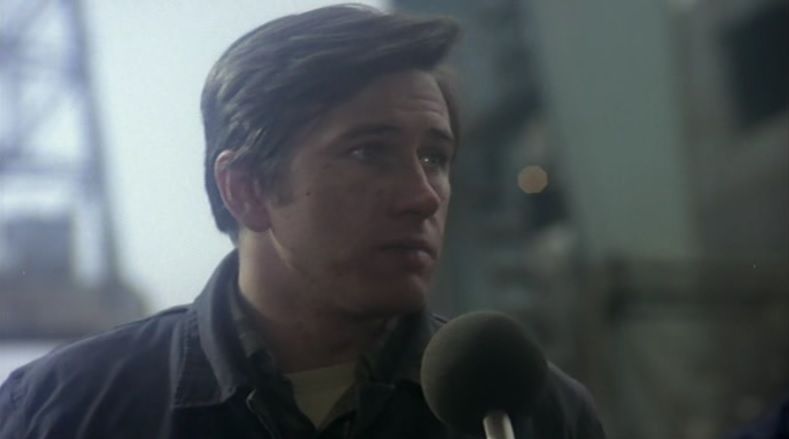
create a slander-filled piece on Maciej Tomczyk (Radziwilowicz). Why Tomczyk?
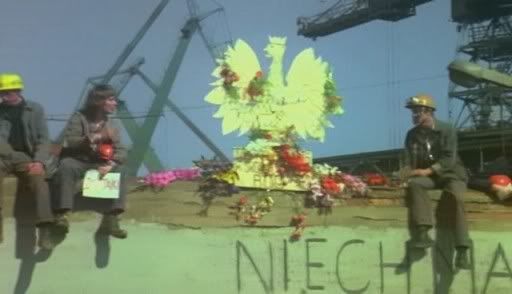
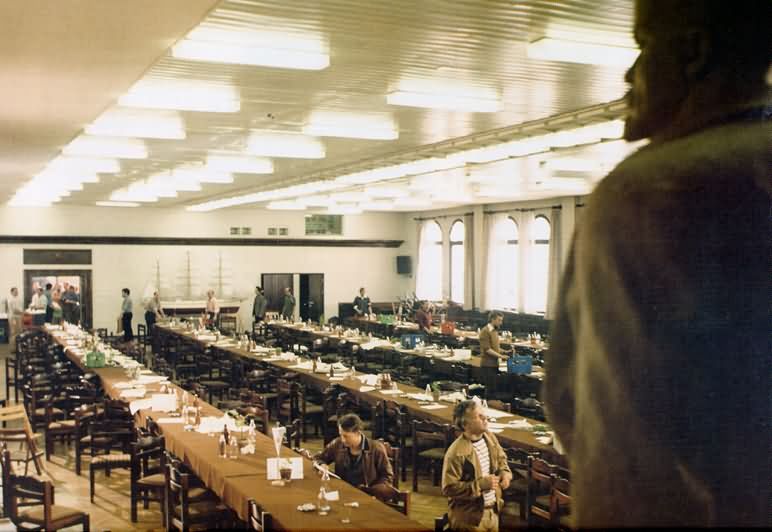
Because he has helped to incite the Gdansk shipyard strikes of 1980. The strikes are on and the government wants
to do what they can to break them; hence the need for Winkel, who must go
undercover into the shipyard in order to gather information against
Tomczyk. Winkel seems hardly the man for
the job, though – small, portly, alcoholic, nervous, he feels the pressure from
both sides and must make a decision. Will he cave to government or will he stand
with the striking workers?

I
had the exact same reaction to Man of Iron as I did to Man
of Marble: I was utterly captivated despite the fact that I felt I had
NO IDEA what was going on, especially at the beginning. There’s a lot of talk in Man of Iron, a lot. And a lot of characters. And a lot of politicizing. And it was sometimes difficult for me to keep
it all straight, especially, as I said, having no background knowledge on
Polish politics. But holy crap, I was
sucked in. I couldn’t stop watching. And that’s what I remembered about Man
of Marble. I was so happy to
discover its sequel was precisely the same.

Why
was I so sucked in? I mean, this is a
long film, and I usually have little patience for long films. I think the narrative structure of the film
goes a long way to help with the pacing of the story, and the two and a half
hours wound up feeling significantly shorter.
Essentially episodic in nature, we follow Winkel as he first has
uncomfortable meetings with the powers that be who tell him stories of Tomczyk,
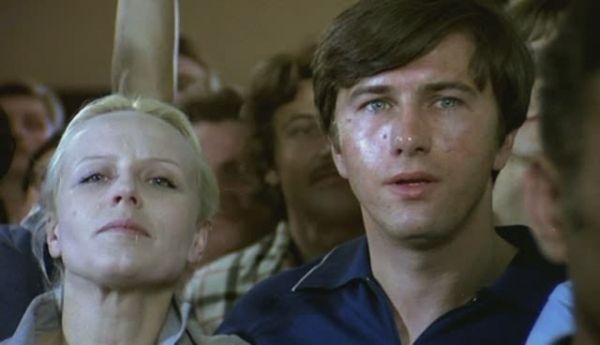
to him meeting people who know Tomczyk – his grandmother, his friends, his wife
(Janda) – who, in turn, tell him their version of the Tomczyk they know. Always in the background is the political
strike, moving forward, ticking towards the showdown between the workers and
the Communist government. We have a
slowly built portrait of a man by methodically revealing significant aspects of
his life, but never through his own eyes.
Instead, it is always through the eyes of someone who has known
him. I love this story telling
technique. It’s a great way to build a
character due to its complete subjectivity, and it greatly helped me overcome
what I lacked in background information.
The first half hour of the film I felt flummoxed, but by the end, with
all the information that has carefully been revealed, I knew exactly what was
going on. The film sucked me in. What’s more, this is straight out of the play
book of Citizen Kane, only finding out about Tomczyk through the eyes
of others. And come on, isn’t that
a tremendous cinematic comparison?

There
are two performances that utterly make this movie, and without them, it would
have been a long haul indeed.
Radziwilowicz as Tomczyk and Opania as Winkel are both fantastic and
have tremendous character arcs to explore.
For Radziwilowicz, he is so utterly, believably passionate from moment
one. His Tomczyk must find the strength
to become a leader for the workers, the eponymous “Man of Iron,” but we watch
him grow from headstrong and unthinking adolescent to deeply committed and more
sober adult. Radziwilowicz (crap that’s
hard to spell) is utterly watchable. He
has a spark, something special; I could watch movies with him all day long and
not get tired of him. But it is Winkel’s
journey, paralleling what he learns about Tomczyk, that is just as important in
Man
of Iron. I love that Opania’s Winkel
is a weak man. I think of Man
of Marble, of Janda’s Agnieszka (who, by the way, I love), who is
completely confident and cocksure; Winkel could not be more different. That’s important, and probably the most
pronounced difference between this and its predecessor. Winkel has to find his strength, that is his
story, and Opania is so good at slowly showing us this. Two fantastic leads, two great characters.

It
amazes me that this film could have gotten made in Communist Poland. A note at the beginning of the film says that
while the characters are fictitious, the situations were real, and use was made
of documentary footage. While I think I
can tell where the documentary footage is inserted, I’m still not entirely
sure, mostly because it’s so outrageous, I can’t believe that Poland would have
“allowed” it to stay in the movie.
Wajda’s message is staggeringly anti-government. What I love about it, though, is his message
is so righteous, it becomes positive, transcending the violence and the rioting
and the bickering; it’s a force for good, for peace. Look at Agnieszka in her jail cell. She is so utterly confident that the workers
will win, she’s calm. If they don’t win
in a matter of days, she knows they will win eventually. This optimism of Wajda’s was eventually
proved right, with Poland being the impetus for the fall of the Communist bloc
in the late 1980s. That unfailing
optimism is so joyous, it lifts up what could have been a repressive story of
government power. The politics of Man
of Iron are impressive.

I
don’t think everyone will enjoy this movie as much as I did – in fact, I doubt
most will. I understand that it’s long
and full of talking heads and tells a VERY political story about a moment in
time most Americans don’t remember or don’t care about. But holy crap, I kinda love it. I find it thoroughly compelling. I wish that Man of Iron was out on
DVD. I would love to own both it and Man
of Marble and watch them back to back, making a lovely little day of
it. I love getting sucked into the world
of Birkut and Tomczyk. It’s a rather
thrilling place to be, and I wouldn’t mind returning to it again in the future.
Arbitrary
Rating: 9/10. It is DEFINITELY cut from
the same cloth as its predecessor, and I really kind of love it.