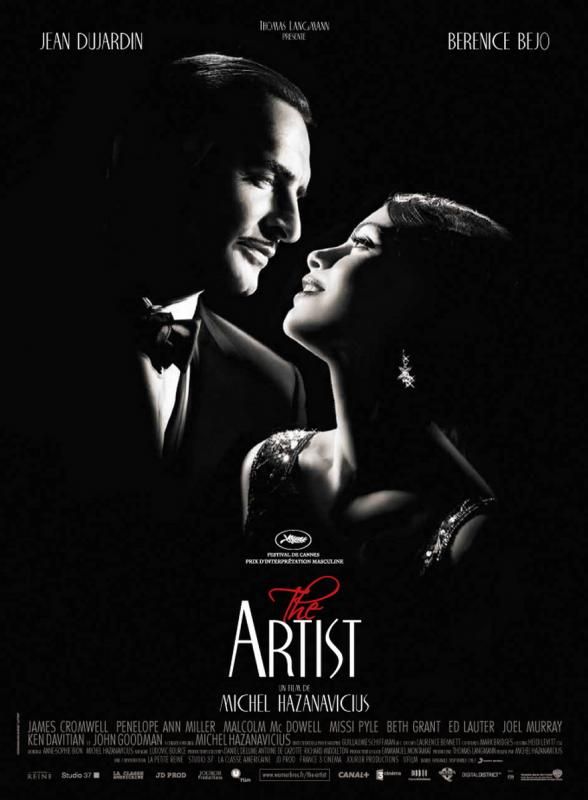
The
Artist
2011
Director: Michel Hazanavicius
Starring: Jean Dujardin, Bérénice Bejo,
John Goodman, James Cromwell
The
Artist was
one of the select few films from recent years that has made me get my butt out
of the house and into a theater in order to see it in its initial theatrical
release. I had heard vague things about
a silent movie being released (‘in this day and age!’) which made me intrigued. Then I saw the trailer and I was even more
intrigued. Then it started getting
nominated up the wazoo for any and all film awards and that sealed it.
I
cannot remember the last time a film made me feel such a warm, lovely feeling
as The
Artist.
George
Valentin (Dujardin in an Oscar-winning performance) is a mega silent film star
in 1927. Peppy Miller (Bejo) is a
wannabe actress. When she, as a fan,
accidentally bumps into him at a premiere, it opens the gateway to her fame and
fortune in film, and Valentin helps her on her way to stardom. Not long after, though, talkies come to
Hollywood and Valentin refuses to evolve with the times. He tries to prove that people will still
watch a silent film by sinking all his funds into his own self-produced title,
only to lose everything when the stock market crashes. As the 1930s progress, Valentin is no longer
working and sinks into depression and poverty, all while Peppy Miller becomes a
bigger and bigger star, although she never forgets who provided her initial
stepping stone to fame.
I
think it’s difficult not to love this film, especially if you’re someone who is
passionate about film in general. The
Artist oozes with reverence for film history and a passion for the
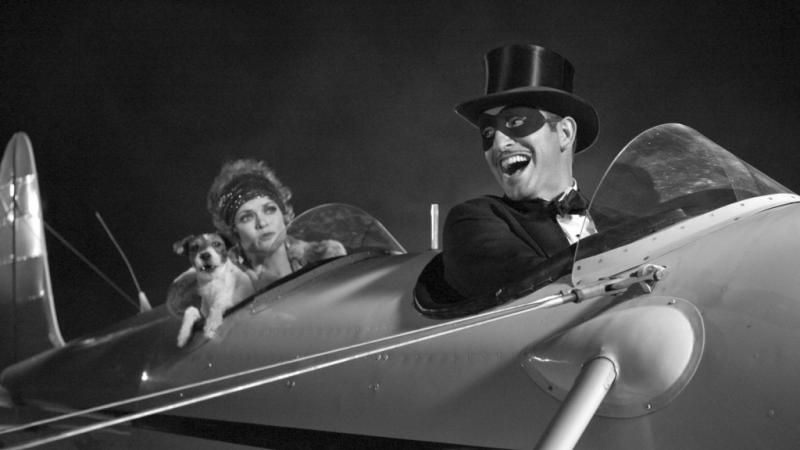
greats of the past. When Valentin is
watching one of his old silents, Hazanavicius actually used footage from The
Mark of Zorro (1920), and simply added some close-ups of Dujardin in
place of Douglas Fairbanks. The feel of
the early films presented in The Artist is just spot on – I love
the several nods to Chaplin and German Expressionism in the silents we see in
the first third, then the goofy nature of the comedies of the early 1930s in
Peppy Miller’s vehicles, and then the birth of the movie musicals as well. I was reminded of Citizen Kane in the
breakfast-eating montage with Valentin and his wife Doris (Penelope Ann
Miller). I love film, and The
Artist loves film; it’s a bond we both share.
All
of that reverence gets me in the front door for The Artist. But what really makes me fall in love is
where it pushes the story. I was not
expecting to be taken on the journey that this film takes. The Artist is clever, in that it
starts out with a solid half hour presenting everything you think of when you
think “classic Hollywood silent film.”
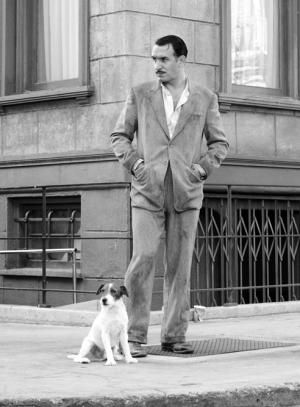
There’s the actor mugging non-stop for the camera, ridiculously cute dog
doing nonstop pet tricks, an adorable meet-cute for Boy and Girl, and all in
all, incredibly sweet entertainment, though hardly intense. But The Artist is unexpectedly dark, and
the narrative goes to an incredibly desperate place. Just when you think the film is going to be
nothing but a litany of Jean Dujardin’s eyebrows doing acrobatics, things start
to get serious. Not too much, not all at
once, but a little at a time. The film
slowly and carefully switches from goofy comedy to despairing drama, and I
wasn’t expecting that. What’s more, the
drama is based on a topic that I always feel most acutely and respond intensely
to: loneliness. The sadness that
ultimately envelops Valentin is so poignant it hurts. Even a scene in the middle of the film,
before the frightening darkness of the finale, has me feeling a sense of awful
and all too real loneliness. A simple
shot of Valentin eating dinner in a restaurant with his chauffeur (Cromwell)
nearly moves me to tears, because it’s painfully sad. This man, who once had the world at his feet,
only has one (well, two) true friends, and at the merest hint of reduced
circumstance, his superficial friends abandon him. He eats dinner with his chauffeur. And Dujardin is masterful in his portrayal of
a man destroyed by the world that he loves.
Trust me: his Oscar wasn’t for his mugging antics of the opening
scenes. His Oscar was how he quite
believably turned Valentin into a fully-fleshed out man, too proud and
arrogant, yet beaten down by the world in his turn. Those who have seen the film will know
precisely what I mean when I say I was on the edge of my seat in a stream of
tears thanks to Dujardin and the narrative.
This, this is what made me fall over the top in love with The
Artist: the unexpected dramatic heft to it, and the incredible tragic
elegance with which it explores the theme of loneliness.
Add
on top of this the fact that The Artist is a silent movie (with
only a few exceptions), and you have something extraordinary in this day and
age. Now, I know that silent films can
be highly emotionally charged – The Last Laugh is utterly
devastating – but I wouldn’t have known that if I hadn’t started watching
silents several years ago. Most modern
filmgoers have never seen a silent film, so I can understand others treating The
Artist with a fair degree of trepidation. But The Artist is so good at conveying
its story it makes you forget you’re watching a silent film. It’s a proof of concept film: that silent
movies are not dead media, that silents can tell a gripping story, and that
modern audiences will (with enough inducement) actually watch a silent
film. When I saw The Artist in theaters, I
overheard several fellow audience members making comments to the effect of
“wow, I can’t believe a silent movie made me feel that way.” Exactly.
In
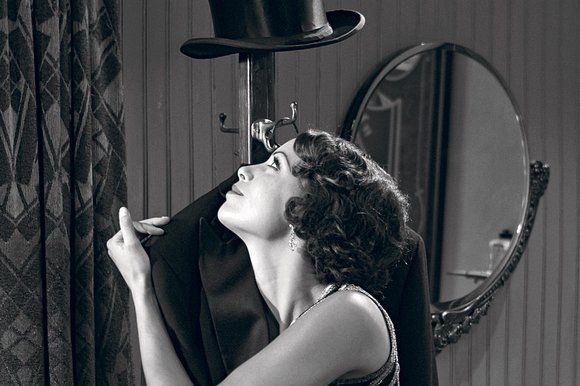
addition, I must, MUST comment on the relationship between Peppy Miller and
George Valentin. This might be one of my
favorite movie relationships in recent years because it isn’t a relationship. There is implied love between them but never
anything shown. I like to think of them
being the fastest of friends rather than the most passionate of lovers. It’s a wonderful example of two people
encountering one another and yet the stars aren’t quite lined up
correctly. Sure, sparks fly when they
first meet, but he’s married and she’s too aware of that fact. Later on, when they meet again, he’s too
proud and she’s seeing some random young boyfriend. Given the fact that their romantic relationship
is never consummated, I find Peppy’s devotion to George that much more
touching. She loves him, but in a very
pure way. It takes him, on the other
hand, quite some time to realize how she feels about him and to realize that he
feels similarly. His pride is too real
and too much an obstacle to prevent him from letting her into his life any
sooner. It’s a refreshing change of pace
for any mainstream film, frankly, to put a man and a woman together and not
have them make out.
The
Artist
gets practically everything right. The
reverence for film, the portrayal of the early silents and then the early
talkies, the emotional heft, the performances by Dujardin and Bejo, and even
the joyous soundtrack, it’s all right.
It all works. A good (online) friend
of mine has an expression that I am shamelessly stealing to describe The
Artist: It made me feel all the feelings. That’s how I describe this movie. It makes me laugh and it makes me cry. It’s absolutely wonderful. All the feelings, all of them, right here,
for this movie.
Oh,
and one final thing – why are there so few films about the transition from
silents to talkies? The movies love to
make movies about the movies – they are very narcissistic that way. And yet, what is possibly the biggest
revolution in the history of film-making, the introduction of sound and how it
utterly changed the industry forever, gets precious little coverage in the
world of “the cinema of cinema.” What’s
up with that? And, speaking of, I now
want to watch Singin’ in the Rain again.
These two would make a very appropriate double feature.
Arbitrary
Rating: 10/10. Perhaps there were
grittier films this year come Oscar-time, but I feel strongly that it was the
right decision in Oscar season to reward this film. And dammit, but I just love this one. Love it.
