Showing posts with label 1940s. Show all posts

Thursday, August 14, 2014

The Philadelphia Story


The Philadelphia Story
1940
Director: George Cukor
Starring: Katharine Hepburn, Cary Grant, James Stewart

While I make it no secret that MGM musicals were the movies of my youth, they were, for the most part, the only classic Hollywood movies I saw. When I first went through the pages of 1001 Movies, making note of which films I had already seen, I was truly shocked to realize just how few classic films I had already seen.  But one of the few classic films I had already seen prior to embarking on my cinematic journey was The Philadelphia Story. My parents introduced me to this one at a young age, and frankly, it only gets better as I get older.


Tracy Lord (Hepburn) is a New England wealthy socialite about to embark on her second marriage to the bland and blustery George. Naturally, there is no better time for her first husband, C.K. Dexter Haven (Grant), to make an appearance at the family compound. Turns out, though, that Dex has good reason to turn up, as he is actually trying to head off at the pass a sniveling paparazzi journalist who wants to unearth some sordid family secrets about the Lord clan. Reporter ‘Mike’ Macauley Conner (Stewart) and photographer Liz Imbrie (Ruth Hussey) are strong-armed into covering the wedding against their wishes.  Things get complicated as all these people around her turn Tracy’s normal, even-keeled emotional life on its head.

How on earth am I supposed to talk about the verbal perfection that is the dialogue and its delivery in this movie? How unbelievably quotable is every other line that comes out of someone’s mouth? It’s clear that this was a stage play first because of the sheer import that is placed on the specific phrasing of the lines, along with how much they are allowed to shine. This is not a film that shines due to fancy camerawork or flashy special effects, or even on a genius conceit. No, it’s the dialogue that is pitch perfect and painfully brilliant. When you aren’t howling with laughter over Dinah’s pronunciation of “innuendo” or snorting over Mike crank calling as the Voice of Doom, you’re feeling Tracy start to come across at the seams as she hears again and again language of statues and goddesses and ice queens. In my opinion, The Philadelphia Story is easily one of the most quotable films of all time.


When I was younger, it was the broad comedy, found mostly in the dialogue, which I loved in The Philadelphia Story, and it was why I liked the film. But as I got older and I inevitably kept revisiting the movie, I slowly began to understand something more. I really, truly enjoy watching Tracy’s journey from well-meaning but somewhat blind and insulated pride to a more open, more understanding, and definitely happier woman. I didn’t understand Tracy’s story when I was a child; it’s a subtler journey than one typically sees in film, as it’s not as simplistic as “she starts evil and is shown the error of her ways.” No, she somehow manages to start the heroine and end the heroine. But that’s precisely why I like it so much, why I like HER so much.

I identify with Tracy Lord, which maybe isn’t entirely a good thing to admit. But I do. I like her strength throughout the entire film. She starts out as strong but stubborn, and she ends strong as well. I think it takes a lot of guts for her to confront her faults and try to come to terms with them, to admit that she might be making a mistake for marrying someone like George, and for admitting that she has things to learn. She makes mistakes throughout the film, gets sloppily drunk, and generally throws everything into disarray. She isn’t perfect. And you know what? I love that. It’s refreshing. Hers is the sort of character I haven’t seen out of Hollywood in quite some time. Hepburn pulls off the role with aplomb, and it’s easy to see why this is the film that convinced the American public at large to forgive her for… whatever it was they had accused her of. I love the remake of The Philadelphia Story, but damn, it’s hard to one-up how perfectly Hepburn pulls off Tracy Lord.


But the character of Tracy Lord and Hepburn’s performance would not be nearly as interesting if she weren’t surrounded by two equally wonderful roles performed by two equally amazing actors, Cary Grant and Jimmy Stewart. Dexter and Macauley represent choices Tracy can make as she approaches her wedding. Watching Macauley set her free throughout their drunken revels is brilliant. While I would be hard-pressed to call this Jimmy Stewart’s most impressive film performance (it is the only one for which he won an Oscar), it is certainly a fine performance and it is easy to see why the Academy saw fit to recognize it. He is not simply the drunken fool, but full of heart as well, and not afraid to call shenanigans when he sees them. But really, Cary Grant’s Dexter just ties everything together. I absolutely adore Cary Grant, but I do feel like he tends to play different aspects of his celebrity persona in most of his films. His C.K. Dexter Haven, though, is reserved and hard in a way that one doesn’t expect from Cary Grant. He is unsettlingly stoic. And yet Grant has to convince us that Dexter really loves Tracy, that he never stopped loving her despite divorcing her, and that he loves her while being unafraid to speak the truth to her.  Convince us he does, through several sometimes small, sometimes not so small gestures throughout the movie. How he hides the bracelet, how he hits Macauley first, how he stays out of her way when she asks him to at the party, how he doesn’t judge her too harshly, how he is all too willing to save Tracy’s family from incendiary press, and finally, how he tries to help her save face at her botched wedding.  Grant doesn’t try to make Dexter perfect, but he does make him perfect for Tracy. He is wonderful in this role, and I easily think it’s one of his best.

Lovely dialogue, well-formed and interesting adult characters, actors who fully inhabit their roles, and a rollicking comedy with a happy ending. Really, it shouldn’t take anyone by surprise that I have loved this movie ever since I saw it and I will continue to love it for the rest of my life.


Arbitrary Rating: 10/10. Duh.

Saturday, January 11, 2014

Rebecca


Rebecca
Director: Alfred Hitchcock
Starring: Joan Fontaine, Laurence Olivier, Judith Anderson
1940

The only film of Hitchcock’s that the Oscars saw fit to recognize, Rebecca is certainly one of Hitchcock’s strongest works.  Not quite up to his true genius of the decades to come, however, and it is really such a shame that the Academy only recognized this, and not more layered and phenomenal films like Rear Window.

Joan Fontaine plays a young, timid, shy ladies’ companion vacationing with her brusque and societal leech of an employer, Mrs. Van Hopper.  While in Monaco, she meets Maxim de Winter (Olivier), a tortured widower seemingly trying to forget the drowning death of his much beloved wife, Rebecca.  The two fall in love and marry quickly, then Maxim takes her back to Manderley, his expansive estate back in England, where she soon realizes the strange hold that the first Mrs. de Winter seems to still have over both the house and all the servants, staff, and indeed, her husband.

It’s funny – this is a scary film.  Sort of.  It’s Hitchcock, to be sure, and immensely suspenseful, but in a very untraditional manner.  It’s practically a period piece, even though it was set during current times.  Manderley is such a character in the film, it makes the entire film feel as if it came from a different era.  There’s a dreamy quality that emanates from this strange estate, a feeling established in the opening shot of the film which, indeed, is revealed to be a dream sequence through a voiceover.  The house is immense, hollow, expansive, and of another era.  It’s easy to see how it could get inside your head, start playing games with you.


As if the house itself wasn’t bad enough, there’s Mrs. Danvers (Anderson), the housekeeper.  Brrr – this is not someone I’d want hovering around while I’m living in a joint!  Cold and imperious from the first, she utterly dominates everything and everyone around her.  It’s revealed that she was devoted to her first mistress, Rebecca.  It’s not difficult to extend this devotion to more of an infatuation, or even obsession.  Mrs. Danvers, with her no-nonsense bun and perfectly straight shoulders, seems just the sort of person who could easily flirt with the edge of insanity.  Anderson plays the role to the hilt as well, spewing thinly disguised insults and manipulations from her very first entrance.


The intimidating Mrs. Danvers and the cavernous Manderley play host to The Second Mrs. de Winter, Joan Fontaine’s character.  Fascinatingly, she is not given a name.  I’m certain that Mrs. Van Hopper introduces her once to Maxim de Winter at the beginning of the film, but that is the only time she’s given a name, and even then I’m not so sure.  Even IMDB lists her character as “The Second Mrs. de Winter.”  Her identity itself is tied up in being the Second Wife After Rebecca.  Once she arrives at Manderley, she is constantly haunted by the shadow of the first, indominatable mistress.  Fontaine plays her role as a baby foal trying to walk for the first time.  All breathlessness and wobbly knees, here is a woman who is very much in love with her new husband, but extraordinarily out of her element in this new environment.  She was not raised in society, nor does she does not know how to fit into society, a fact that Mrs. Danvers is all too aware of, as well as something that only prompts disgust from the staunch housekeeper. 


Fontaine’s character is simply no match for her new world.  As if the house and the creepy Mrs. Danvers weren’t enough for this poor girl (and she really is only a girl) to contend with, soon her husband starts behaving oddly as well.   Laurence Olivier – always a force of nature – is phenomenal as the brooding and mysterious Maxim de Winter.  When we meet him in Monaco, he seems more bemused by Joan Fontaine than in love with her, which makes his very sudden marriage proposal somewhat confusing.  Then, once he’s married her and brought her back to Manderley, he starts to fall into tempers, become withdrawn, or flies off the handle at the tiniest mistake.  Really, what has this poor girl gotten into?  Is Rebecca really that a strong a force that she controls the housekeeper, the house, and her husband, all from beyond the grave?  Well, it certainly seems so, but Rebecca has some tricks up her sleeve yet.


Hitchcock photographs the film brilliantly.  Reminiscent of Otto Preminger (I was forcibly reminded of Laura several times during the course of the film even though I know Rebecca came first), there is a romantic gothic sensibility to the photography here, fitting for the novelist Daphne du Maurier’s work.  We get long lingering shots of the house, showing the caverns of each room, the high ceilings, the long staircases in beautiful shimmery black and white.  The cinematography draws out the mystery, making gauzy window curtains seem as though they may contain a ghost.

There is a central mystery to Rebecca, but unraveling it here for you makes it no fun.  There is a quiet beauty, something very unostentatious about this film.  And really, it’s very creepy, but for very different reasons than any other traditional horror or suspense film.

Arbitrary Rating: 9/10


Saturday, September 14, 2013

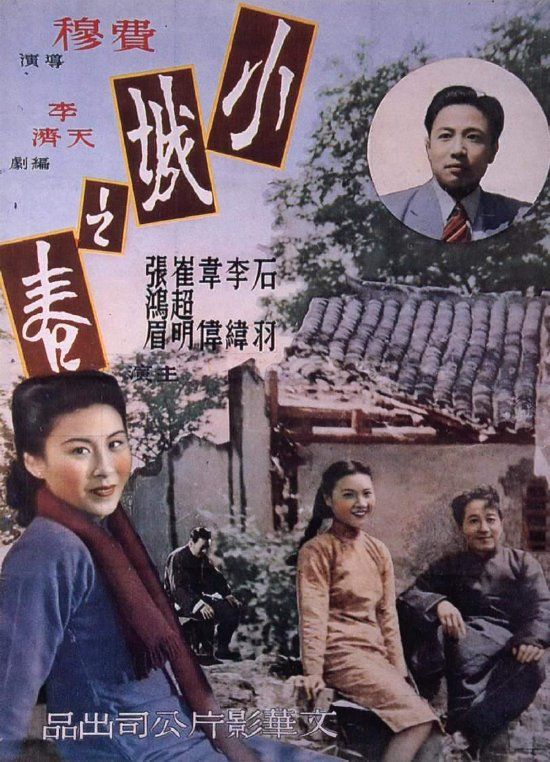
Spring in a Small Town (Xiao cheng zhi chun)


Spring in a Small Town (Xiao cheng zhi chun)
1948
Director: Fei Mu
Starring: Wei Wei, Shi Yu, Li Wei

When I took my first, massive swipe at knocking off titles from 1001 Movies, I went chronologically by decade, something I’m very glad of in retrospect.  The biggest advantage to doing this was to encounter trends in filmmaking as they happened.  The second advantage was watching how national cinemas appeared, or perhaps disappeared.  Take Germany for example: going chronologically, I watched lots of German films in the beginning, then nothing, not for decades.  Rather poignant, that.  On the flip side, there is only one Chinese film that predates Spring in a Small Town in 1001 Movies, indicating that, at least according to the editors of this book, Chinese cinema was still in its birth during the early decades of filmmaking.  Spring in a Small Town was one of the first Chinese films to rise to international stature, one of the first to be considered worth preserving and worth seeing still to this day.

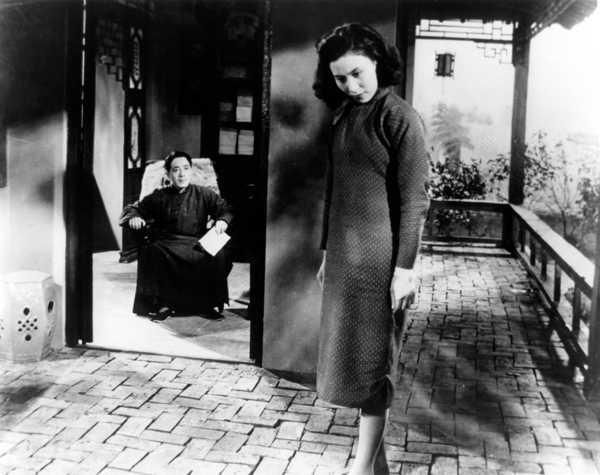
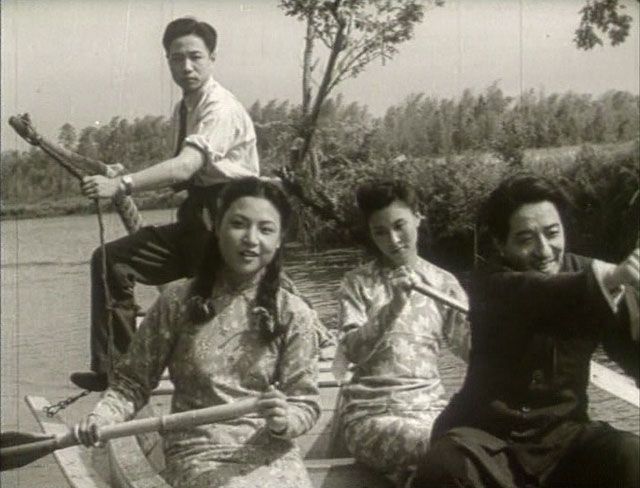
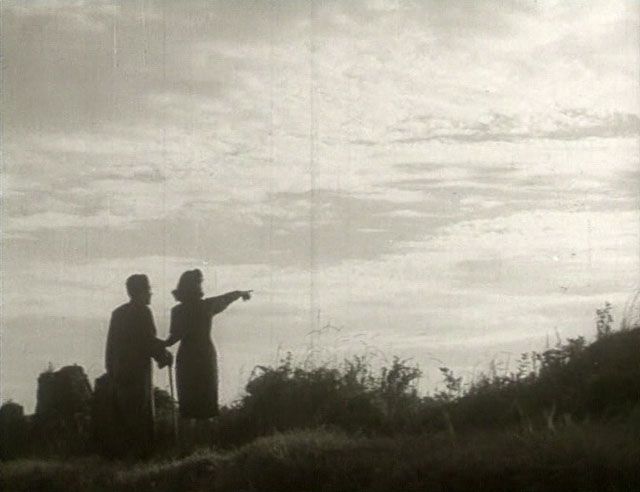
The story is ripped straight from standard drawing room drama tales.  Yuwen (Wei) has been married for eight years to her invalided husband Liyan (Li).  We learn very early on that theirs is a loveless marriage, although they are still affectionate with one another.  She is bored and suffocated by her endlessly repeated existence.  Enter Zhichen (Shi), Liyan’s friend from childhood and Yuwen’s former love.  Her resolve is thoroughly tested as the passion she used to feel and thought dead and buried begins to rise again.

  
I find it fascinating to discover the same sort of tropes I’m used to encountering in Western costume dramas here, in a Chinese film from the forties.  I think that’s telling; it indicates that there are similarities between all cultures, even in basic romantic storylines.  How often have I seen this story played out, this sad sort of repressed love?  Many, MANY times.  I don’t hold this against Spring in a Small Town, the fact that it’s telling a story I’ve heard before; if anything, I like it more for telling a story I am familiar with from its own unique cultural perspective.  And the China that is on display in Spring in a Small Town is from a very distinct time period and culture.  (I will at this point reiterate my comparative ignorance about world history – thank you, New Hampshire public education – so please, this is just a quick review of what I taught myself on the interwebs; if I am grievously mistaken on anything, please let me know.)  The second world war was over, China was no longer under Japanese control, but the Communist Revolution had not yet taken over.  This was a relatively short time period, and the artistic result is a film with very little, if any, political commentary.  Spring in a Small Town is a simple, sad little romance about a repressed woman and her long lost lover who is definitely NOT her husband.  It does not feel allegorical or symbolic of larger issues.  No, it is simply a romantic drama, nothing more or less.  This is probably a large reason of why, when the Communist Revolution did succeed, Spring in a Small Town was roundly denigrated, then forgotten, and nearly destroyed.  I’m glad the film survived, though; it’s worth a viewing, at least one, because of its purity of intent and because, well, it certainly does repression well.

  
Spring in a Small Town gets very angsty.  It moves slowly – it is practically the definition of the slow burn.  And there’s little payoff.  In my first go around with Spring in a Small Town, I remember feeling enraptured by this furtive, repressed romance between Yuwen and Zhichen.  This time, I was less affected by it, but it still has its moments.  Despite the, um, VERY slow build up, I was still caught up when Yuwen gets drunk, slips up, and throws herself at Zhichen.  And it takes every smidgen of strength he has to do the honorable thing.  And I rather enjoy it.

Spring in a Small Town is very reminiscent of Brief Encounter.  Repressed woman narrating her own tale of romantic feelings for a man, a doctor, who is not her husband?  Brief Encounter.  Frankly, Brief Encounter does it better – loads better – but the voice over narration in particular I find important in Spring in a Small Town.  Just like in Brief Encounter, it is crucial in providing us a critical window to Laura’s soul so we understand her, we need that gateway to Yuwen, perhaps even more so.  As much as Laura presents a calm façade to the outside world, Yuwen is one hundred times more serene on the outside, never letting on for a second what might be happening under the surface.  This is actually a bit of a detriment to the film; I needed more than a voice over to convince me of the magnitude of Yuwen’s feelings, and the actress didn’t quite manage to convince me on performance alone.

  
The other major mark against Spring in a Small Town is the condition of the film itself.  This is, sadly, a film that has not been preserved well in the slightest.  The DVD is watchable, certainly, and the English subtitles were clear (not always a given), but the image is hazy and foggy and full of scratches.  The sound isn’t any better; it’s muffled and the background static is incredibly loud.  Even the original filming conditions seem less than perfect, as the background noise cuts out in certain parts of scenes, indicating that there was just no sound, PERIOD, while recording.  The story works well enough in Spring in a Small Town, but the logistics are incredibly lacking.  It’s very difficult when it’s this bad not to let this affect my read on a movie. 

Spring in a Small Town was remade in China in the early 2000s, and I’m not surprised.  The story is universal enough and works pretty well, but the original film could use a brush up, more style, better acting, and any sort of a soundtrack.  I have not seen the remake, but I’m glad at least someone thought it worthy of telling again.  Frankly, though, if I want angsty romance, there are plenty of other films I’d choose over Spring in a Small Town (Brief Encounter most definitely).

Arbitrary Rating: 6/10


Monday, August 12, 2013

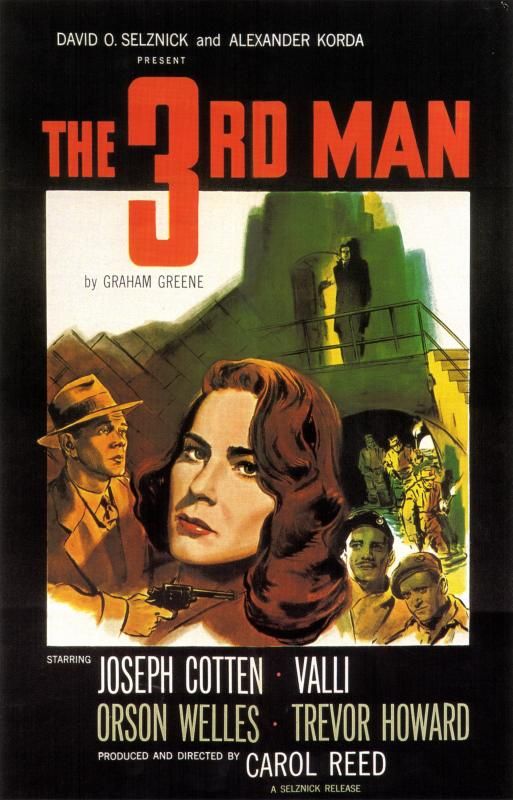
The Third Man


The Third Man
1949
Director: Carol Reed
Starring: Joseph Cotten, Alida Valli, Orson Welles, Trevor Howard

My blog friend Jay from Life vs. Film has a category of film he calls “Guaranteed Happiness.”  It’s a great tag, and one I think I just might have to adopt, especially for films like this one.

Because seriously, ladies and gentlemen, cogency escapes me when dealing with something so utterly sublime, so painfully perfect, so completely flail-worthy as the fantazmoniousness (yes, that’s a made up word from my college days) of The Third Man.

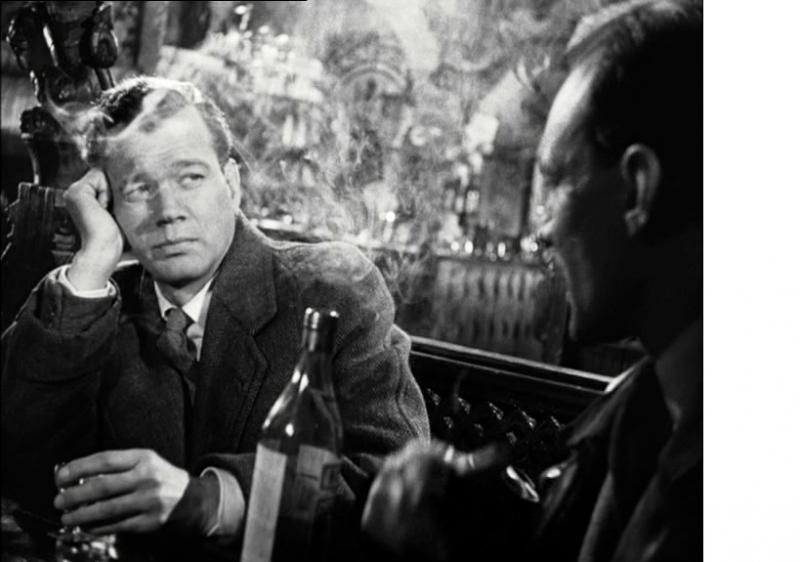
The somewhat labyrinthine story focuses on Holly Martins (Cotten, a name that autocorrect refuses to recognize), an American pulp novel writer who heads over to 1949 rubble-strewn Vienna in order to get a job from his old friend Harry Lime (Welles).  Trouble is, though, as soon as he shows up, he’s told that his friend Lime has died under rather shady circumstances.  Not only has he died, but the British Major Calloway (Howard) informs Holly that Lime was a crook who was running penicillin on the black market.  Not at all certain who to believe, things get more complicated when Holly falls in love with Lime’s mourning girlfriend, the actress Anna Schmidt (Valli) who thoroughly believes Harry was a good man.

Seriously, I don’t know where to begin.  Photography!  Characters!  Music!  Thematic elements!  TOO MUCH!  Suffice it to say, this movie inspires such overwhelming feelings of love and adoration that it has rendered me imbecilic.

adskjfai;oewjraio;h.  That is all.
  
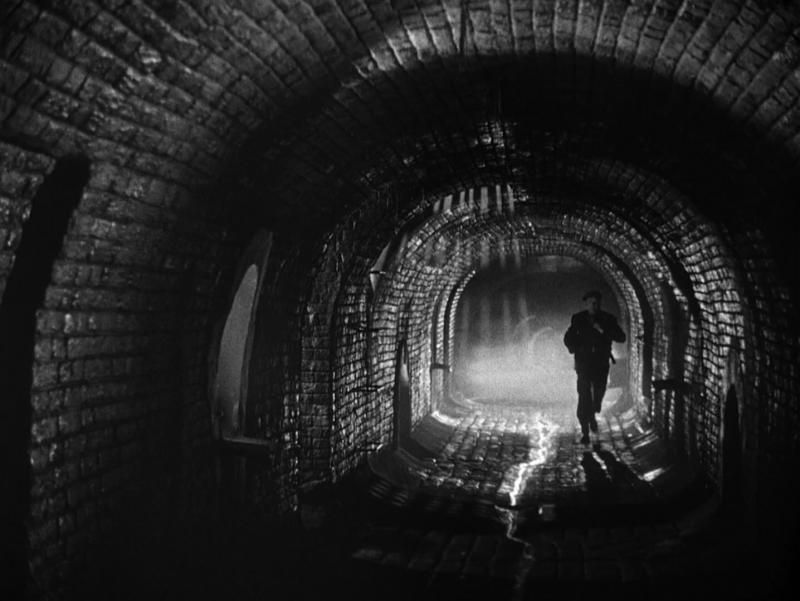
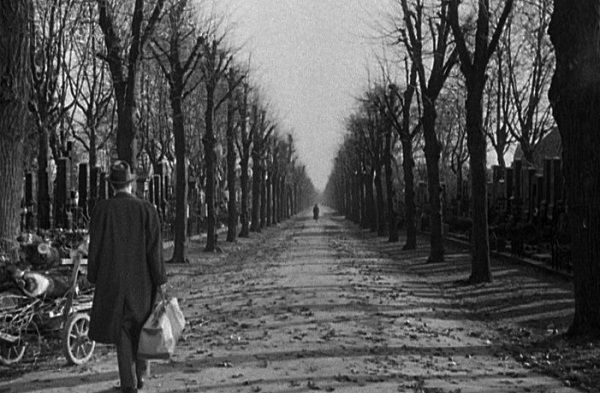
I guess I’ll start with the first time I ever saw part of The Third Man.  It was right around the time I was considering making an effort to see the films from the 1001 Movies book; I had purchased the book, but had not yet committed myself to it.  On a lazy Sunday, I was flipping through channels and the final sewer chase sequence was on Turner Classic.  It made me stop.  It made me gasp.  I watched, enraptured, such black and white photography the likes of which I had never seen before.  To say I was stunned would be putting it lightly.  The photography of this film went a long way towards convincing me that I should embark on the 1001 Movies journey.

Because fuck, this is a pretty movie.  I dare you to find two back-to-back shots that aren’t canted at an angle and I find that exciting, thrilling even.  Reed goes to town with the sense of disarray throughout the entire film, constantly skewing shot after shot.  When you combine this with the beautiful shadow and light play, this is some brazenly constructed cinematography, and I cannot get enough of it.  I hold my breath during certain shots in The Third Man because they’re just too gorgeous.  Not only are the shots skewed, but they are filled with a heady mixture of gothic romantic architecture and rubble.  Some of the characters live in formerly luxurious apartments that are no longer furnished because of the war.  There are cracks in the plaster and repair equipment everywhere.  There’s something about the combination of destruction and luxury that seems so illogical, yet it works.

  
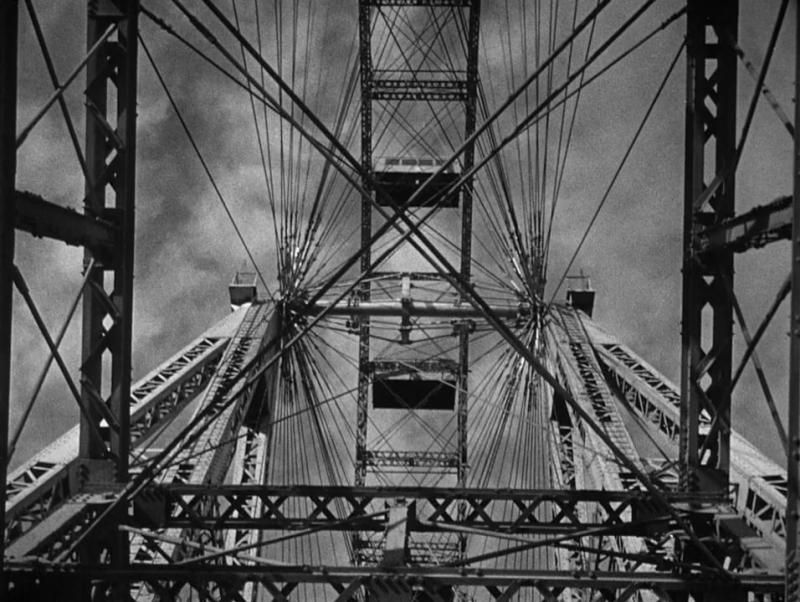
It’s also the little touches that put The Third Man over the edge for me.  Things like the fact that the head of the Culture Committee that invites Holly Martins to speak is constantly subtly trying to shunt his mistress to the side.  The young boy with the ridiculously cherubic face accusing Martins of being a murderer.  The blind balloon salesman and his important walk.  The fact that a significant conversation takes place at an old amusement park.  The slimy guy with his stupid little dog that nevertheless rarely leaves his side.  The police sergeant who loves Martins’ novels because they’re easy to put down.  The fact that no one seems to be able to get a name right to save their lives.  “Vin-kel,” Professor Winkel repeatedly tells Holly.  Callahan instead of Calloway.  Anna even calls Holly Martins “Harry” in one scene.  The richness of the details in The Third Man goes a very long way for me.

The confusion in names is related to the setting of the film, a war-torn Vienna that is occupied by four countries at once.  Vienna is a necessary character in the film; this movie would not be the same were it transplanted to any other place or time.  No, this is 1949 Vienna, and it MUST be 1949 Vienna, set in a world where there is confusion on an international level and no one quite knows what’s going on.  The French, American, British, and Russian sections all have their own quarters of the city and no one speaks each others’ languages; Harry Lime and associates took advantage of this fact to run their black market operations.  This movie NEEDS the rubble and confusion next to the centuries-old cathedrals.

  
The score.  The goddamned music.  Best movie music ever, or best movie music ever?  No movie score is like the score to The Third Man because the music makes no sense when combined with the plot, BUT THAT IS ITS GENIUS.  The score here does NOT serve to emotionally underpin key scenes or lines, but instead simply contributes to the sense of Vienna.  A nonstop run of carnival-esque zither music, of all things, plays throughout The Third Man, and it’s perfect.  I love how it goes against any and all expectations of what a film score is or should be.  And yet, because it’s so utterly Viennese (Anton Karas was, for all intents and purposes, a street performer before he recorded the music for The Third Man), the music goes such a long way in immersing me in the foreign and uneasy world of Vienna.  For three years, the main theme was my ringtone on my phone, that’s how much I love this music.

But beyond the superficiality of the film, there is a fascinating and immensely complex morality play going on in The Third Man.  Holly Martins is the de facto “hero,” but he is so, so far from this role.  As an American dime novelist who writes cheap westerns, undoubtedly full of Good Guys in White Hats and Bad Guys in Black Hats, Martins doesn’t understand shades of grey, and he just walked into the greyest city in Europe.  He doesn’t understand why Anna, who seems nice enough, could love the criminal Harry Lime after he learns of Lime’s black market dealing.  He doesn’t understand how his friend could have entered into the black market at all.  What’s so clever about The Third Man, though, is that the movie makes it clear to the audience how both of those things could have come to pass.  A speech about how we do not judge countries who commit atrocities in war, killing millions, and yet spread about some diluted penicillin and you’re the devil himself.  Is that a fair judgment?  No, it isn’t, but Martins has trouble with this.  He’s far too tunnel-visioned, and his dime novel sense of morality and justice does nothing in The Third Man to bring him joy; instead, it divorces him from everything he thought he cared for.  When you add in the fact that he is constantly appearing to be the fool – bungling a speech, mucking up friendships, getting bit by a pet bird, even falling down and generally being clumsy, we have a hero who is really anything but.  Not a hero, no, but a fool, a dunce, who thinks he knows everything and in reality knows nothing.

Everyone else, however, is far more world-weary and cynical, having adapted to living in the moral ambiguity of post-war Europe.  Major Calloway is an interesting study; he’s the character closest to the side of right, but I would hesitate in actually calling him virtuous.  He’s got a tough job to do, and he’s more than willing to subvert justice to get his way.  Watch how he plays Anna, then plays Holly, to get his man.  He’s not concerned with the fact that Anna is in Vienna on false papers and the daughter of a war criminal; he’s more than willing to ignore this to get his way.  Unlike Martins, he’s incredibly aware of the moral grey area and isn’t afraid to dip his toe in.  He’s a great foil to the baddies in The Third Man.

  
And then there’s Anna.  She might be one of my favorite female film characters of all time.  Completely full of flinty determination, she is a pillar of strength and sadness.  It’s easy to understand why Holly becomes infatuated with her, but I love her all the more for sticking by her man and not making eyes back at Holly simply because he’s there.  She could never love Holly, he’s far too simple, and the deliciously powerful final shot of the film confirms this (I LOVE THAT SHOT JFC!).  She is loyal to Harry despite Harry’s many flaws because, well, he’s her man.  And she’s no angel.  She’s in a tough situation, but she will get herself through.  Anna’s a survivor.  I love her for that.

Giddy.  This movie makes me giddy.  It’s brilliant.  It’s fantastic.  It has one of the BEST reveals in all of cinema (one that I have, on several occasions, made my rather bored husband watch over and over and over).  It’s got a gutsy and perfect final shot.  The music is divine.  The cinematography is heavenly.  The characters are intriguing.  This movie, man.  This movie.  This is what movies are all about.

Arbitrary Rating: 10/10.  Because duh.