Showing posts with label 1981. Show all posts

Friday, July 26, 2013

Three Brothers (Tre Fratelli)


Three Brothers (Tre Fratelli)
1981
Director: Francesco Rosi
Starring: Charles Vanel, Philippe Noiret, Michele Placido, Vittorio Mezzogiorno

Nothing like a death in the family to start out a movie in dreary fashion.  Three Brothers, while not actually depressing, feels like the cinematic equivalent of a sleeping pill.  It’s slow, it’s rather dull, and it made me feel rather woozy and disconnected.  Not, perhaps, its point, but that’s what it did to me.

The death of their mother calls grown sons Raffaele (Noiret), Nicola (Placido), and Rocco (Mezzogiorno) from their modern lives to their ancestral home to aid Donato (Vanel) their elderly father.  Each of them brings their metaphorical baggage as well.  Raffaele, a judge, is being targeted with death threats by terrorists for a case he is considering accepting and it haunts him.  Nicola, a labor organizer, dreams of better conditions for work but also is tortured by his impending divorce.  Rocco is the head of a school for juvenile delinquents.  Feelings of grief but also isolation and disillusionment run rampant for everyone.
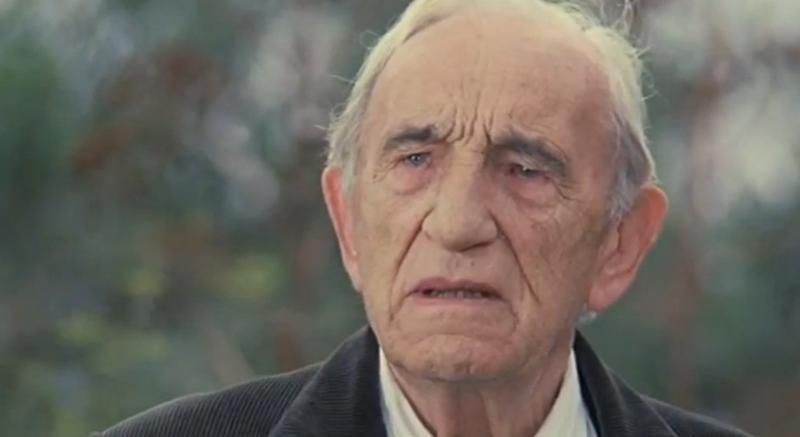
  
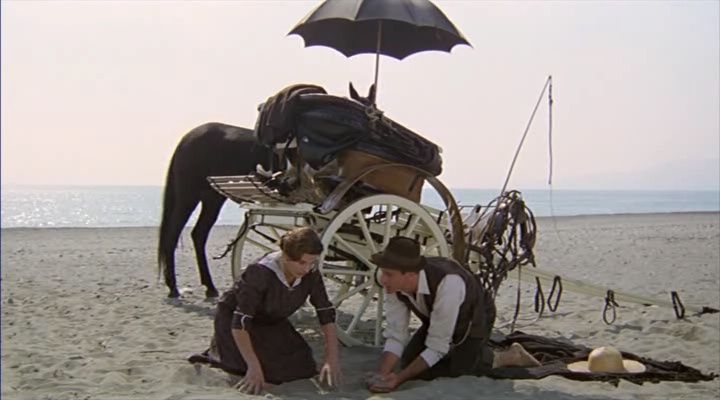
How memories and fantasies blend together into the narrative of the film is probably Three Brothers’ strongest attribute.  The death of the mother naturally brings everyone together but also has them reminisce and reflect and dream for what they want in the future.  The flashbacks work very well within the context of the story.  They are brief and clear and emphasize a point.  The memory of Donato, the father, as he recalls a day at the beach with his young wife was particularly touching.  Later in the story, we have some dream sequences as the characters turn their thoughts to the future, and these are equally well done.  Raffaele has nightmares of being shot over his job, Nicola fantasizes of reuniting with his estranged wife, and Rocco dreams of cleaning up the streets and displaced youths of Italy.  Fitting in well, these moments were the highlight of the film for me.  I wish there was more of them.
  
Why do I wish there was more?  Because the rest of it dull.  Oh my god dull.  I watched Three Brothers on a day when I was tired and ill, and I know from my own experience that I have so much more patience for slow-moving films if I’m tired and less agitated – it’s easier for me to get lost in the world of the film if my brain is less keyed up.  But still I was unable to get wrapped up in the world of Three Brothers that day.  I understand that the film is trying create an attitude, a feeling of sadness, of laconic grief, of that depressing realization that you’re no longer connected to your childhood home, and it does in fact manage to do this rather well.  However, I found myself struggling to stay awake and struggling even harder to focus on the film, and I never, NEVER have trouble staying awake for a movie.  So take it as you will that this one nearly put me to sleep.  It’s desperately slow and nothing really happens. 

Strike that – there is one thing that happens over and over and over again.  Raffaele and Nicola debate politics in every other scene.  Raffaele the judge is calm and even-minded, always seeing both sides of the story, while Nicola the union worker is passionate in his siding with laborers looking for rights.  We get a change of pace when Raffaele debates politics with his old friends down the pub instead of with Nicola.  Oh yes, much different.  Then back to issues with the politics of Raffaele’s job.  Then back to Raffaele and Nicola arguing, because I didn’t get enough of that from the first hour of the film.  No, thank you.
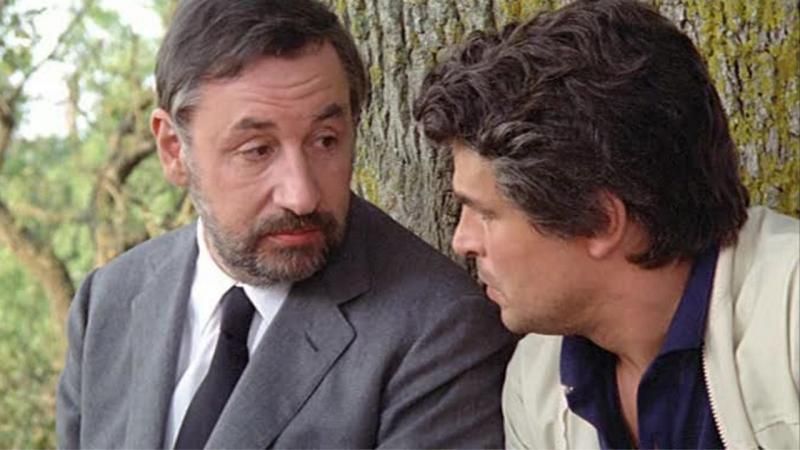
  
The reason I take issue with this is because of the three brothers in the story, I am least intrigued by Raffaele and Nicola, so to watch them constantly bicker was trying.  Furthermore, I am not terrifically interested in politics.  I keep myself informed well enough, but listening to a film tackle Italian politics of three decades ago is one gigantic snore.  No, it was Rocco I was interested in from the start, Rocco who runs a boys’ school for reform with a sense of sad dignity and acceptance.  And who do we get the absolute least of?  ROCCO.  The film is full to the brim of hot-headed Nicola, constantly yelling and smoking and making speeches.  I don’t care.  I don’t care a jot for Nicola.  The film fleshes out Raffaele nicely, making clear that while he believes strongly in the anti-terrorism cases he’s judging, he’s also fearful of the growing urban violence that threatens his own life.  But Rocco… Rocco gets bupkus.  The title of the film ought to be “Two Brothers,” what with the short shrift that’s given to the neglected bro.  But Rocco fascinated me from the beginning.  We get an early focus on him as we watch him wake up in a small, almost clinical bedroom that is then revealed to be adjacent to a large boys’ dormitory.  We watch him handle the cops with respect, yet still be protective of his boys.  He returns to his father’s home and has a slow contemplative walk along a country path followed by a flashback.  I was sold.  This was the brother I wanted to see develop in the film.  But then Rocco practically disappears.  After that point, it’s all – and I do mean ALL – Raffaele and Nicola, Nicola and Raffaele.  When Rocco finally gets his own fantasy, it feels tacked on, as if the director forgot that Rocco was there and realized they should do something to tie up his plot line.  Which made me sad, because I liked him the most and he was given the least attention.  
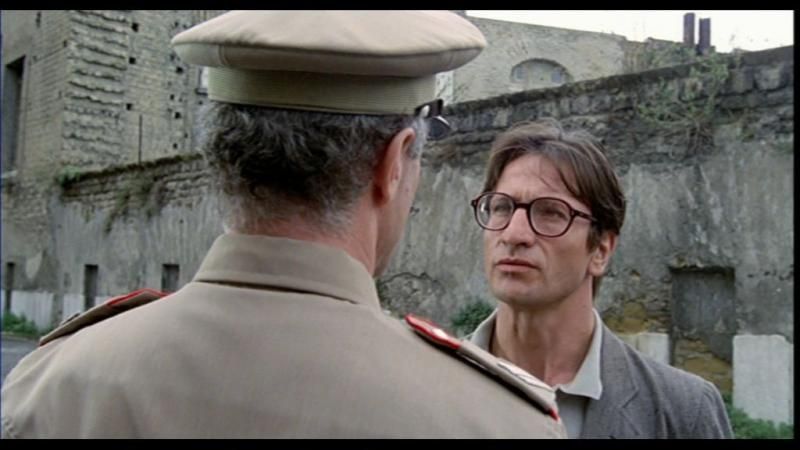
  
I will end by adding that I thought the scenes involving Donato and Nicola’s young daughter were rather lovely.  There was a sense of coming full circle here.  Nicola may feel himself permanently disconnected from his childhood home, but there is a sense of hope as we watch little Marta delightedly explore the farm and bond with Donato.  Not everything was doom and gloom. 

Overall, however, I felt frustrated by this movie.  I wanted more of Rocco, but instead got ridiculously huge portions of Raffaele and Nicola.  The fact that there is no clear plot – this is definitely more of a character study – meant I was bored into a bit of a stupor.  I get the languid emotions, the sense of sadness and loss; I felt them but only superficially.  There is good stuff in Three Brothers, but not enough.

Arbitrary Rating: 6/10

Sunday, July 21, 2013

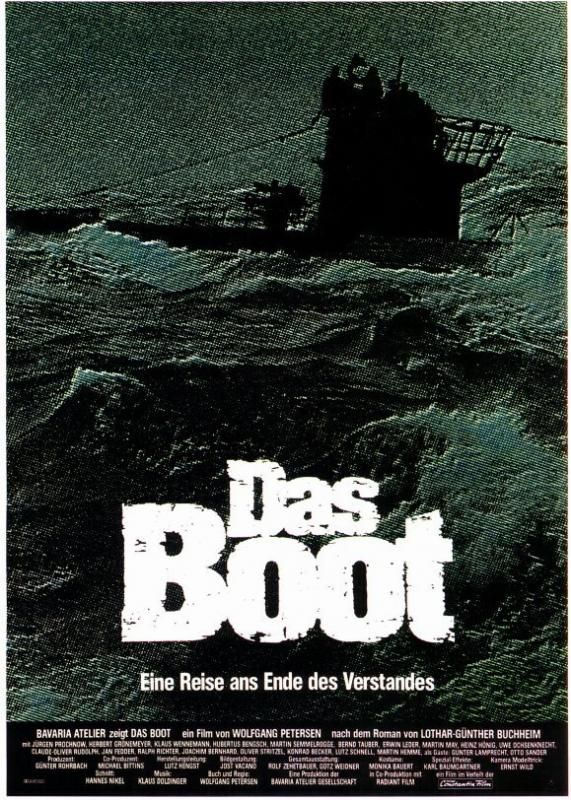
Das Boot


Das Boot
1981
Director: Wolfgang Peterson
Starring: Jürgen Prochnow, Herbert Grönemeyer, Klaus Wenneman
(to be clear, this review is for the 209-minute Director’s Cut released in 1997)

Das Boot is a film I have been aware of for at least fifteen years, but for one reason or another (okay, one reason, the fact that it’s 3.5 hours long) I had never forced myself to sit down and actually watch it.  Thank goodness, then for the 1001 Movies Blog Club, and whoever picked this for our Movie of the Week.  Not only does checking this one off the list come with a sense of accomplishment only a crazy long foreign epic can provide, but I know now exactly how much I’ve been missing these last fifteen years.  I was missing a helluva lot.

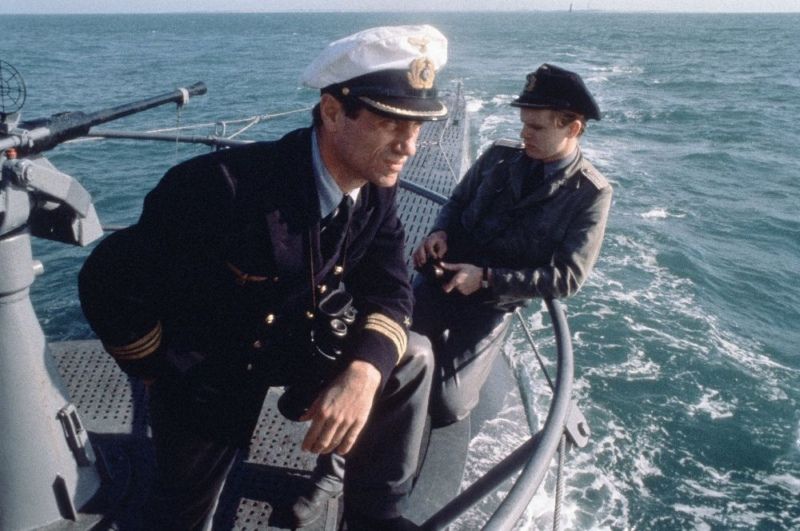
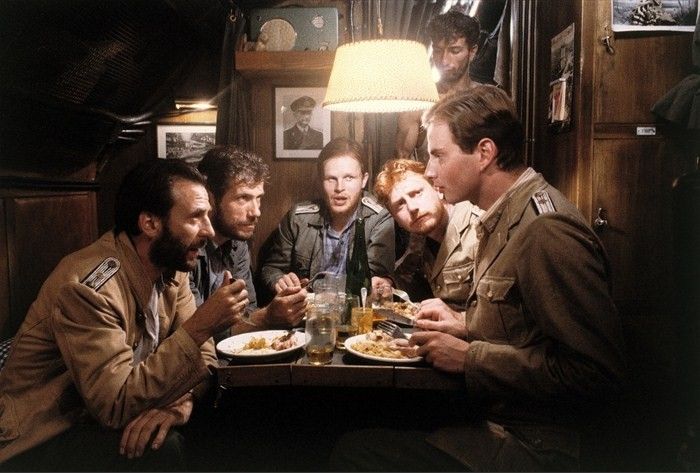
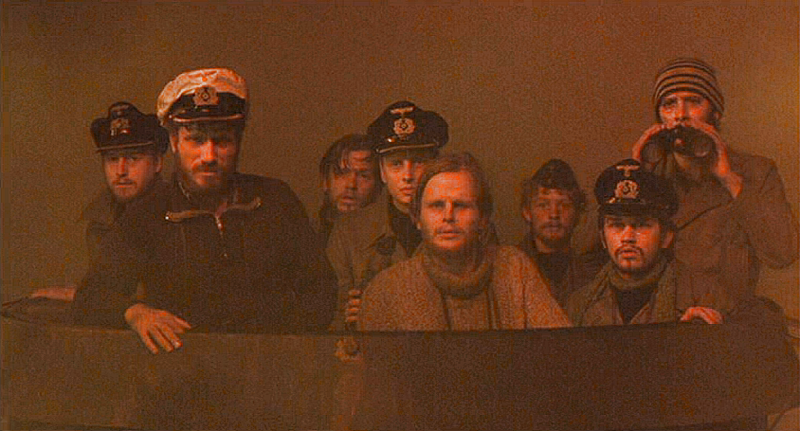
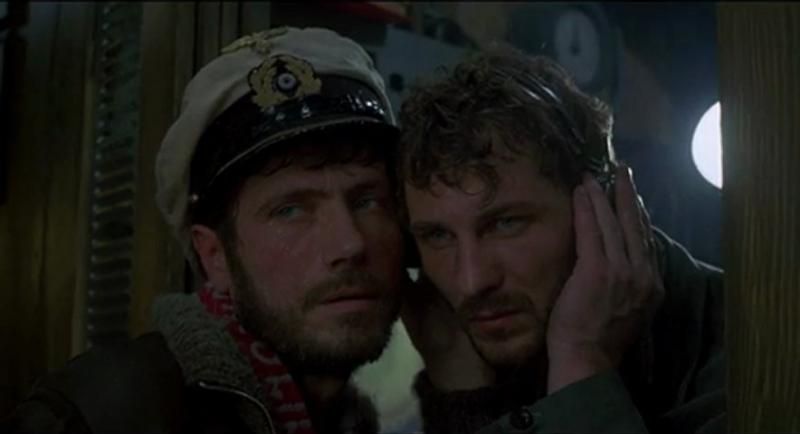
In 1942, a German U-boat captain (Prochnow) takes onboard an official Naval Correspondent (Grönemeyer) before setting off for the Battle of the Atlantic against British ships.  The correspondent and almost the entirety of the crew are young, enthusiastic, and hopelessly green, a fact the captain complains about to his Chief Engineer (Wenneman).  The submarine faces attacks by British destroyers armed with superior technology, but also manages to inflict some damage of its own when it comes across a convoy of enemy ships.  But these encounters are few and far between; in the interim, we see the life onboard the unbelievably cramped quarters of a submarine.

  
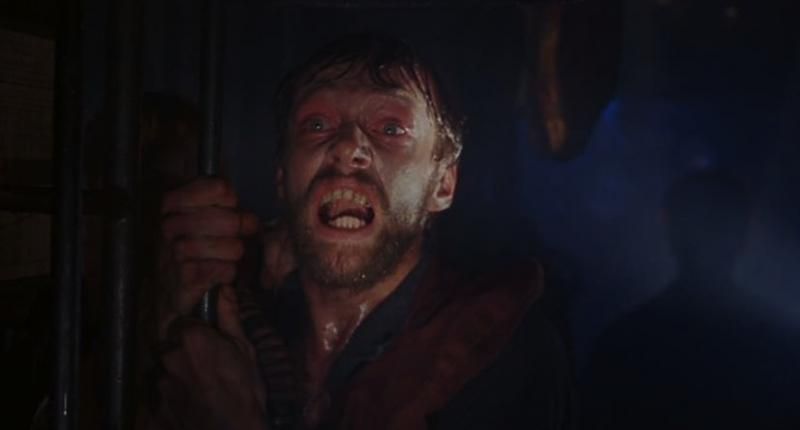
I mentioned in my review for The Thin Red Line that I abhor modern war films mostly because the level of realistic violence is almost too much for me to bear without developing traumatizing nightmares.  Das Boot is a war film, and it’s certainly a modern war film, released in 1981.  But it is nothing like any other modern war film I’ve seen.  The violence is at a bare minimum, but this fact does absolutely nothing to lessen Das Boot’s message.  When it comes to nihilistic anti-war sentiment, Das Boot packs just as much of an emotional punch as any other war film I can think of, and that’s because the tension and the strife come from psychological battles, not physical wounds. (well, mostly.) 

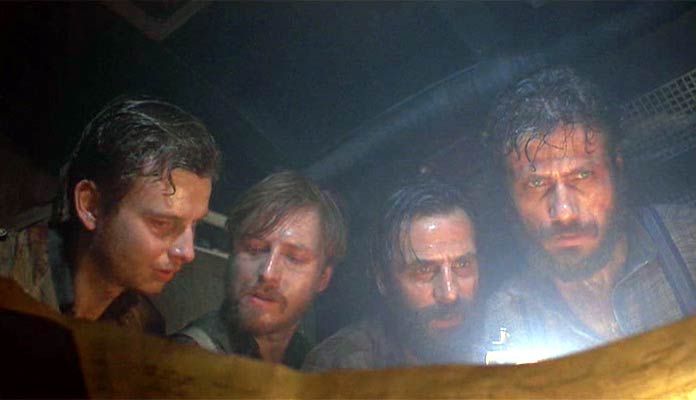
This is mostly achieved from the simple conceit that these men have no place else to go but the submarine; everyone is trapped inside, and the unknown, unseen enemy is always kept a very long distance away.  Claustrophobia is a term often bandied about with Das Boot, and deservedly so.  The actors are crawling all over because the sets are so cramped, and we, as the audience, get no relief either.  Even when the captain goes above deck, Peterson keeps his camera tight on the actors, barely allowing us to see the larger physical scope of the open sea.  In the precious few scenes that do not take place on board the submarine, Peterson carefully shows us comparisons by giving us very wide shots full of open spaces; when we are onboard with the men, we get no such views.  

  
These cramped quarters inevitably lead to tricky mind games, and the net result is a film packed to the gills with tension.  The first forty five minutes are nothing but a waiting game on the U-boat as the men are forced to sit on their hands and do nothing.  This is beyond mentally taxing.  Then there is the first encounter, which shakes everyone’s nerves.  The film is essentially episodic, and every single portion is fraught with tension; there is barely time to catch breath at the conclusion of each segment before moving on to the next, more harrowing encounter.  Yes, Das Boot is long, but with such finely drawn suspense, I’m not complaining.

 
Based on a true story, everything in Das Boot reeks of veracity that even other “based on a true story” movies lack.  Peterson built ridiculously expensive working sets to film on, making sure the specifications of his U-boat were historically accurate.  He filmed the shots over a course of one year and in script order, giving his actors strict instructions to remain inside as much as possible to allow for their skin to become pallid and their hair and beards to grow, as befits men trapped onboard a submarine.  Originally intended to be an American Hollywood picture, I am thankful that it got shelved and then bought out by Peterson, as I doubt Hollywood couldn’t have kept itself from adding needless embellishment. 

This is a German film about Germans in World War II, but right away, it’s significant that there is a distinct lack of Nazism in Das Boot.  The men on board the ship are sailors, not Nazis; the captain is openly cynical of the Nazi regime (which, apparently, was historically accurate as well).  When the crew encounter a refueling ship about halfway through the story and are treated to a feast of fresh food, the Nazi soldiers in charge of the fete seem ridiculous in their compunction to constantly salute an absent Hitler, and the captain smiles slyly to himself.  Only one crew member is clearly designated as Nazi, and that is the First Officer; what’s more, he is roundly and repeatedly chastised by every other crew member for this fact.   Interestingly, the First Officer begins to let go of his adherence to Nazi ideas by the final act of the film as he finally stops shaving every day and wearing his proper uniform all the time.  He is becoming a sailor, not a Nazi.  Modern day Germany, from what I know of it (which isn’t a ton), is rather haunted by its role in World War II; Das Boot seems to be made with this in mind.  We are not meant to see these men as Nazis, but as men.  Regular men serving their duty in wartime.  And yes, when the U-boat is attacked, I was so engrossed in the film, I was actually upset at the British for firing on these men.  If that’s not a testimonial to how effective Das Boot is at distancing itself from traditional Hollywood depictions of evil and ruthless Nazis, I don’t know what is.  Damn those Brits and their effective navy!


Across the board, the performances of the actors are stellar, but for my money, Das Boot boils down to one man: the captain, played by Jürgen Prochnow, and not played as a Nazi but as a grizzled man of the sea.  Prochnow is phenomenally large in a role that requires him to be very quiet and subdued.  His captain is an unnaturally intense man who can relate to his men but knows exactly where the line is drawn – and, in an off-the-charts intense scene involving Johann, the crewman who mans the engines, the captain is not afraid to enforce that line.  He radiates with an inner power, often making words redundant, as his face is all that’s needed to tell you everything.  In fact, in one scene, Prochnow was silent (typical), but moved the muscles in his face the merest fraction of an inch; that one tiny, ridiculously subtle movement told me exactly how the captain had suddenly figured everything out and made his decision.  It’s rare that an actor can so completely telegraph his character to the point where both lines and most physical movement become unnecessary.  Prochnow is a powerhouse in Das Boot; it’s stupidly easy to understand why he shot to international fame after the release of this movie.


The last thing I’d like to comment on is that the person whose autobiography Das Boot was based on complained, loudly and a lot, about how Peterson took his anti-war story and made a film that glorified war.  I am having trouble comprehending why on earth he would say this.  Undoubtedly it is because I’ve never been to war myself, but I do not understand how he thinks Das Boot, in any way, makes war seem cool, because it spoke to me quite well about the pointlessness of war.  I spent a great deal of time with the men of Das Boot, and never once did I think, “wow, how awesome, get ME on that tiny submarine full of moldy food and pubic lice and the unacceptably high possibility of death!”  And that was before the film reached its utterly nihilistic conclusion.  In fact, I kept thinking of All Quiet on the Western Front, another famously anti-war film told from the point of view of German soldiers.  The utter uselessness of the war machine is painted so well by both of these films.


Das Boot is long, something my gnat-like attention span greatly dislikes, but it’s also taut and suspenseful, something I very much like.  What started off feeling like a bit of a chore quickly turned into “JESUS CHRIST WHAT HAPPENS NEXT?!?”  Das Boot is a devastating and brilliant film, and is definitely one of my favorite war films.  Once again, The Book proves to me that although I may generally dislike a certain genre of movies, there are always, ALWAYS, exceptions.

Arbitrary Rating: 9/10. Oh, and I’d be remiss to mention that one of my husband’s best friends, a buddy from college, goes by the nickname of “Das Boot.”  So for years now, when anyone has said Das Boot, I think of Brian, not German submarines.  And yes, the crazy college buddies would start singing the techno theme song when they said his nickname. 

And I’ll also add that I am always reticent to give a perfect score to a film that I’ve only just seen for the first time.  I like to let it marinate for a few months, and then maybe return to it, reassess, determine how I feel about this, and then bump up the score if it fits.  Das Boot is definitely in the running to get said bump in a few months’ time.

Friday, May 10, 2013

Man of Iron


In honor of Ironman 3 hitting theaters last weekend...

 
Man of Iron
1981
Director: Andrzej Wajda
Starring: Jerzy Radziwilowicz, Marian Opania, Krystyna Janda

Films like Man of Iron remind me of how utterly ignorant I am of histories other than those of the United States.  Watching them makes me aware of how much I don’t know of things like Poland’s political history of the twentieth century, and of how much I would like to know.  This can be a significant handicap for watching a film; the director might be assuming some basic understanding of certain historical events.  But despite my having zero background in pertinent information, Man of Iron is still captivating and watchable, and that to me is its real genius.

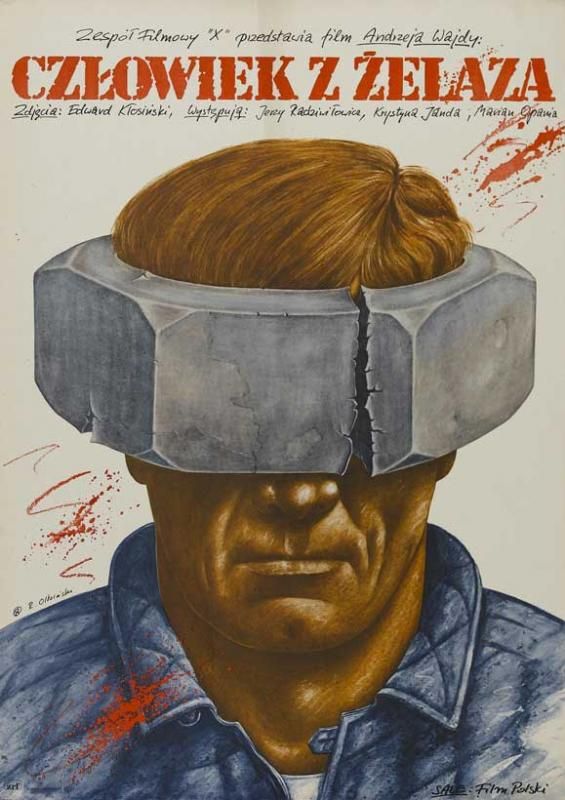
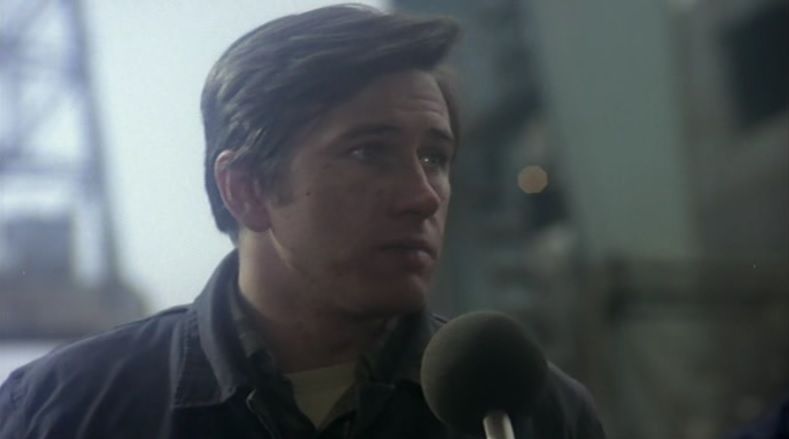
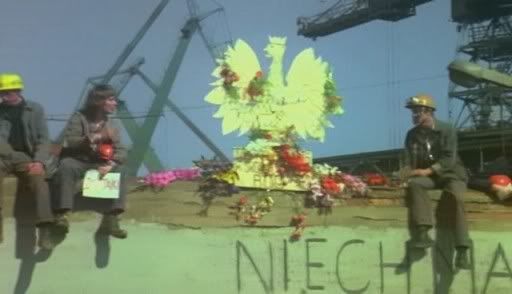
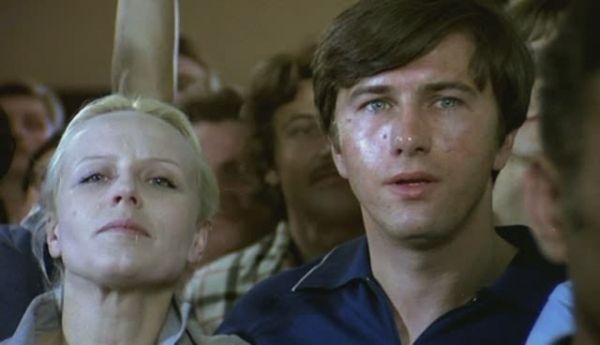
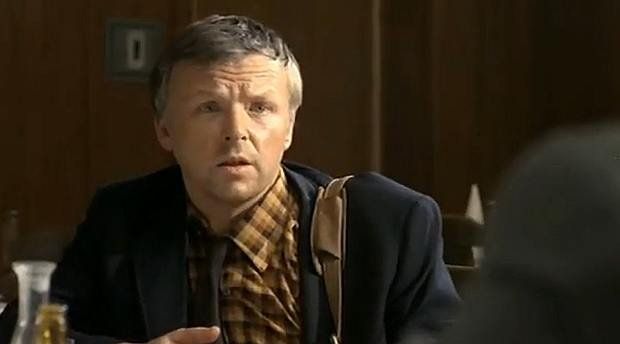
A sequel to 1977’s Man of Marble, Man of Iron essentially picks up where the first left off and follows a similar path.  Television producer for the Communist-run state network Winkel (Opania) is commissioned by the bosses in government to create a slander-filled piece on Maciej Tomczyk (Radziwilowicz).  Why Tomczyk?  Because he has helped to incite the Gdansk shipyard strikes of 1980.  The strikes are on and the government wants to do what they can to break them; hence the need for Winkel, who must go undercover into the shipyard in order to gather information against Tomczyk.  Winkel seems hardly the man for the job, though – small, portly, alcoholic, nervous, he feels the pressure from both sides and must make a decision.  Will he cave to government or will he stand with the striking workers?

 
I had the exact same reaction to Man of Iron as I did to Man of Marble: I was utterly captivated despite the fact that I felt I had NO IDEA what was going on, especially at the beginning.  There’s a lot of talk in Man of Iron, a lot.  And a lot of characters.  And a lot of politicizing.  And it was sometimes difficult for me to keep it all straight, especially, as I said, having no background knowledge on Polish politics.  But holy crap, I was sucked in.  I couldn’t stop watching.  And that’s what I remembered about Man of Marble.  I was so happy to discover its sequel was precisely the same.

 
Why was I so sucked in?  I mean, this is a long film, and I usually have little patience for long films.  I think the narrative structure of the film goes a long way to help with the pacing of the story, and the two and a half hours wound up feeling significantly shorter.  Essentially episodic in nature, we follow Winkel as he first has uncomfortable meetings with the powers that be who tell him stories of Tomczyk, to him meeting people who know Tomczyk – his grandmother, his friends, his wife (Janda) – who, in turn, tell him their version of the Tomczyk they know.  Always in the background is the political strike, moving forward, ticking towards the showdown between the workers and the Communist government.  We have a slowly built portrait of a man by methodically revealing significant aspects of his life, but never through his own eyes.  Instead, it is always through the eyes of someone who has known him.  I love this story telling technique.  It’s a great way to build a character due to its complete subjectivity, and it greatly helped me overcome what I lacked in background information.  The first half hour of the film I felt flummoxed, but by the end, with all the information that has carefully been revealed, I knew exactly what was going on.  The film sucked me in.  What’s more, this is straight out of the play book of Citizen Kane, only finding out about Tomczyk through the eyes of others.  And come on, isn’t that a tremendous cinematic comparison?

 
There are two performances that utterly make this movie, and without them, it would have been a long haul indeed.  Radziwilowicz as Tomczyk and Opania as Winkel are both fantastic and have tremendous character arcs to explore.  For Radziwilowicz, he is so utterly, believably passionate from moment one.  His Tomczyk must find the strength to become a leader for the workers, the eponymous “Man of Iron,” but we watch him grow from headstrong and unthinking adolescent to deeply committed and more sober adult.  Radziwilowicz (crap that’s hard to spell) is utterly watchable.  He has a spark, something special; I could watch movies with him all day long and not get tired of him.  But it is Winkel’s journey, paralleling what he learns about Tomczyk, that is just as important in Man of Iron.  I love that Opania’s Winkel is a weak man.  I think of Man of Marble, of Janda’s Agnieszka (who, by the way, I love), who is completely confident and cocksure; Winkel could not be more different.  That’s important, and probably the most pronounced difference between this and its predecessor.  Winkel has to find his strength, that is his story, and Opania is so good at slowly showing us this.  Two fantastic leads, two great characters.

 
It amazes me that this film could have gotten made in Communist Poland.  A note at the beginning of the film says that while the characters are fictitious, the situations were real, and use was made of documentary footage.  While I think I can tell where the documentary footage is inserted, I’m still not entirely sure, mostly because it’s so outrageous, I can’t believe that Poland would have “allowed” it to stay in the movie.  Wajda’s message is staggeringly anti-government.  What I love about it, though, is his message is so righteous, it becomes positive, transcending the violence and the rioting and the bickering; it’s a force for good, for peace.  Look at Agnieszka in her jail cell.  She is so utterly confident that the workers will win, she’s calm.  If they don’t win in a matter of days, she knows they will win eventually.  This optimism of Wajda’s was eventually proved right, with Poland being the impetus for the fall of the Communist bloc in the late 1980s.  That unfailing optimism is so joyous, it lifts up what could have been a repressive story of government power.  The politics of Man of Iron are impressive.  

 
I don’t think everyone will enjoy this movie as much as I did – in fact, I doubt most will.  I understand that it’s long and full of talking heads and tells a VERY political story about a moment in time most Americans don’t remember or don’t care about.  But holy crap, I kinda love it.  I find it thoroughly compelling.  I wish that Man of Iron was out on DVD.  I would love to own both it and Man of Marble and watch them back to back, making a lovely little day of it.  I love getting sucked into the world of Birkut and Tomczyk.  It’s a rather thrilling place to be, and I wouldn’t mind returning to it again in the future.

Arbitrary Rating: 9/10.  It is DEFINITELY cut from the same cloth as its predecessor, and I really kind of love it.