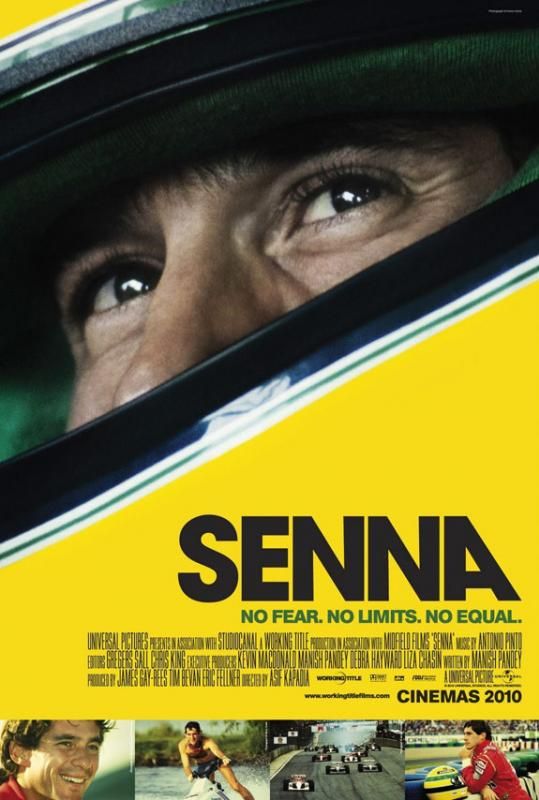
Senna
2010
Director: Asif Kapadia
Starring: Ayrton Senna, Alain Prost,
Ron Dennis
I
am an odd duck when it comes to sports.
Despite my family’s best efforts to inculcate me into the cult of various
Boston major league teams as a child, as a grown-up, I do not follow the Red
Sox, Bruins, Celtics, or Patriots, nor have I adopted my new local hometown
sports teams as my own. Simply put, I
don’t particularly care about mainstream American sports. But if it’s NOT mainstream, I’ll eat it up. You’ll find me during the winter Olympics
DVRing the biathlon and curling while completely ignoring figure skating and
skiing. You want to know my favorite
sport in the entire world? Professional
cycling (conversations about doping in sport are for another place and time, my
friends, I’ll say that right here right now).
Best not to call me during the first three weeks in July (STARTS JUNE 29th
THIS YEAR BABY!), as I’ll be camped out in front of my TV getting as much Tour
de France coverage as I can possibly cram in my eyeballs. I fall asleep every night to the dulcet tones
of Phil Liggett. Want to have a conversation
about Andy Schleck’s chances, if Cadel really has it in him again, or the
Wiggo/Froome drama over at Sky? I’d love
to. Pro cycling is fascinating to me
partly because it isn’t something typical – I didn’t grow up with it – but also
because the rules and politics of the sport are many, varied, and rather
sophisticated. It’s not just about
riding your bike as fast as you can; as a matter of fact, if that’s what your
strategy is in pro cycling, you’ll lose every race. In fact, after watching Senna, a documentary
about Formula One driving superstar Ayrton Senna, I found more than a few
similarities between pro cycling and the universe of F1.
Which
basically means that I had an utter blast watching it.
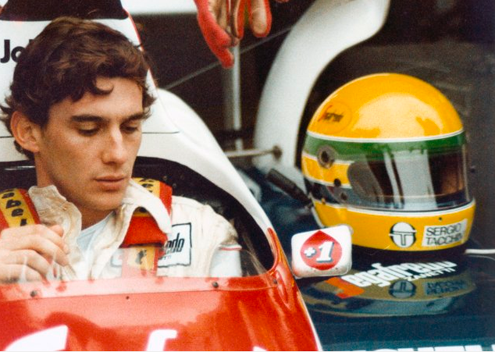
Senna starts with the ascension of
Ayrton Senna, Brazilian F1 driver, through the ranks of what can only be
described as professional go-kart racing, and really gets going with his
anointment as the Next Big Thing in F1 during the Monaco Grand Prix in 1984. He drives really well, insanely fast, and has
faith in a higher power. Using a great
deal of stock footage and interviews with those who knew him, the film
chronicles his move over to Maclaren and his clashes with French driving star
Alain Prost, issues of safety in F1 motorsport, what Senna’s fame meant to
impoverished Brazil, and even how computer technology influenced racing. Always, Senna is humble and impassioned about
the sport he loves.
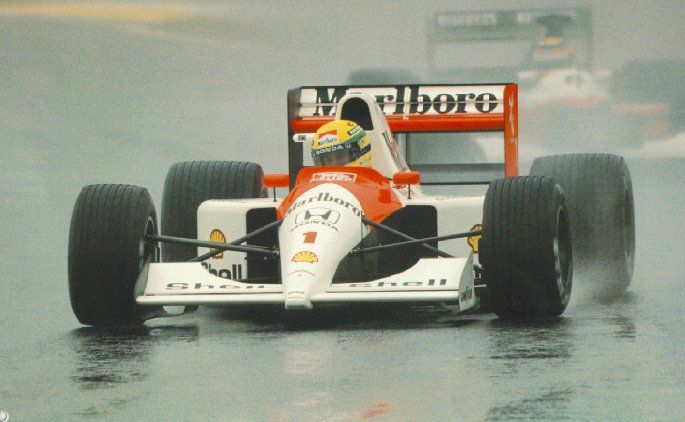
The
parallels between what I saw of F1 racing and cycling were phenomenal,
especially when issues of politics in sport came up. In one episode in the film, Senna suffers a
fairly severe setback due to a complicated situation and a technicality. Holy cow if I haven’t seen that before, many
times over, in cycling. Take Robbie
McEwen’s (fairly blatant) head-butting of Stuart O’Grady in the 2005 TdF that
resulted in his relegation that day; McEwen constantly argued that O’Grady
pushed him off his line and that he was forced into it, but the judges never
saw it Robbie’s way. Or the bit in Senna
where the (French) president of Formula One tells Senna outright that “my
opinion is best. Always.” Don’t even… don’t EVEN bring up the issue of
governing bodies in cycling, because although I’d love to say that the F1
president is an outlier, he’s not. Such
is the norm, to think that just because you’re in charge, you’re always
right. When Prost and Senna crash
together more than once, the film questions whether it was on purpose. Enter in parallels with “Chaingate” in
2010. Even the very issue of Senna
having to move to Europe, to work his way up through the ranks, to prove
himself not with money but through his talent, is straight from cycling’s
playbook. The best riders have to go
through Europe. American kids with the
cycling spark move over there early and live a monk’s existence for nine months
out of the year racing around Spain and Germany and Italy. Leaving behind your home and loved ones for
long stretches of time is an expectation in cycling, as, apparently, it is in F1
racing.
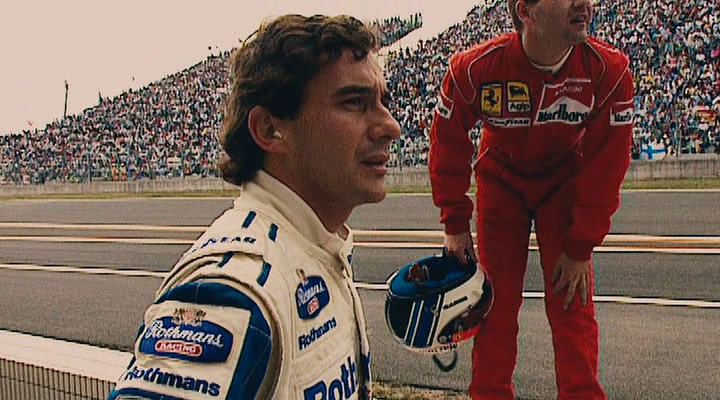
And
honestly, I saw the conflict between Alain Prost and Senna coming from a mile
away. Cycling is riddled with stories of
teams trying to have more than one Big Name on them, and the inevitable
infighting that follows. Who can forget
Vino attacking Ullrich in the mountains in 2005? Well, you might, but I can’t. Watching T-Mobile implode upon itself was
practically the biggest story of that year.
There are similar issues (somewhat mitigated by Wiggo’s injury pulling
him out of this year’s TdF) currently between Froome and Wiggins at Sky, with
Froome feeling that he’s got the goods just as much as Wiggins, and he
shouldn’t have to help his teammate out.
Cycling, like F1, is in the odd situation where it is a team sport with
only one winner. This leads to, in my
opinion, fascinating team psychology. Essentially,
there can never be more than one head of a team in order for the team to be
successful. Too many leaders cause split
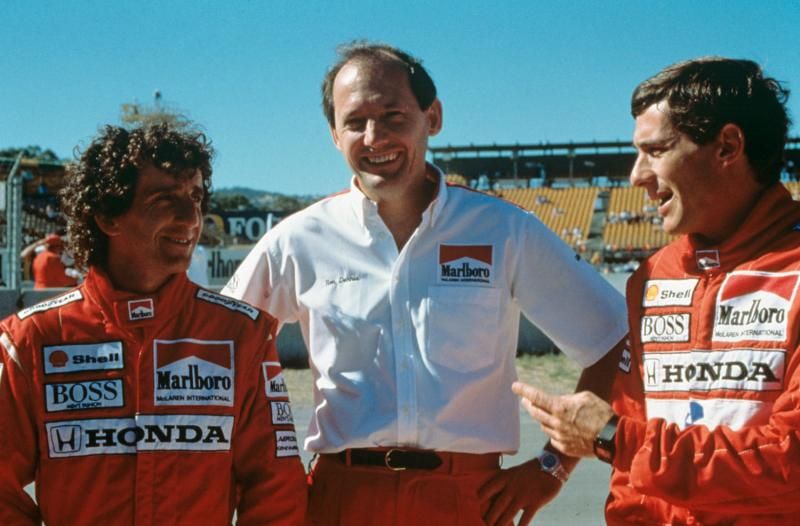
focuses and rifts. Watching the dynamic
between Prost and Senna deteriorate was like watching any number of cycling
stories play out.
I
mention all of those because, and I’ll say this again, I love cycling, and I am
fascinated with the rules of cycling.
Seeing such similarities to how both pro cycling and F1 motorsport operate
made me pretty dang excited to watch a movie about an F1 driver. Ayrton Senna, as a man, was not nearly as
compelling to me as drawing these parallels between the sports as a whole.
And
if that weren’t enough, I connected another one of my favorite things in the
world with the non-sport aspect of the movie.
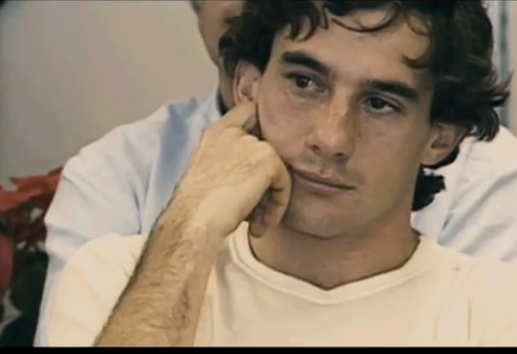
A minor focus of the film is what Senna’s success in an international
sport (albeit one based mainly in Europe) meant to a struggling Brazil. Seeing one of their own ascend to ranks of
brilliance at the highest levels brought the people of Brazil together. There are clips of people on the street
saying that Senna gives them joy and hope.
As an American, we see our own constantly becoming international
superstars in many different fields. We
have no notion of a single, unifying, national hero because we simply have too
many heroes. It was inspiring watching
Brazil rally around Senna, and it reminded me completely of Juan Diego
Florez. OK, so who’s JDF (as I’ll now
refer to him)? Well, my non-opera loving
friends, he’s only the single greatest bel canto tenor currently performing in
the world, easily the greatest bel canto tenor the world has seen in the past
few generations, the heir apparent to Pavarotti’s legacy, and my favorite opera
singer of all time. I’ve had the
pleasure of seeing him live three times in my life, and I hope I can get in at
least one more performance. He’s
amazing. I don’t have enough
superlatives for him. I could listen to
him sing all day long (and I usually do), his voice makes me happy. JDF is from Peru. You want to know how many international
superstars Peru currently has in circulation?
One, and his name is Juan Diego Florez.
How big a deal is Florez in Peru?
He’s on their stamps. Give him
another twenty years, and he’ll probably be on their currency. When Florez got married a few years ago (in
Peru), the country opened up a basilica that hadn’t had formal ceremonies
performed there in decades. He’s that
big a deal. He’s also using his fame to
sponsor music programs for children in the country, realizing that he should
give back to his native country. Much in
the way that Senna talks about waving the flag for Brazil, Florez waves the
flag for Peru. Given that JDF is one of
my favorite stars in the entire world, seeing the similarities between him and
Ayrton Senna was another point of fascination for me.
Really,
does any of what I wrote above have to with Senna itself, as a film,
being great? No. It doesn’t.
It has nothing to do with Senna, and everything to do with me
and my tastes and interests. Senna,
as a film, is a pretty standard albeit well done documentary in terms of using
stock footage and interviews with those who knew him to paint a picture of
Senna’s legacy. Is there anything
groundbreaking or “must-see” worthy in that?
I don’t really think so. But I
was utterly fascinated. I couldn’t turn
away. I was interested, I was engaged,
and that says something right there.
Is
Senna
a film you NEED to see before you die?
Ultimately, no, I don’t think it is.
Did I like it? Hell yes. Very fascinating stuff. I’d watch it again in a heartbeat.
Arbitrary
Rating: 9/10.


