Saturday, September 15, 2012

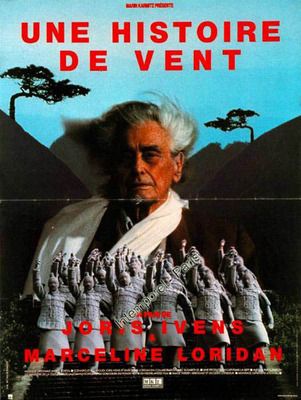
A Tale of the Wind


A Tale of the Wind
1988
Director: Joris Ivens
Starring: Joris Ivens

It’s very difficult to categorize this film. It’s a little bit of a documentary, but then it’s not. It’s a bit of a surrealistic film, but then it isn’t. It’s from a famous artistic director whom I’ve never heard of before. There are gorgeous shots of nature, and then completely artificial set pieces.

Experimental cinema? You betcha. But unlike obnoxious experimental films, there is a distinct sense of whimsy and magic laced throughout A Tale of the Wind that makes the sense of incomprehensibility go down that much easier.

Thursday, September 13, 2012

The Rules of the Game


The Rules of the Game
Director: Jean Renoir (yes, related to THAT Renoir)
Starring: Marcel Dalio, Nora Gregor, Roland Toutain, Jean Renoir
1939  

The Rules of the Game is a difficult film to review for its sheer enormity. Right up there with Citizen Kane, Casablanca, and The Godfather, it is consistently considered one of the ten best films ever made. The only reason you may never have heard of it before is the fact that it’s French, and American audiences aren’t the keenest when it comes to foreign films, but it is a daunting subject for any lover of film to undertake. After all, what can I possibly say about The Rules of the Game that hasn’t already been said elsewhere?

The answer to that difficult question (the question which, by the way, has kept me from writing about the other great films mentioned above) is to regale the reader with my personal relationship with the film. When I first saw The Rules of the Game, it didn’t have much impact. I took it at face value. Man, if there’s ever a film to be a little patient with in order to peel away the outer layers, it’s this one. I then saw it a second time not long after because it was playing on the big screen. Still not that much of an impact. Years passed, and although I had the presence of mind to pick up the DVD when it went on sale, the DVD went unwatched… until today. I did a little bit of reading before watching it, watched the introduction on the DVD by the director, and suddenly found myself entranced, moved, and unexpectedly crying at the end of the film. Now I am starting to understand The Rules of the Game. Now I am feeling its impact.

At face value, The Rules of the Game is a comedy of manners – and I would never say this wasn’t a comedy. The plot centers around married couple Christine (Gregor) and Robert La Chesnaye (Dalio) and their respective lovers, Andre (Toutain) and Genevieve (Mila Parely). A group of guests are invited to La Chesnaye’s country estate for a hunting party. There are machinations, secrets, revelations, and, ultimately, a tragedy. The lives of the servants downstairs blindly imitate those of their masters, as Christine’s maid Lisette finds herself juggling more than one man as well. It’s very Gosford Park in this respect – as a matter of fact, these two films would make a pretty decent double feature.
Tuesday, September 11, 2012

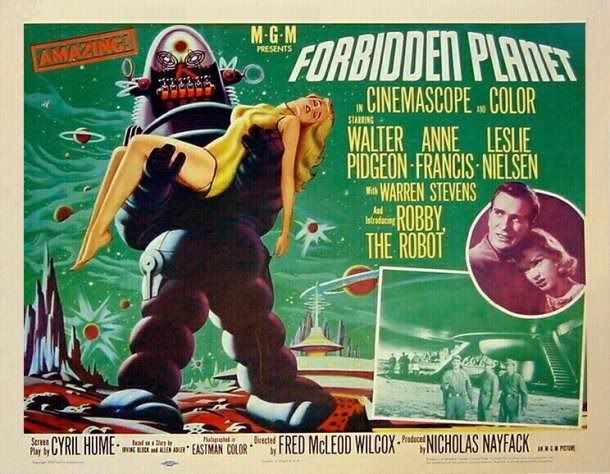
Forbidden Planet


Forbidden Planet
1956
Director: Fred M. Wilcox
Starring: Leslie Nielsen, Walter Pidgeon, Anne Francis

“In the final decade of the 21st century, men and women in rocket ships landed on the moon.”

Oh, from this laughable beginning starts the incredibly silly yet legitimately entertaining sci-fi ride that is Forbidden Planet. The film was made in 1956; I mention this because it’s incredibly important when considering the more ludicrous parts of the film. Think of it – this film is pre-Sputnik. Humans had never put anything into space – ever. Star Trek was a thing of the future, and Star Wars was considerably far off. Hollywood is to be somewhat forgiven, then, with their bizarrely stereotyped image of space exploration and adventure.

The crew of an elite (and fundamentally American) space ship is sent to a distant planet for a search and rescue mission stemming from a lost colony 20 years earlier. On landing on the eerily earth-like planet, the captain, played by Leslie Nielsen (yes, THAT Leslie Nielsen, more on that later) is greeted by the somewhat unnerving Doctor Morbeus (Pidgeon), apparently the only survivor of the failed colonization, his beautiful daughter Altaira (Francis), and the helpful domestic Robby the Robot, the first of Robby’s many subsequent Hollywood appearances. Morbeus warns the captain and his crew to leave at once, that the rest of the settlers were killed in horrible ways, that they must flee if they want to keep their lives. The captain says no. While a romance develops between the captain and Altaira, scary and inexplicable things do indeed start happening to the crew. The truth of the horror is, well, a little cheesy and a bit overly complicated, but the film has a satisfying conclusion nonetheless.

Sunday, September 9, 2012

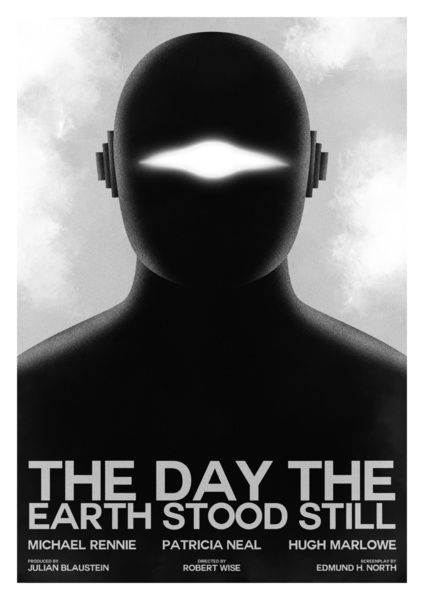
The Day The Earth Stood Still


The Day the Earth Stood Still
1951
Director: Robert Wise
Starring: Michael Rennie, Patricia Neal, Sam Jaffe, Billy Gray

I’m intrigued by the many different forms science fiction can take. There’s plenty of science fiction that’s lots of men in funny rubber suits playing funny rubber aliens, nothing more than battles with laser guns on silly Martian sets. On the other hand, I’ve seen a number of science fiction films that have zero special effects, zero makeup, zero costumes, but are absolutely still sci-fi because of an otherworldly premise. The best science fiction utilizes its otherworldly setup to bring home a message of humanity. The Day the Earth Stood Still indulges in special effects, but its point is tremendously clear: this is a message movie, through and through.

The nations of the world are all thrown into disarray when an alien spaceship is found to be circling the earth. After landing in Washington D.C., alien Klaatu (Rennie) and his huge robot Gort step off the ship, only to be immediately fired upon by the amassed military. Klaatu is taken to a hospital where he requests to speak to representatives from all countries in one meeting to warn them of an impending peril. Frustrated by the world’s inability to convene such a meeting, he escapes the hospital where he meets both a young widow (Neal), her son Bobby (Gray), and a scientist (Jaffe), and he again tries to pass his message on to them.

Friday, September 7, 2012

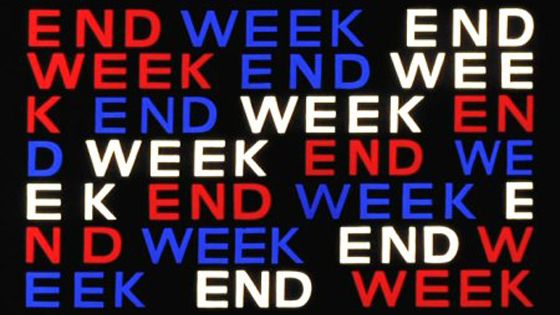
Week End


Week End
1967
Director: Jean-Luc Godard
Starring: Mirielle Darc, Jean Yanne

I’m not a fan of French New Wave. I know, right? How can I consider myself a fan of films if I don’t pee myself over French New Wave films? Well, it’s true. I can absolutely appreciate everything that the French New Wave did to change film, yet I’d never count a single one of them amongst my favorites. I do not enjoy them. Godard, in particular, is troubling for me. I have never felt entertained or amused or even moved by a Godard film. Instead, I tend to just sit there with a look of “WTF?” on my face. Have I completely ruined any credibility I may have had by now?

The “plot” is about Roland (Yanne) and Corinne (Darc), an upper class married couple who openly want to murder the other. They go for a getaway on a weekend to visit her father, who they also want dead, and along the way, increasingly tragic and violent (and bizarre) things happen to them.

To me, when I think French New Wave, and ESPECIALLY Godard, I think about rule-breaking. To me, that was what the Nouvelle Vague was all about, and by breaking tried and true cinematic “rules,” it managed to move cinema light years into the future. Like any Godard film, there is all kinds of rule-breaking in Week End, both cinematically, narratively, and sociologically.

Tuesday, September 4, 2012

Manhattan


Manhattan
1979
Director: Woody Allen
Starring: Woody Allen, Mariel Hemingway, Diane Keaton, Meryl Streep

Despite the fact that I’ve now written about a hundred reviews for films from 1001 Movies You Must See Before You Die, I have not yet reviewed a Woody Allen movie. Oh, Woody Allen. You give me so many problems. He and I have a very love-hate relationship. Occasionally, I really love one of his movies. Most of the time, I rather hate them. So consider this review to be Part One of my Standard Woody Allen Rant, which shall no doubt repeat itself for nearly every one of his films in the book.

The plot of Manhattan is very typical Allen neurotic comedy. Isaac (Allen) is a forty-two year old television writer who is dating Tracy (Hemingway), a seventeen year old high school student. His ex-wife (Streep) left him for another woman and is now writing a book about the breakup. He falls in love with his married best friend’s mistress Mary (Keaton), which of course means that there is a great deal of hemming and hawing and complaining about relationships. Whiny neuroticism ensues.

Sunday, September 2, 2012

The Wicker Man

Photobucket


The Wicker Man
1973
Director: Robin Hardy
Starring: Edward Woodward, Christopher Lee, Diane Cilento

Horror is a very personal genre. What scares one person doesn’t affect someone else in the slightest. Like comedy, it’s impossible to make a scary movie that can get under everyone’s skin. While The Wicker Man is not a horror movie through and through, it certainly has certain classic horror elements, and although tame by today’s bloodbath torture porn, it still has the ability to be creepy. I can see why some would find it ridiculous, but personally, I find The Wicker Man disturbing.

More a mystery, perhaps, than a horror film, the story focuses on Scottish cop Sergeant Howie (Woodward) who goes to the island of Summerisle to investigate the disappearance of the young girl Rowan Morrison. When he gets there, though, all the locals deny ever knowing Rowan, let alone being able to help him in his investigation. Moreover, the longer he’s on the island, the more he’s exposed to, and offended by, the free love pagan rituals that start to show up. Howie, a devoted Christian, clashes with Lord Summerisle (Lee) and the local schoolteacher (Cilento) over “proper practices” for worship and education.