Sunday, September 1, 2013

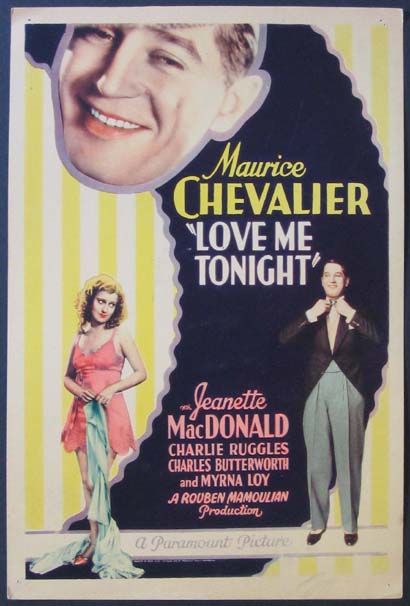
Love Me Tonight


Love Me Tonight
1932
Director: Rouben Mamoulian
Starring: Maurice Chevalier, Jeanette MacDonald, Charles Ruggles, Myrna Loy, C. Aubrey Smith

I admit, I’ve been holding off on writing a review of this film for the simple reason that I was saving it for a time when I really needed a pick me up.  With the next school year just around the corner, now seems as good a time as any for a cinematic happy pill, and by god, Love Me Tonight is most definitely a happy pill in film form.  I love this movie, perhaps to an almost irrational level, but I don’t care.  Love.  I LOVE Love Me Tonight.

Maurice (Chevalier) is a tailor living in Paris.  Princess Jeanette (MacDonald) is young widowed royalty living in the confines of a palace along with an elderly duke (Smith), several aunts, a boy-crazy young countess (Loy), and a womanizing viscount (Ruggles).  It is the viscount that Maurice first meets after the viscount stiffs Maurice on the bill for his latest suit.  Determined to get his money back, Maurice follows the viscount to the palace and poses as a baron, refusing to leave the viscount’s side until he gets his fee.  Problem is, he and the Princess Jeannette fall in love while he’s waiting for his money; whatever will happen when she realizes he’s not aristocracy?!?!?!?

I don’t even know where to begin.  It’s overwhelming, really.  Shit.
  
Alright, I’ll start at the opening of the film.  For my money, the first twenty minutes of Love Me Tonight are sheer perfection and beyond clever.  1932 was still fairly early in sound technology, but Mamoulian is remarkably wise with how he utilizes sound as a tool.  There are three songs in the first twenty minutes, almost making Love Me Tonight appear to be an operetta rather than a musical (it’s not), and these three songs are so smart.  First up, we open with a sleeping Paris.  Slowly, the city begins to awake, and it does so via sound.  Various vendors open their shops, families open their doors, and make all the normal, regular sounds of the city.  Thing is, Mamoulian builds a syncopated percussive song from all these sounds.  The bootmaker bangs his hammer in time with the woman fluffing her sheets.  Ultimately, the sounds become too cacophonous, and that’s when we meet our hero.  Maurice then walks down the street, saying hello to everyone and everything in the second song, and it’s a beautiful little scene that uses the song to further illustrate Parisian life. 

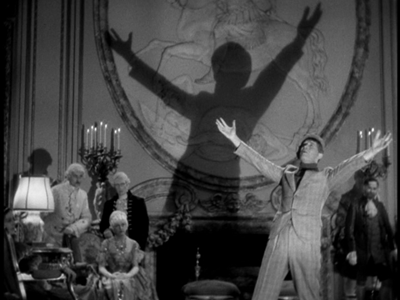
The third song in the opening twenty minutes is probably the best scene from the entire film, and one that’s been written about extensively.  Yes, I’m going to write about it too.  Maurice sings the famous “Isn’t It Romantic,” the first time that song appeared in film.  Maurice sings it in his shop, and the tune gets passed from Maurice to his customer to a taxi driver, etc.  As the song gets passed from person to person, it also travels from Maurice’s shop to, eventually, Jeanette’s palace, where she hears it and then sings a verse.  I love love love this scene.  It’s a remarkable way of connecting the hero and heroine before they’ve even met, making it clear to us, the audience, that these two are meant for one another even though they’ve never met.  It’s a brilliant use of song, utterly clever, showing how the song evolves and travels from person to person and situation to situation, changing in each interpretation.  It’s a military march when the soldiers sing it, a happy tune when Maurice introduces it, and full of slightly melancholic longing when Jeanette sings it.  It’s rightly remembered as the most famous scene of the film; it’s brilliant.

The songs, in fact, are one of the biggest draws of this film for me.  I make it clear that I am a fan of musicals, but I’ve also written several times about how I greatly prefer musicals where the songs are woven within the plot and story rather than “backstage musicals” where the focus is on “putting on a show.”  Love Me Tonight is one of THE best, if not THE best early in-plot musicals.  Nearly the entire plot is somehow syncopated – butlers enter rooms walking to the beat of the soundtrack music, Maurice runs upstairs in time with the tune, characters even talk in rhyme half the time – and yet it works.  The story is an utter fantasy, as are most romantic comedies, so why not indulge all the way?  Let’s be honest, I’m not looking for reality when I watch Love Me Tonight, so I embrace its flights of fancy, including how it handles the in-plot songs. 

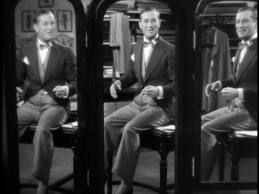
Chevalier is utterly sparkling as he essentially plays himself.  Although much younger here than the Chevalier that most Americans think of (re: the dirty old man who sings “Thank Heaven for Little Girls” from Gigi in 1958), he was still in his early forties when Love Me Tonight was made, hardly a young flower.  Still, there’s something about seeing a younger, more energetic, broad-chested Chevalier that, I admit, I find very appealing.  He works as my romantic hero here.  And when he sings “Mimi,” I melt.  I love pre-Code films, and Love Me Tonight is pre-Code.  The sexual innuendo woven into nearly every other line of dialogue is sparkling, and Chevalier was born for these lines.  “Mimi,” a song Maurice sings to Jeanette the first time they meet as he tries to woo her, is nothing more than him saying, “Hey, you’re cute, wanna fuck?”  Now this on its own tickles me (dirty!), but it’s made even better because Chevalier sings it straight to camera.  It’s not done in a two-shot, but with Chevalier making direct eye contact with the audience.  I smile so broadly when he sings the final verse, “You know I want to have a little son of a Mimi by and by,” but hardly gets out the words because of all the winks and eyebrows and nods he’s throwing in, making it PERFECTLY clear what he’s REALLY singing about.  Yes, Maurice IS Chevalier, but for crying out loud, it’s fun watching Chevalier here.  
  
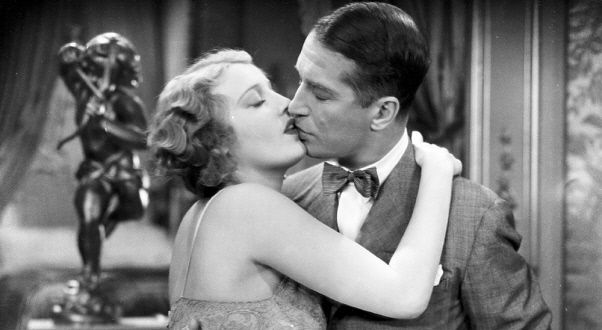
Additionally, although I’m not a huge Jeanette MacDonald fan, I really think the chemistry between Maurice and Princess Jeanette (and christ, I love that they named the main characters after the actors, that’s too funny) works.  It’s actually mostly because of Chevalier.  MacDonald is her typical MacDonald swooning self, with one notable exception that I will mention later on, but Chevalier is unexpectedly shy and timid in certain scenes.  When he finally makes a serious move on Princess Jeanette, kissing her for the first time at the masquerade ball, she slaps him and he sadly shrugs, far too sadly for my heart to handle, and he moves to go away.  When she stops him and kisses him back, I can see him utterly light up, thinking that he lost what he wanted but now finds it’s back.  And when he brokenly, laughingly tells her that he loves her, you can read his utter disbelief all over his face when she says his love is returned.  He makes it so painfully clear that he is aware of their discrepancy in ranks, although she is not, and he also knows that this utter dream of his will not and cannot last.  It has the heartbreaking poignancy of a man desperately clutching to a wish that cannot be fulfilled.  
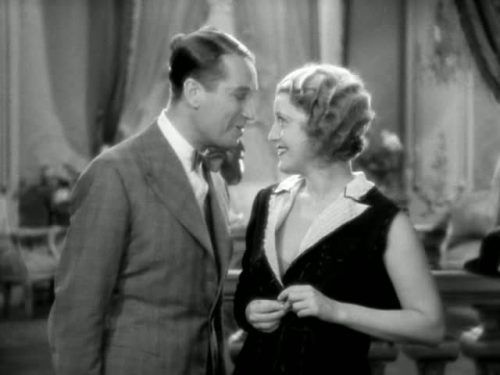
  
Yes, Chevalier isn’t exactly the finest actor to grace the planet, but his handling of the few scenes that require real emotion in Love Me Tonight utterly wins me over.  I feel the chemistry, I feel the love, I get that coiling in my stomach that tells me I am really, truly rooting for this couple to get together.  And later on, when the charade is up (WAIT, A COMPLICATION IN A ROMANTIC COMEDY?  SURELY YOU JEST) and Maurice finally tells Princess Jeanette he is “just” a tailor instead of a baron, Chevalier makes my heart break.  He looks towards the camera and says, utterly crestfallen, “Does that make so much difference?” as Jeanette backs away in horror.  This sad, broken man, who knows that he just lost his love, is shockingly poignant.  The movie is such an utter soufflĂ© for its vast majority, and throwing in this tiniest moment of loss and sadness somehow grounds the rest of the film for me.  It makes their love and his loss feel real in a film filled with fantasy.  The first time I watched Love Me Tonight, I was loving it from the get go, but when it got to this particular scene, that’s when I really fell, and I fell hard.  I love the silliness and the giddiness of the musical scenes and all the snappy, sassy quips, but Chevalier’s simple performance when he outs himself to the Princess just pushes it over the edge for me.
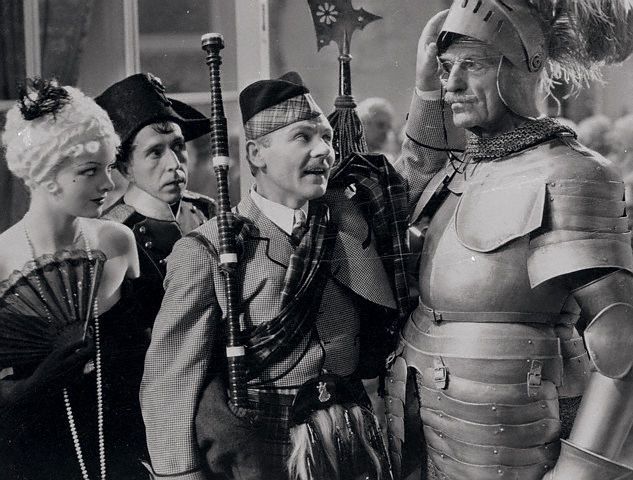
 
And none of this has anything to do with the supporting cast.  Love Me Tonight is easily in the running for one of the best assemblies of a supporting cast ever.  C. Aubrey Smith as the duke is hysterical as he constantly gets his guests to play bridge and even sings a bit.  Charles Ruggles, billed as Charlie Ruggles, nearly steals every scene he’s in as the broke viscount, constantly trying to hit on every woman he meets.  And Myrna Loy.  I mean, I already adore Myrna Loy with the passion of a thousand flames, and seeing her vamp it up here with some of the juiciest lines in the film is joyous.  The snappy dialogue everyone gets to toss around is ridiculously fun, such as when the viscount asks Myna Loy if she could go for a doctor, to which she replies, “Why yes, send him right in!” as she adjusts her dress.  As I’ve stated above, I really rather love the two main characters, but Love Me Tonight is not just about Maurice and Jeanette.  Everyone else who peoples this odd little fantasy universe is hysterical, snappy, and sassy.  It’s a brilliant cast.

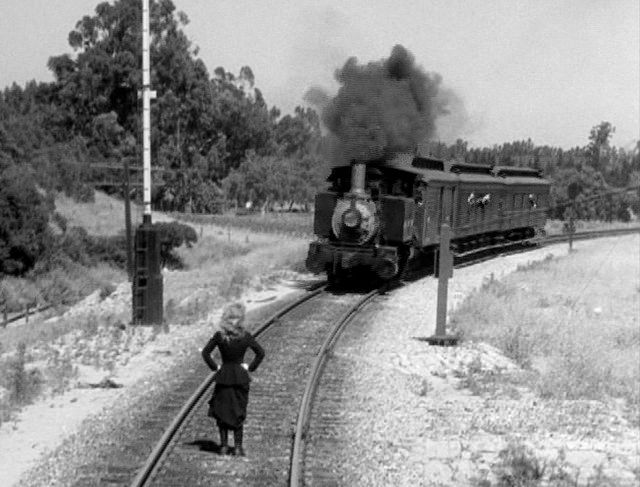
I’ve mentioned in at least one other review a particular quirk of mine.  We all have them, little things that we particularly love or hate, thematic elements that make us either predisposed to loving or hating a film.  They don’t always have to make a lot of sense or even be major plot elements, but if a film has one, it can elicit a strong reaction.  A rather big quirk of mine in romantic comedies is one relating to gender.  I am strongly predisposed to loving a rom com if, in the finale, it is the woman who chases after the man.  It’s about choice; typically, when a guy has to go after a girl, as is the case in 98% of all rom coms, I sometimes read it as the woman having no other options, so she guesses she’ll take this guy back even though he was kind of a dick.  This implies she doesn’t have any other options; she’d better take this one because who knows if anyone else will ever come along?  Or, on the other hand, why is it the guy who always has to apologize?  Why is it always the guy who’s mucking up and has to humble himself to get the girl?  Are all men such dolts?  No, they’re not; women mess up too, y’know, and women admit they made mistakes too.  Do I dislike all rom coms that follow this very traditional path?  No, of course not, but every now and then when I come across one that switches the “Prince Charming Saving The Princess” stereotype in the finale, I am almost automatically a fan.  It puts the woman in a position of power, of choosing to fight for her relationship, of having the choice about being in the relationship because she wants to be and not simply because it’s convenient.  The fact that Love Me Tonight has Jeanette fighting for her man, choosing to be with Maurice after he’s left, AND that this is 1932, is fantastic.  It gives Jeanette an incredible amount of power; she shifts from being a wilting flower to a wild animal in the finale of the film.  And I fucking love that.  She realizes she has fallen in love, and also that she has mishandled the situation pretty badly and chased Maurice away.  So she grits her teeth and fights for Maurice, stopping a frickin’ train in its tracks in order to get her beloved back.  Fuck yeah, Jeanette!  You go, girl!
  
Um, so in case the previous 2100 words (!!) haven’t yet convinced you, I really really love this movie.  It’s so happy, the musical numbers are immensely clever and naughty, it has just the right dose of pleasantly poignant emotions, it’s witty beyond all measure, AND it even manages a bit of grrl power just to add the frosting to the cake!  I’ve seen it more times than I can count and I don’t tire of it.  An absolute favorite, no doubt.

Arbitrary Rating: 10/10.  Top 25 films of all time, easy.  Might even make an argument for Top 10.  LOVE.

Friday, August 30, 2013

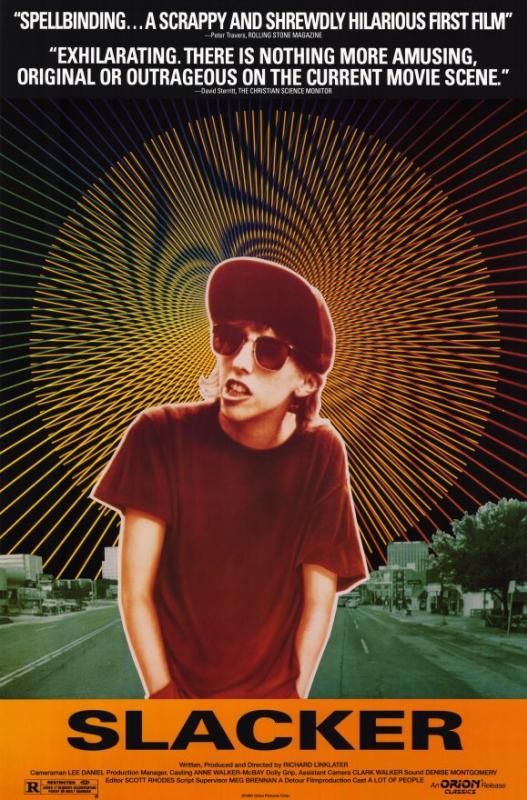
Slacker


The end of summer vacation is a bitch, full of much gnashing of teeth and tearing of hair, and many many little anxiety attacks.  

 
Slacker
1991
Director: Richard Linklater
Starring: um… Austin, Texas

Technically speaking, I am part of Generation X.  However, I am on the tail end of what chronologically defines Gen X, and I grew up with enough awareness of the term to understand all the negative connotations that go along with it.  The characters in Slacker are full on Gen X, no doubt at all, and watching it makes me feel oddly nostalgic for the early days of The Real World.  I shudder, though, that this film represents a generation with which I am technically a part. 

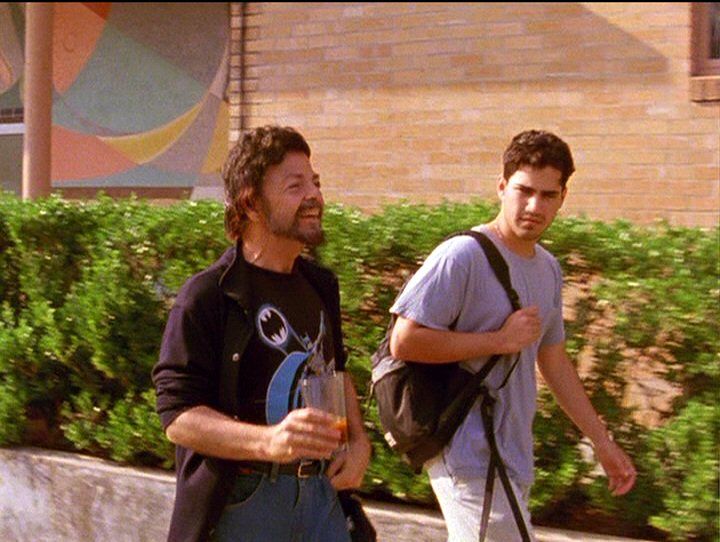
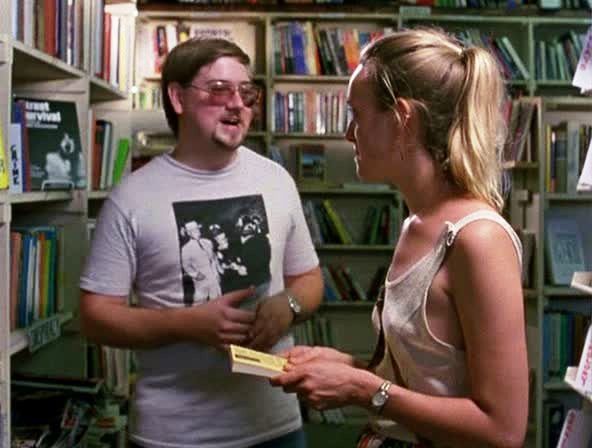
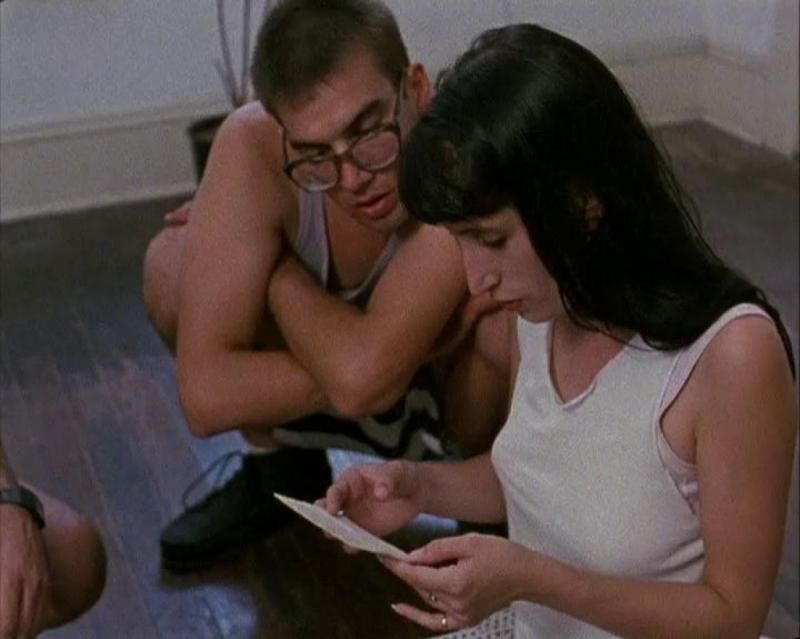
Slacker isn’t so much a story as it is a conceit: it is essentially a series of vignettes strung together by coincidence set in the city of Austin, Texas.  We watch a few people, who are almost always young, unemployed, and pseudo intellectuals, as they have a conversation.  After a few minutes, one of the group leaves the conversation and the camera follows and moves on, finding a new conversation and a new group of young people.  This continues as we spend our whole day meandering around the city, jumping from group to group.  There are conspiracy theorists, nutjobs, anarchists, New Age gurus, and lots and lots of ramblers.

  
I’m not a huge fan of this movie, but it has its moments, most of which I find a bit blackly comic.  I’m particularly amused by the conspiracy theorist, credited at imdb by the role “Been on the moon since the 50s.”  His utter conviction and nonstop spouting made me smile, as did how easily he passed from having a discussion with one young man to having it with entirely different people.  Next up is the young man who’s honest enough to pay for his own newspaper walking into what is easily the most bizarre diner where a patron yells at him to “stop following me!”, the owner tells him to “cut it out!”, and the woman at the counter tells him it’s inappropriate to sexually assault women over and over.  Poor guy… and he just wanted change for the newspaper!  Similarly, one of my favorite sequences is when a would-be robber holds up a homeowner at gunpoint, only to have that homeowner turn out to be a raging anarchist who not only talks the robber down but seriously schools his ass.  The fact that the anarchist is an elderly gentlemen is just icing on the cake. 

There are moments of sympathy in Slacker as well, although they’re few and far between.  A young woman who gives a quarter and a Diet Coke to a homeless man then tolerantly puts up with a Kennedy wingnut’s ramblings and very kindly excuses herself without putting him down in the slightest.  A different young woman makes a slanted illusion to having some fairly serious health issues, and there is definite tension in her conversation with a young man, who rather bluntly steps over her confession and begins talking about himself instead.  Every now and then, through all the meandering conversations that seem to be going nowhere, there is a spark of real emotion, a hint of real kindness or real pain.

  
But for the most part, Slacker is full of void.  This is obviously on purpose, as it is a commentary on the “Slacker” mentality that seemed to be the defining feature of Gen X in the early nineties.  Rambling conversations by pretentious unemployed dicks about Dostoyevsky or the power of the video image are so maddeningly vacuous that I wind up wanting to throttle half the characters.  And this is really my biggest issue with Slacker; I wouldn’t mind the portrayal of this sort of mentality as much if I myself felt more removed from it.  I find myself in this odd duality, where I know that I’m a member of Gen X, this generation portrayed here in Slacker, and yet I feel absolutely no kinship with anyone in the story.  I bristle that this is how “my” generation is seen.  And yet, maybe it was this portrayal of my generation in the media at large that I grew up with that helped me NOT become this.  I remember watching The Real World in the early years, watching Clerks when it just came out on home video, and certainly I remember how much everyone talked about Reality Bites.  Heck, I even did a research paper in high school comparing and contrasting Hemingway’s Lost Generation with Gen X.  I was incredibly aware of this media portrayal, and maybe, in some small part, it drove me to NOT fall prey to the Gen X stereotype.  After college, I fucking went to grad school.  I did something, goddammit, I studied and worked in a research lab, then student taught and got a goddamned career. 

I tend to be in favor of nonprofessional actors in films; usually they deliver surprisingly effective low key performances because they’re not trying to “act.”  I’m not sure if the actors in Slacker were nonprofessional or not, but if they were, then this could be the film that puts me off nonprofessionals.  The acting is painful.  PAINFUL.  The conversations are already rather rambling and awkward, and when you add on top of that awkward performances, it does not make for an enjoyable experience.  It’s like watching an Amateur Improv night down at the local comedy club, and not the good one that gets decent performers.  Just stop.  Just stop right there.

  
To end on a positive note, my favorite part of Slacker is also the most incongruous.  Linklater spends the whole film rambling around aimlessly, following people so apathetic they’re hardly breathing, and so then it is curious that he ends it with a segment that is the antithesis of everything that preceded it.  As the film goes from a wingnut driving around in his car shouting absurdities through his roof speakers, we suddenly cut to a group of young twentysomethings out filming their day adventure on a Super 8 camera.  They are happy – unironically happy, even – as they traipse about and “Skokiaan” plays joyously on the soundtrack.  These young people are doing something, they are not moping about indoors simply talking about doing something.  They are happy instead of lethargic.  I choose to interpret this ending as Linklater ending on an optimistic note, recognizing that not everyone in this generation is as downtrodden as the people who inhabit most of Slacker.    Is that what he’s really saying?  Who knows, but that is the ending I need it to be.  I need a bit of energy and happiness and optimism after an hour and a half of mind-numbing apathy.

I like the central conceit of Slacker quite a bit, and it definitely has a bit of nostalgic appeal as I remember growing up with this sort of media representation of who I am supposed to be.  But I am not this aspect of Gen X, and I have never been that way. 

Arbitrary Rating: 6/10

Friday, August 23, 2013

Hill 24 Doesn't Answer


Hill 24 Doesn’t Answer
1955
Director: Thorold Dickinson
Starring: Edward Mulhare, Michael Wager, Arik Lavie, Margalit Oved, Michael Shillo

Of all the films I’ve yet to see from 1001 Movies, this is undoubtedly the film I’ve been searching for longest.  This is not a readily accessible movie, and I have a feeling I wouldn’t have seen it at all save for Chip’s from Tips from Chip resourcefulness in somehow tracking down a copy.  It was released on DVD for the briefest of moments, but only as part of a Jewish cinema special set, and that was fairly cost prohibitive before disappearing entirely.  So frankly, I’m glad I just got a chance to see this one, full stop, because it’s been so hard to find.
  
But funnily enough, by the time I finished watching it, I was glad I’d seen it because, well, it’s actually rather good.  (If I sound surprised by that, it’s because I’ve learned that the films that are hardest to track down are usually unavailable for a REASON.)

Set during the fighting between the Arabs and the Israelis in 1947, the movie starts with the information that a United Nations dictated cease-fire will take effect at 5:45am.  Four patrol soldiers fighting for the Israeli cause are given the orders to try to take Hill 24, a strategically advantageous position, before that time so that when the border between Israel and Palestine is finally decided, Hill 24 will be Israeli.  We meet these four soldiers as they flashback to events that lead them to their current position.  There is Jim Finnegan (Mulhare), a British government worker originally stationed in Israel as part of the British guard who ended up staying because he fell in love with an Israeli woman.  There is Allan Goodman (Wager), a Brooklyn tourist who came to Israel to see the sights but stayed because of an emotional connection to fight the good fight with his people.  There is Esther Hadassi (Oved), a young Israeli woman who is raring to fight and will not let her gender keep her down.  Finally, there is David Airam (Lavie), a multilingual Israeli who has the most combat experience out of all of them and has seen some pretty horrible things.  

  
The film is divided into three mostly even sections as we learn about Jim Finnegan, Allan Goodman, and David Airam in turn.  Esther’s story is mostly tied in with that of Allan.  You’ve seen this structure of a film before, as each character in turn flashes back and tells “their story.”  While not exactly my favorite narrative technique of all time, such a device serves to move the film along by automatically sectioning it into three distinct acts.  As each character has a (mostly) fully formed story to tell, we have three beginnings, three middles, and three ends, all of which are bookended by the film as a whole.  Frankly, it works here.

And a big reason why I feel it works is that I thought the film kept getting better with every successive story.  Jim’s tale, the one we kick off with, feels like I’ve seen it before.  There’s nothing wrong with it, per se, but it felt like a fairly rote romance between two opposites.  Just as I was beginning to tire of Jim, though, we switch over to Allan.  Allan’s tale is very different; he goes to Jerusalem for a guided tour of the Old City and wants thrills and excitement.  Somehow joining up with the freedom fighters along the way, he finds himself caught in a firefight at night between the Arabs and the Israelis, and oh so quickly, his dreams of thrills disappear as he encounters firsthand the horrors of war.  Winding up injured and in the makeshift hospital, he has a crisis of faith with a rabbi and his desperation only grows.  Whereas Jim simply fell in love with an Israeli girl, Allan goes through a much more interesting emotional rollercoaster.  Yes, it starts to feel a bit like propaganda (this was the first film fully produced in the new country of Israel), but that’s to be expected, and I was still invested in Allan’s transformation.

  
And then we tote out the brief, but easily most potent, story of David.  David’s flashback, unfortunately the shortest back story of the lot, was gripping.  He recalls a previous encounter in battle in Israel when he found himself rescuing an enemy soldier who turns out to be German.  This segment was absolutely riveting, and when the film transitions smoothly from David’s powerful tale to the more nationalistic yet still powerful finale of the film as a whole, Hill 24 Doesn’t Answer definitely ends on a high note.  Rare is the film that I feel gradually improves as it goes; if it starts rather slow, usually it ends rather slow.  But no, Hill 24 Doesn’t Answer crescendos up to a very strong ending.  And I’ll add here that I should have expected it, as the film opens with a wicked punch to the gut.  The film makes absolutely no bones from the get-go about delivering a fairly bleak and powerful tale, but managed to lull me into complacency with Jim’s rather predictable flashback.  

  
I couldn’t help but be reminded of several other films while watching Hill 24 Doesn’t Answer, the two most significant of which were made prior to Hill 24.  I really can’t help wondering if Thorold Dickinson was heavily influenced by The Third Man and All Quiet on the Western Front, or if the similarities are honest coincidences.  The Third Man’s influence is most notable in Jim’s flashback.  In it, we see that while the British have some sort of control on the turmoil-ridden city of Haifa, there are rebel fighters at every turn.  There is so much rubble and confusion and a sense of barely-withheld anarchy that one could easily transplant Jim’s Haifa for Harry Lime’s Vienna.  All Quiet on the Western Front, on the other hand, shows a very heavy influence in both Allan’s story, as his transition from thrill-seeking naĂŻve tourist to war-hardened, disillusioned soldier is played out in very similar terms to that of Lew Ayres’ Paul.  And in the final segment of Hill 24, where David tells his story, all I could think of, ALL I COULD THINK OF, was the scene in All Quiet on the Western Front where Paul is trapped in a bomb crater with a wounded French soldier, the enemy.  There are imprints of All Quiet on the Western Front all over this film.  I don’t necessarily think that a bad thing – All Quiet on the Western Front is an amazing film – but derivative is still derivative.

Really, if I’m being honest with myself, I expected something far worse from Hill 24 Doesn’t Answer.  I expected this film to be in the book for the sole reason that it’s the first Israeli film, and not on the benefit of the film itself.  But I was wrong.  Hill 24 packs a punch.  Not a huge punch, sure, but it’s there.  It’s a bit of a shame this film is so hard to find.

Arbitrary Rating: 7/10.  Oh, and did I mention that the print SUCKS?  It’s hard to watch – not because of the film itself, but the graininess is almost too much and definitely detracts from the viewing experience.